Publications
Selected papers and full publication record.
Filter
This filter will trim down the list of publications below to those containing a specific word in their description.
Selected publications
These ten papers provide an overview of my research, particularly the development of new satellite methods for observing atmospheric gravity waves, their role in atmospheric dynamics, and their representation in numerical models. They are selected to give a flavour of my primary research area, as opposed to being (e.g.) my ten most cited or most recent.
2026
- ACP
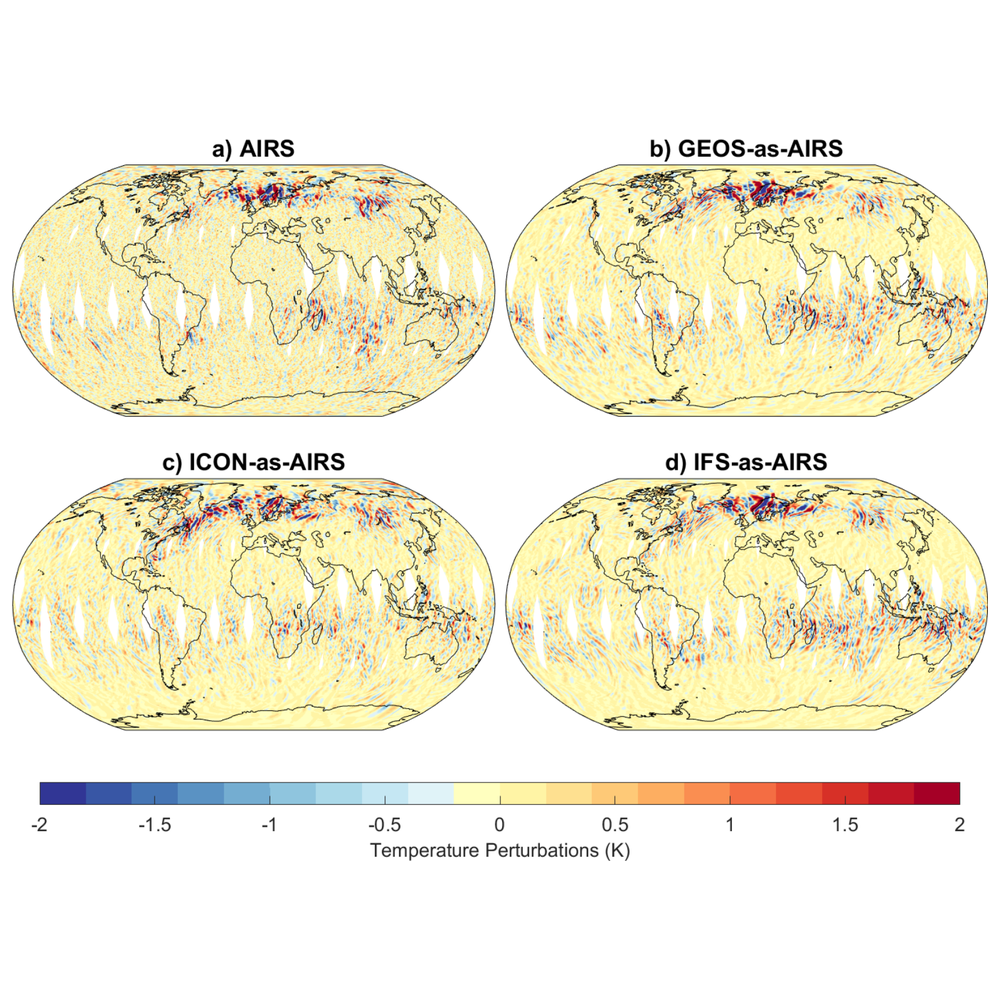 Stratospheric gravity waves in three high-resolution models and AIRS satellite observationsAtmospheric Chemistry and Physics, 2026In three global models with 3–5 km grid spacing, 61–73% of detected gravity waves have amplitudes below 1 K, compared with only 10% in AIRS observations. Excluding these weak waves considerably improves agreement.
2025
- GRL
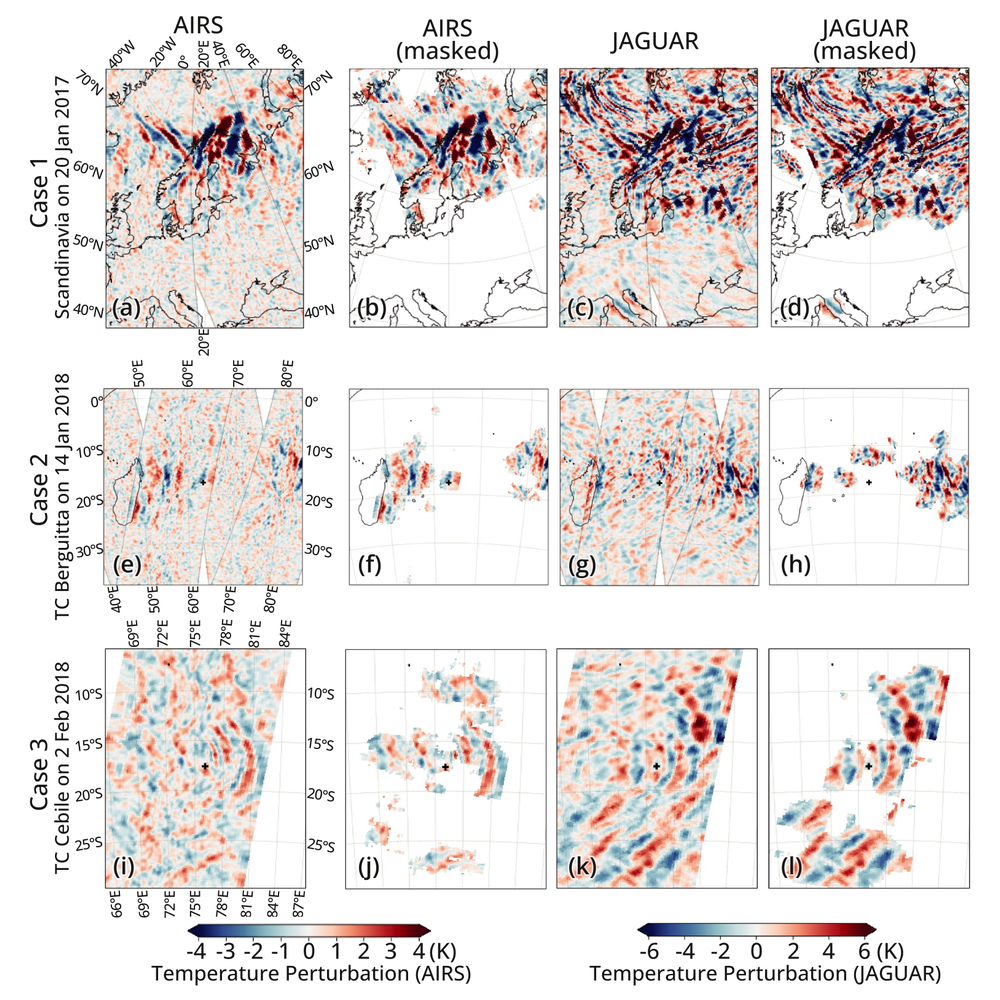 A Convolutional Neural Network for the Detection of Gravity Waves in Satellite Observations and Numerical SimulationsGeophysical Research Letters, 2025A neural network trained on noisy satellite measurements also detects waves in smooth model output; comparisons show similar year-to-year variations but a more east–west-extended tropical wave belt in the model.
2022
- Nature
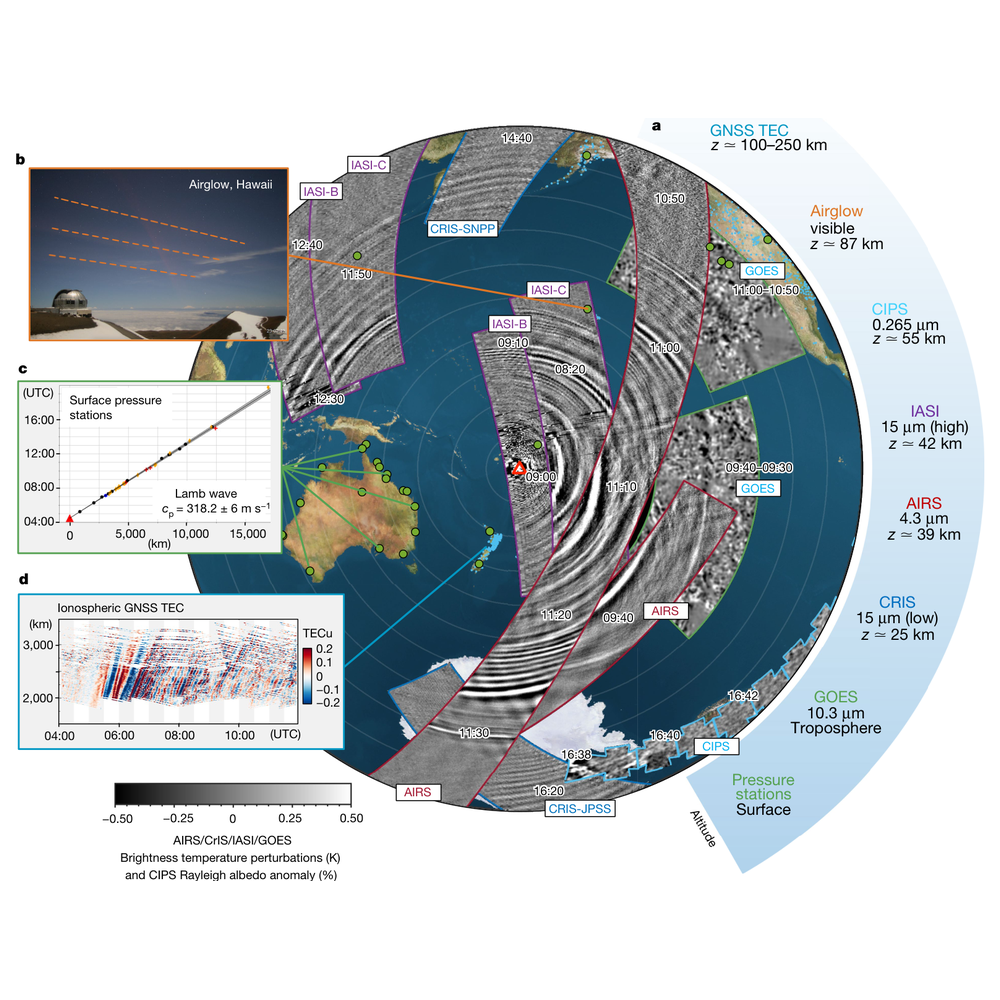 Surface-to-space atmospheric waves from Hunga Tonga–Hunga Ha’apai eruptionNature, 2022The Tonga eruption generated atmospheric waves observed from the surface to the ionosphere, including waves that circled the globe. Its volcanic plume subsequently produced gravity waves that dominated the Pacific stratosphere for over 12 hours.
2020
- GRL
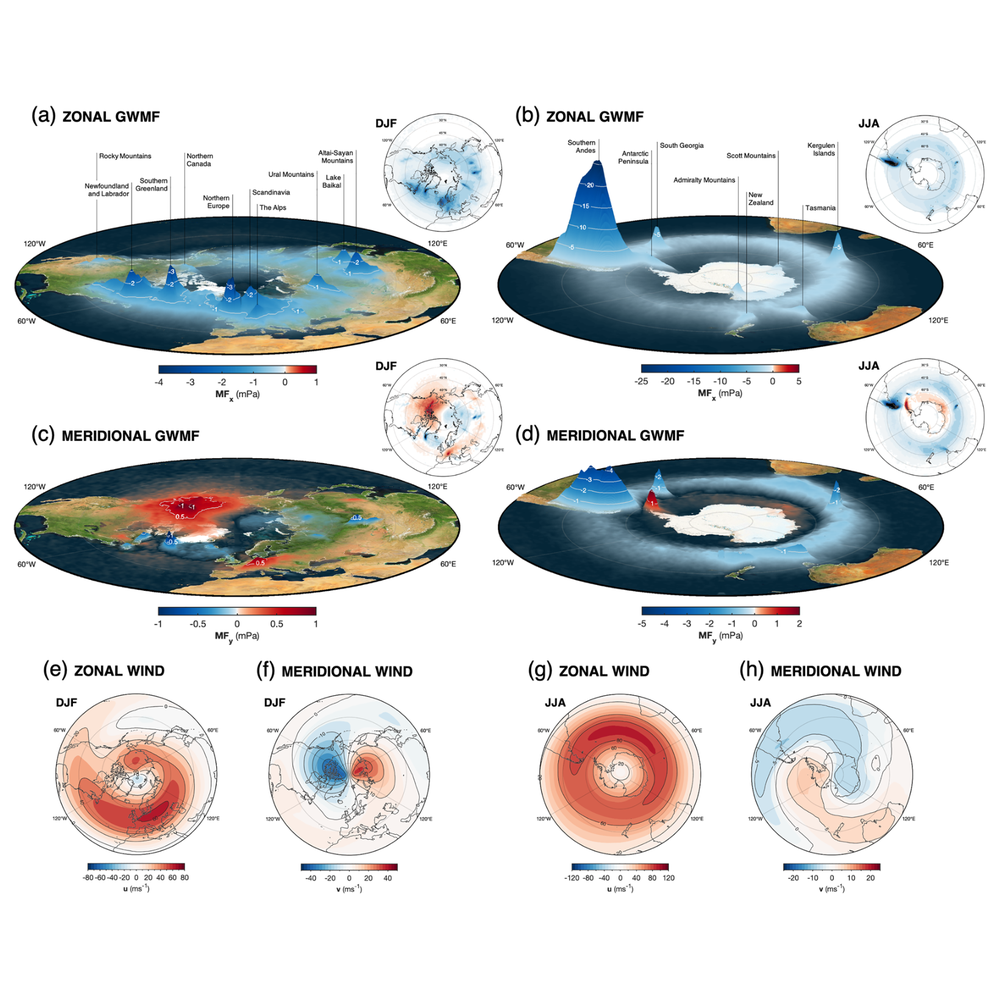 An 18-Year Climatology of Directional Stratospheric Gravity Wave Momentum Flux From 3-D Satellite ObservationsGeophysical Research Letters, 2020Eighteen years of satellite observations reveal gravity wave momentum transport converging towards 60° S during southern winter, with no Northern Hemisphere counterpart; sudden stratospheric warmings can reverse the transport.
2018
- ACP
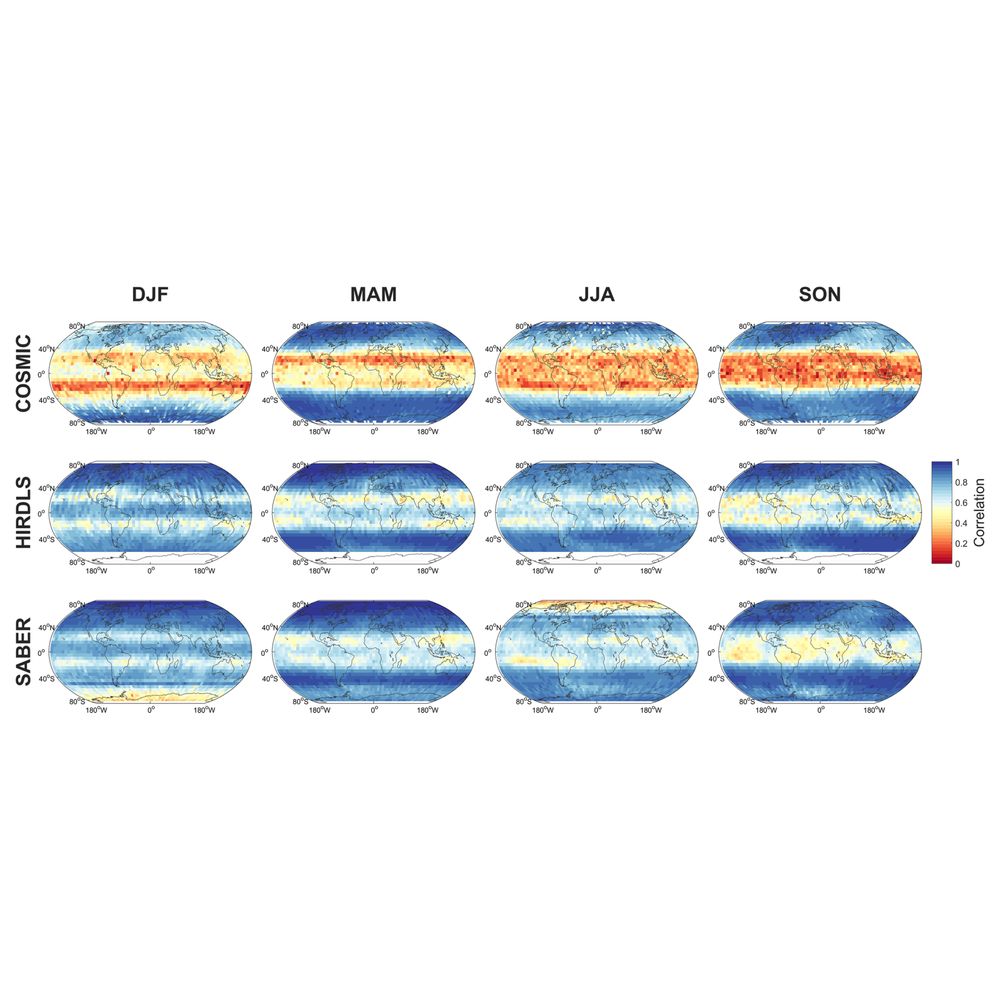 How well do stratospheric reanalyses reproduce high-resolution satellite temperature measurements?Atmospheric Chemistry and Physics, 2018Six widely used atmospheric reanalyses agree more closely with one another than with satellite measurements, including observations assimilated into the reanalyses; agreement with observations deteriorates above 30 km.
2017
- ACP
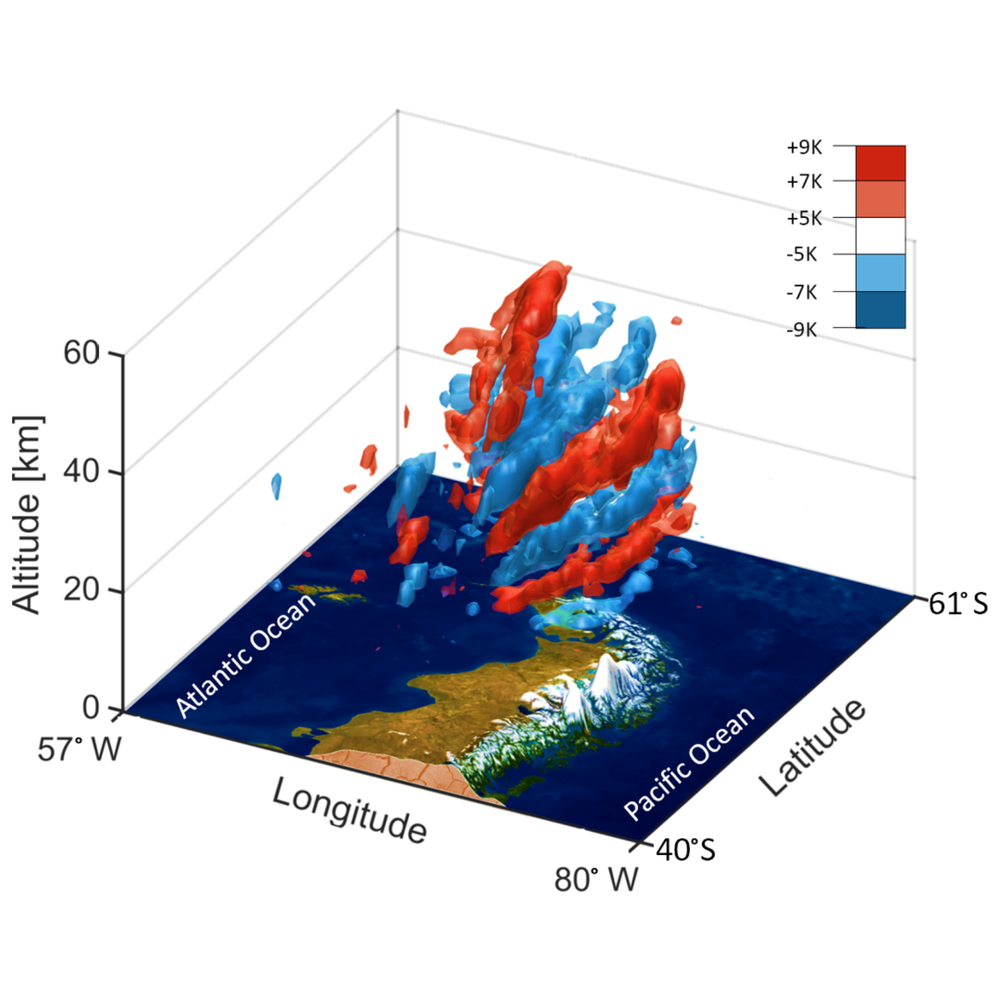 Exploring gravity wave characteristics in 3-D using a novel S-transform technique: AIRS/Aqua measurements over the Southern Andes and Drake PassageAtmospheric Chemistry and Physics, 2017A 3-D analysis of satellite temperatures retrieves the propagation speeds and momentum flux directions of individual gravity waves, identifying intense events over the Southern Andes with fluxes reaching 80–100 mPa.
2016
- GRL
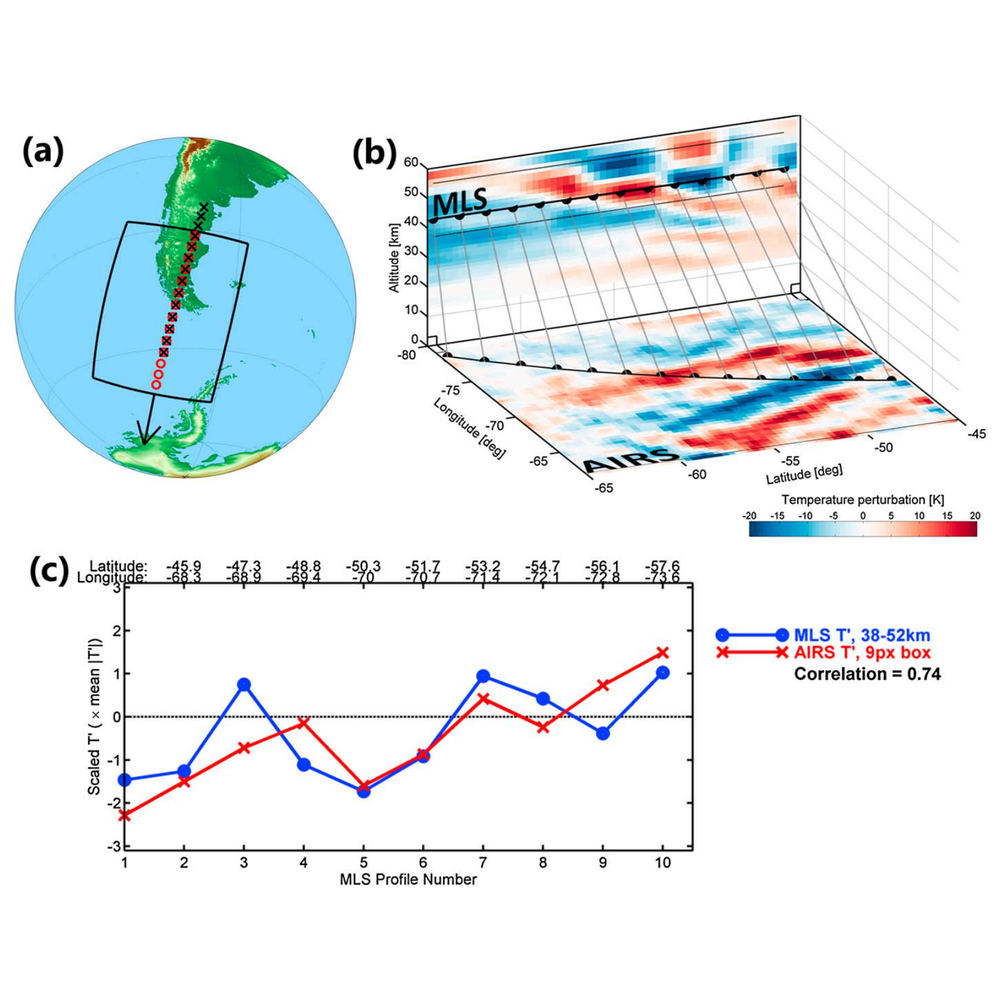 Combining AIRS and MLS Observations for Three-Dimensional Gravity Wave MeasurementGeophysical Research Letters, 2016Combining AIRS and MLS makes it possible to measure gravity wave momentum transport in three dimensions without assuming a mountain source, using more than a million nearly coincident satellite observations.
- AMT
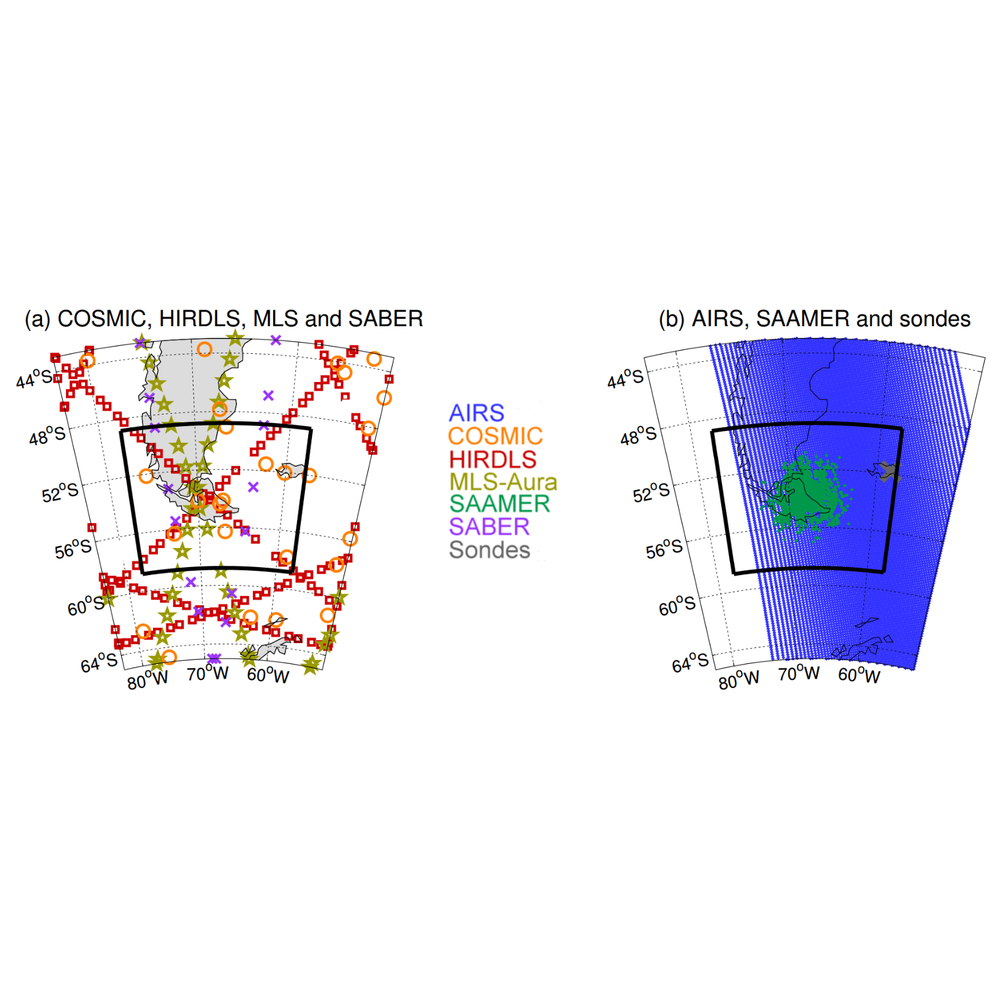 Multi-instrument gravity-wave measurements over Tierra del Fuego and the Drake Passage – Part 1: Potential energies and vertical wavelengths from AIRS, COSMIC, HIRDLS, MLS-Aura, SAAMER, SABER and radiosondesAtmospheric Measurement Techniques, 2016Three satellite limb sounders show correlations exceeding 0.8 in their gravity wave measurements, while AIRS and radiosondes are often uncorrelated with them, reflecting their sensitivity to different wave populations.
2015
- ACP
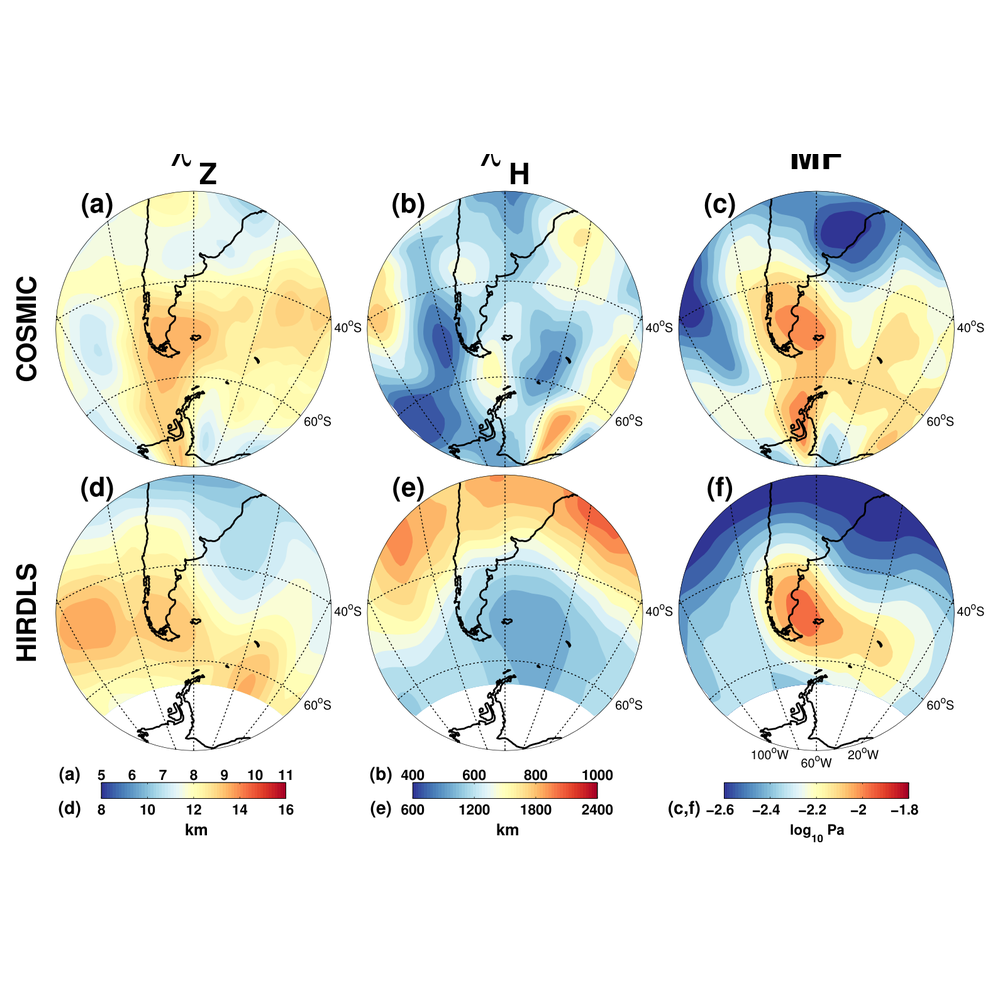 The southern stratospheric gravity wave hot spot: individual waves and their momentum fluxes measured by COSMIC GPS-ROAtmospheric Chemistry and Physics, 2015Gravity waves originating over the Southern Andes propagate south towards 60° S and east over the Southern Ocean, potentially contributing to the wave drag missing from atmospheric models.
2013
- JGR-A
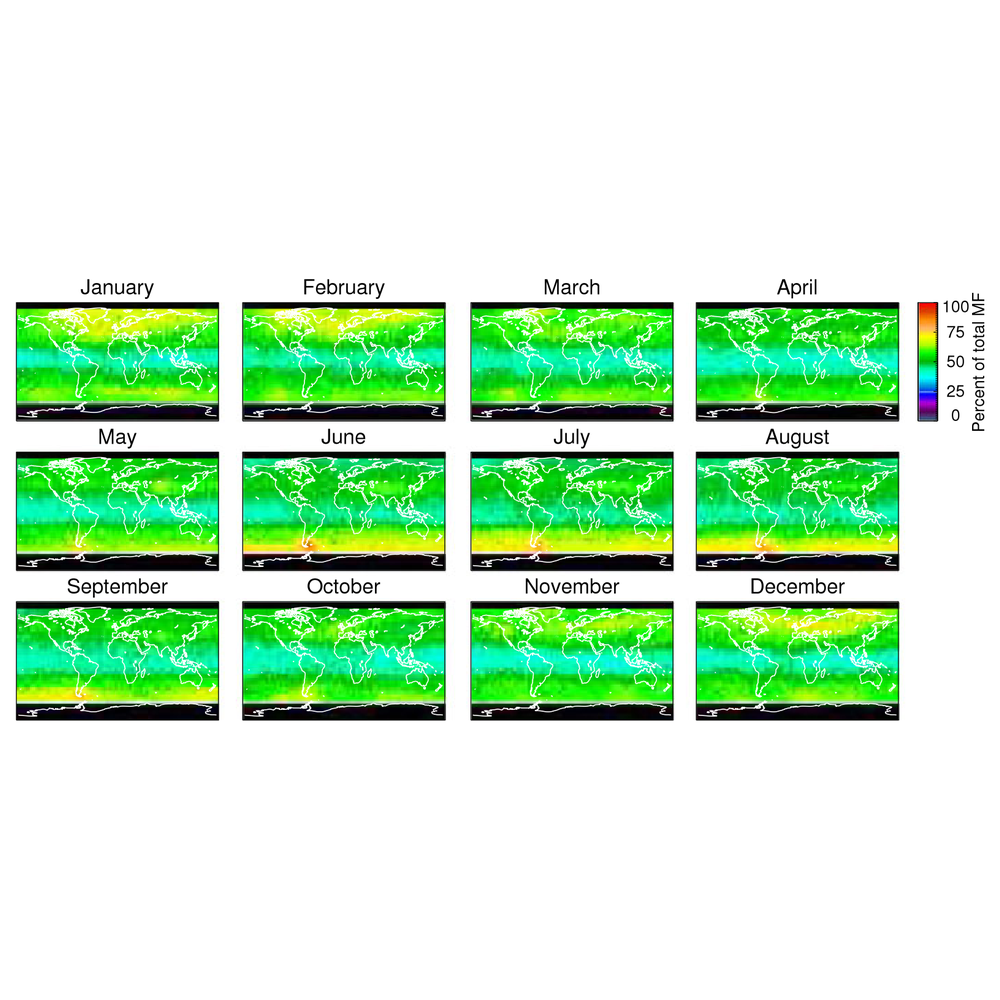 Global observations of gravity wave intermittency and its impact on the observed momentum flux morphologyJournal of Geophysical Research: Atmospheres, 2013Between 7% and 25% of observed gravity waves account for most of the geographical structure of the measured momentum flux distribution.
Other publications
The below complete list may be slightly out-of-date as it is updated manually. A (perhaps) more up-to-date list is also available on Google Scholar.
2026
- JSWSCDriving the Mid-Latitude Ionosphere from Below: A Statistical Study Using LOFARJournal of Space Weather and Space Climate, 2026Ionospheric disturbances occurred in 17% of 2,810 hours of radio observations and were associated with roughly four times as much nearby lightning; solar and geomagnetic activity were not their main drivers.
2025
- ACP
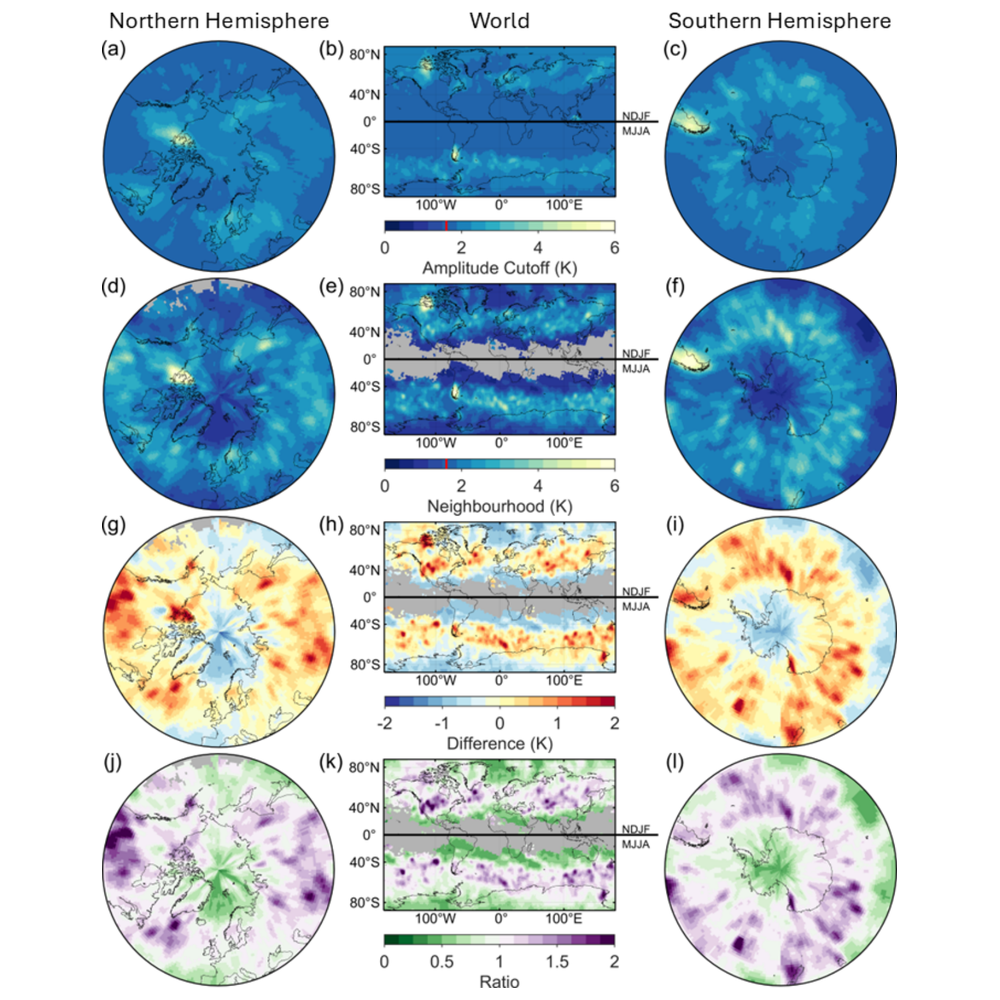 A Novel Identification Method for Stratospheric Gravity Waves in Nadir Viewing Satellite ObservationsAtmospheric Chemistry and Physics, 2025A new detection method identifies gravity waves missed by conventional amplitude thresholds, which exclude 35% of the regions detected by the new approach.
- ACP
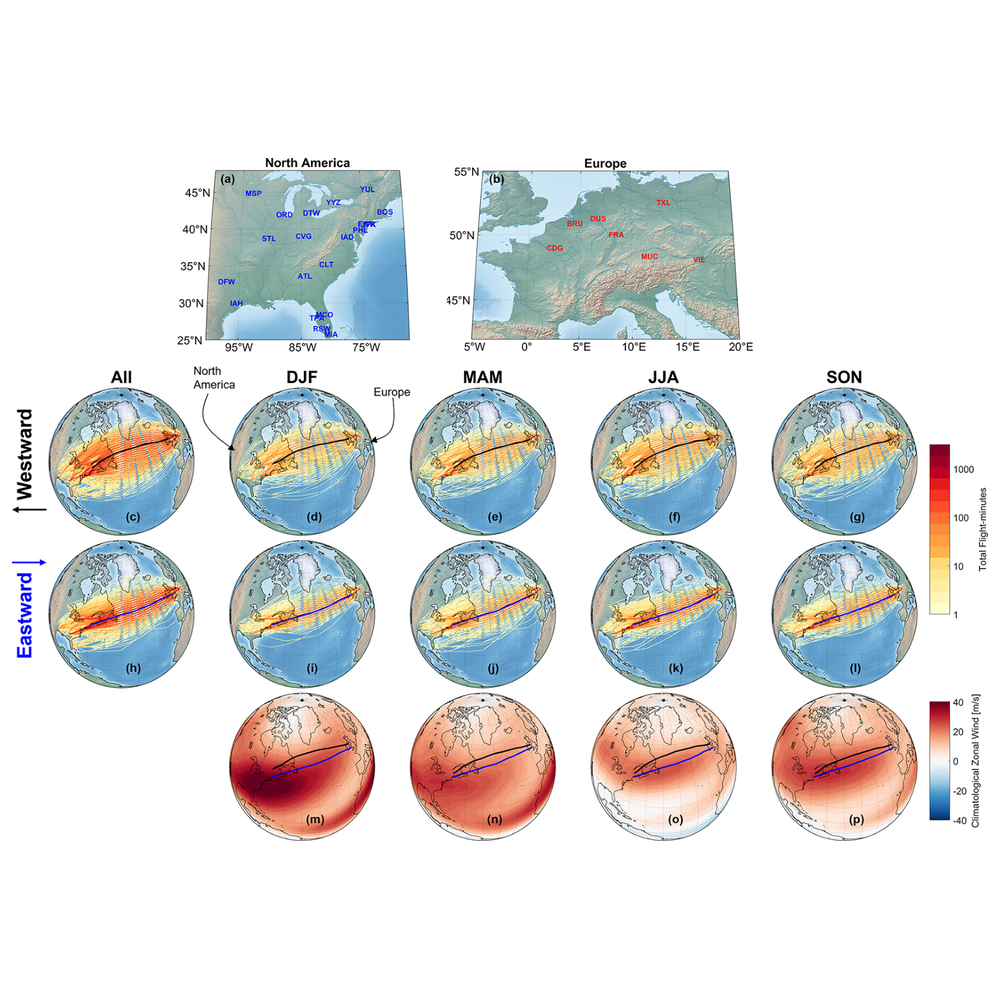 The influence of climate variability on transatlantic flight timesAtmospheric Chemistry and Physics, 2025During winter, changes in the North Atlantic Oscillation are associated with differences exceeding 80 minutes in eastbound transatlantic flight times; the effect largely cancels on round trips because westbound flights are affected in the opposite direction.
- AMT
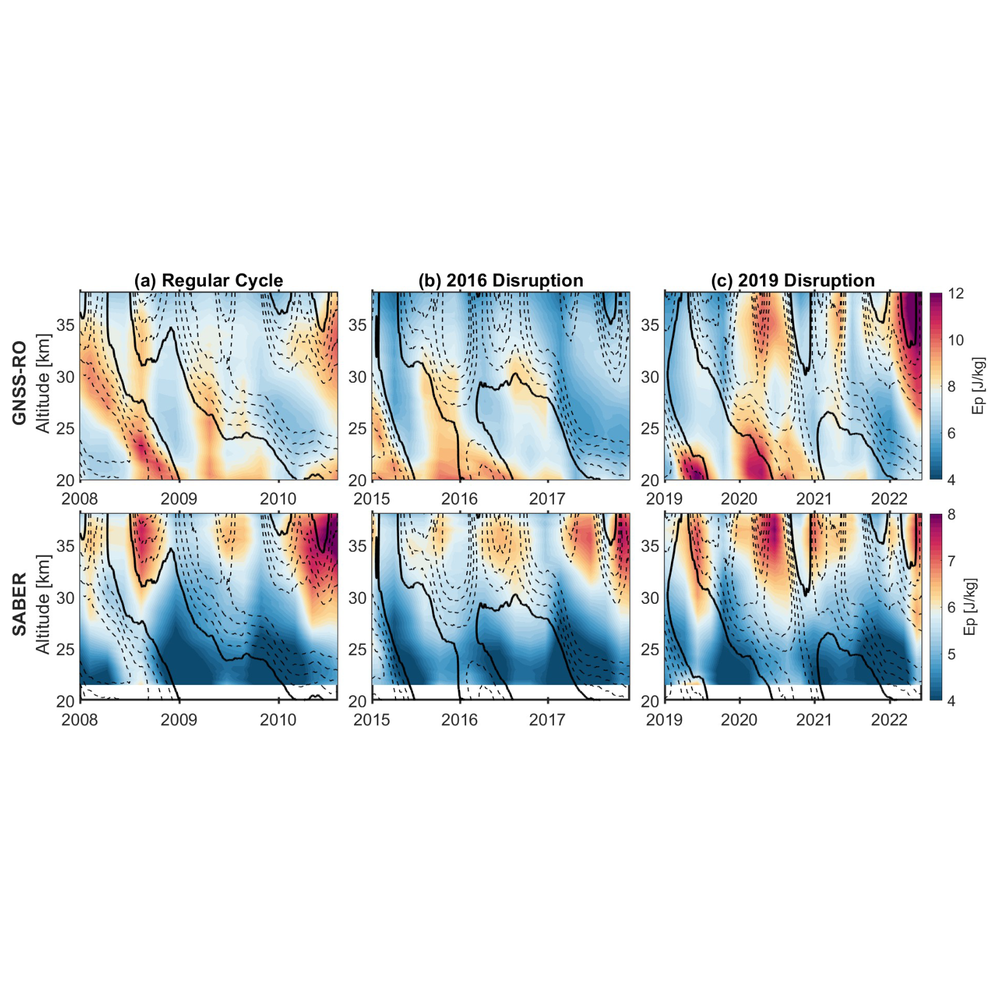 Stratospheric gravity waves in a post-limb sounder era: can GNSS-RO be used to extend the SABER QBO-driving record?Atmospheric Measurement Techniques, 2025GPS radio occultation detects much stronger gravity waves than SABER, but vertically smoothing its measurements brings the two into close agreement, allowing their long-term records to be combined.
- JGR-A
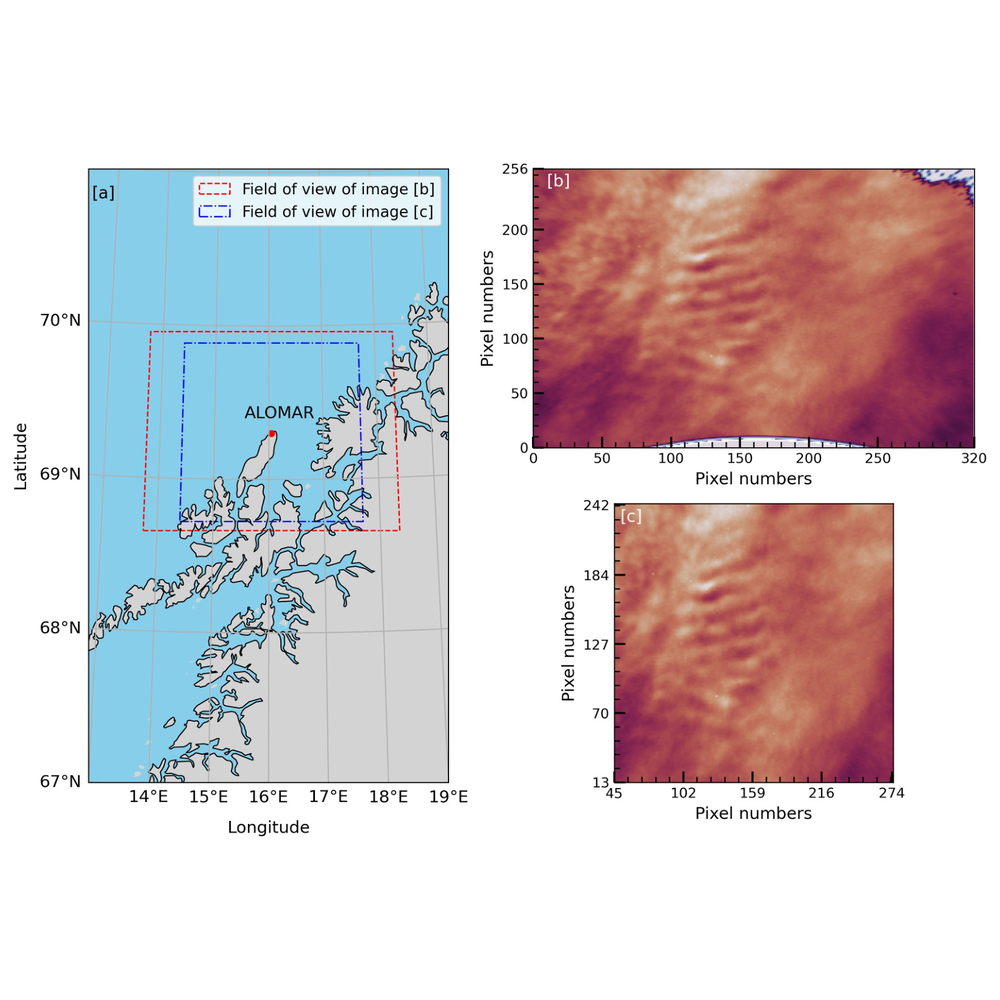 Gravity Wave Variability in the Arctic Mesosphere in Relation with the Stratospheric Polar VortexJournal of Geophysical Research: Atmospheres, 2025During the stronger Arctic polar vortex of January 2015, gravity wave activity near 87 km was two to three times weaker than in 2014 or 2016, with different preferred propagation directions.
- GRL
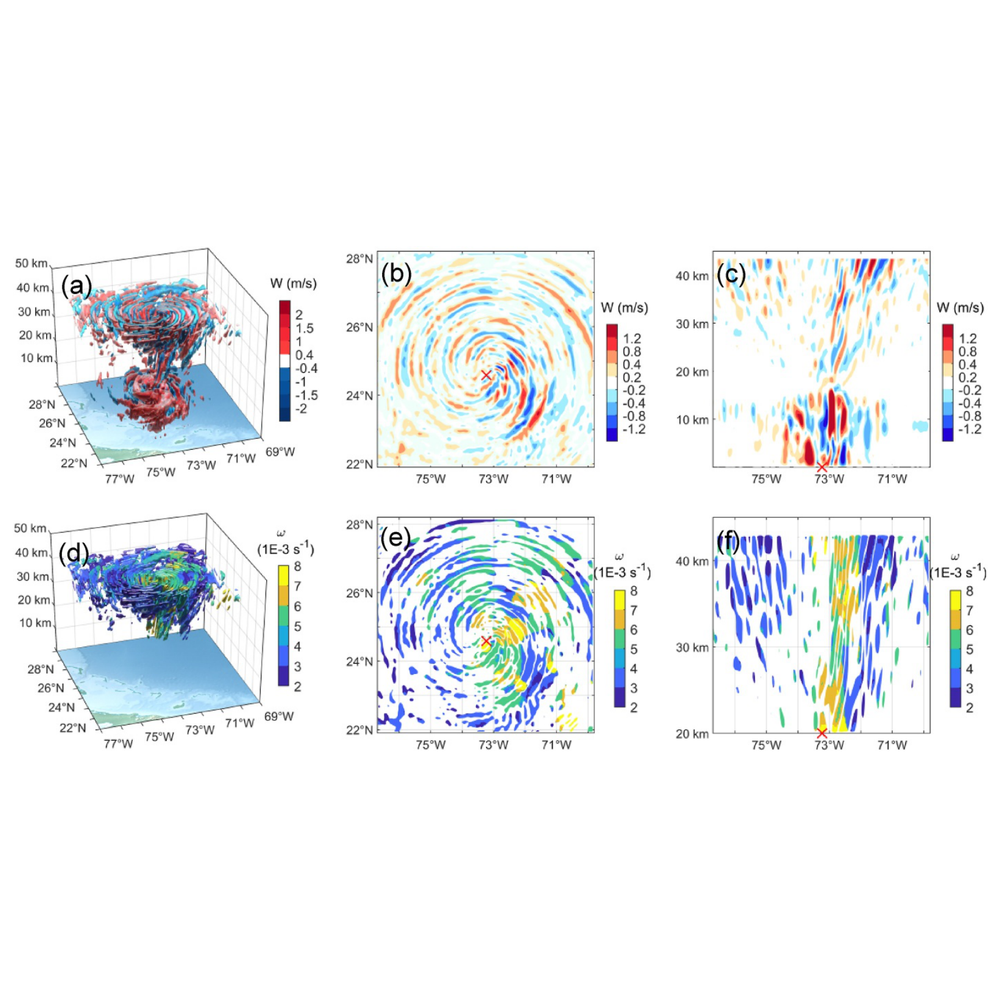 Mechanisms Linking Stratospheric Gravity Wave Activity to Hurricane Intensification: Insights from Hurricane JoaquinGeophysical Research Letters, 2025Simulations of Hurricane Joaquin show that gravity waves can reach the middle stratosphere within 20 minutes, creating a detectable signal before peak intensity that could help anticipate hurricane strengthening.
- JGR-A
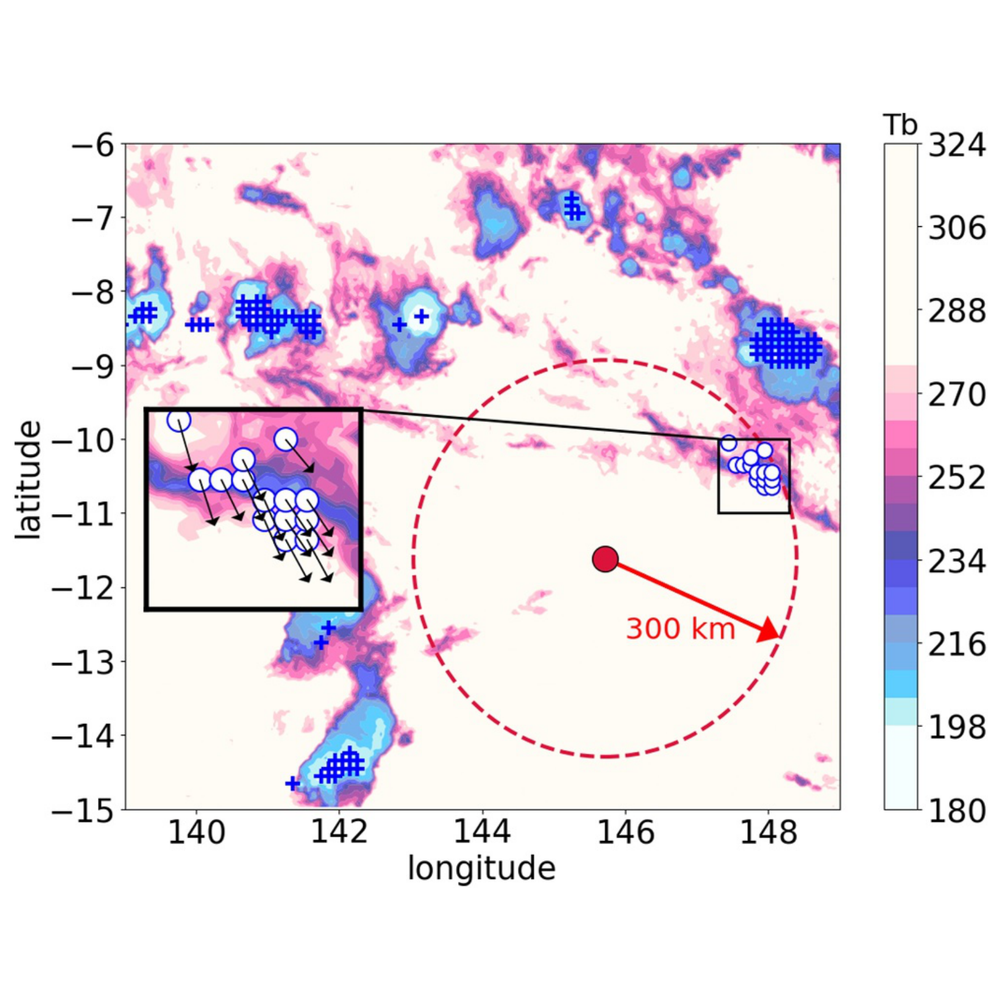 Observation of gravity waves generated by convection and the ’moving mountain’ mechanism during Stratéole-2 campaigns and their impact on the QBOJournal of Geophysical Research: Atmospheres, 2025Balloon observations show that convective gravity waves can provide up to two-thirds of the forcing of the QBO below 50 hPa, including up to 10% from a “moving mountain” mechanism absent from climate models.
- WCD
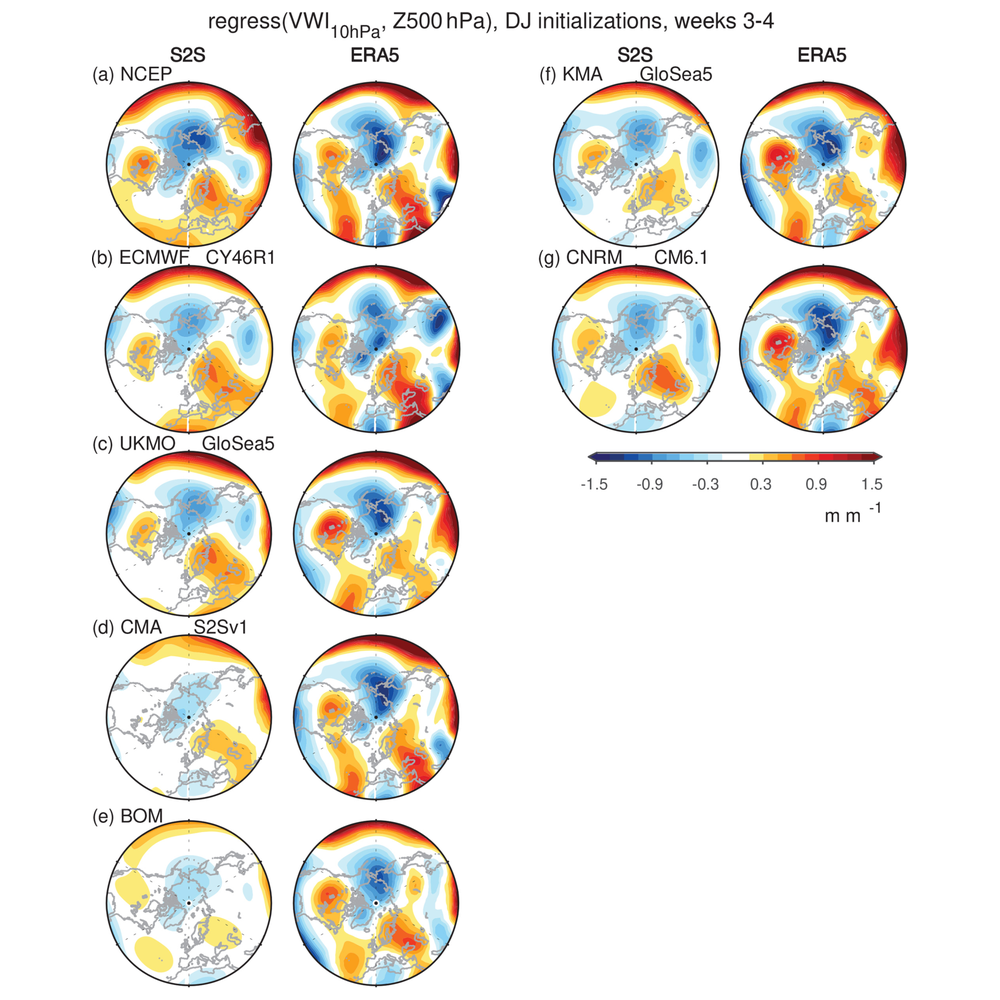 A process-based evaluation of biases in extratropical stratosphere-troposphere coupling in subseasonal forecast systemsWeather and Climate Dynamics, 2025Across 22 subseasonal forecast systems, most underestimate how strongly the troposphere influences the Northern Hemisphere stratosphere, while generally overestimating the reverse influence in the Southern Hemisphere.
2024
- JGR-A
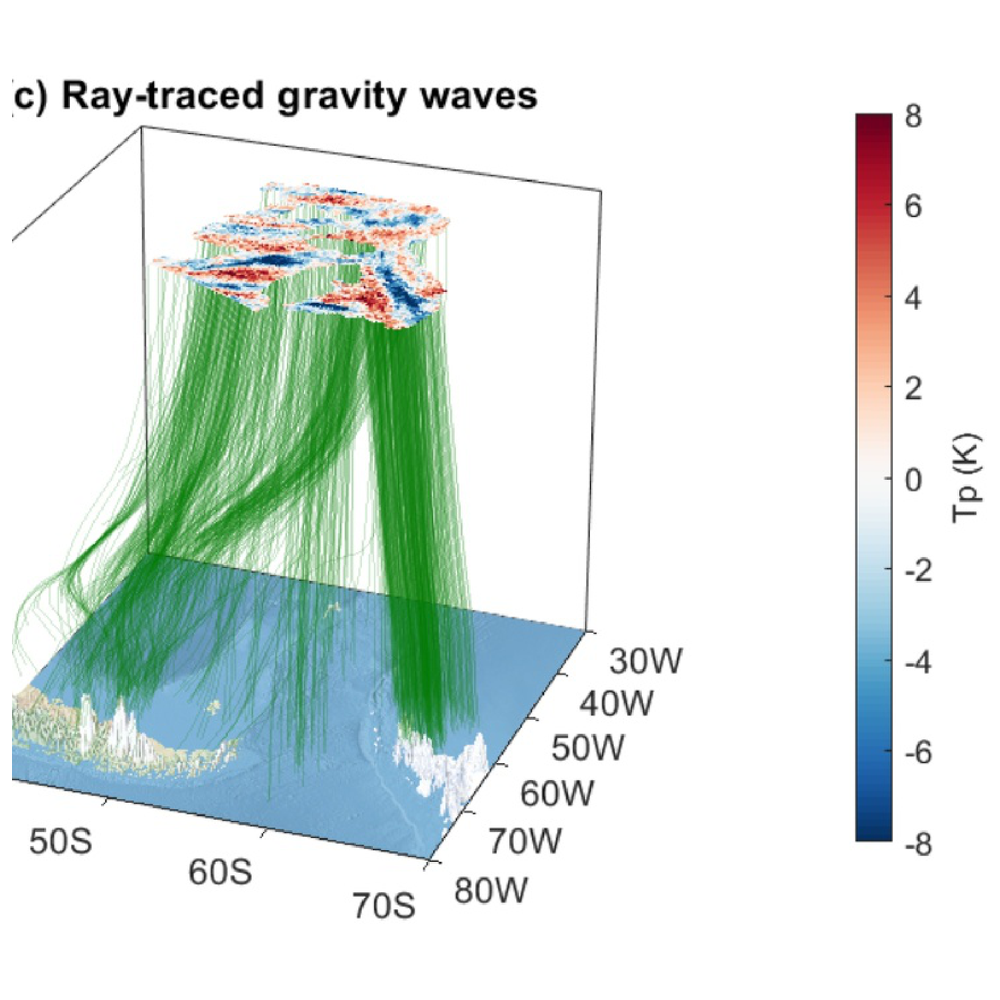 Exploring sources of gravity waves in the southern winter stratosphere through ray-tracing 3-D satellite observationsJournal of Geophysical Research: Atmospheres, 2024Tracing over 14 million wave paths from satellite observations suggests that mountains supply only around 5–35% of gravity wave momentum flux near 60° S in winter, with waves from many sources converging over the Southern Ocean.
- JGR-A
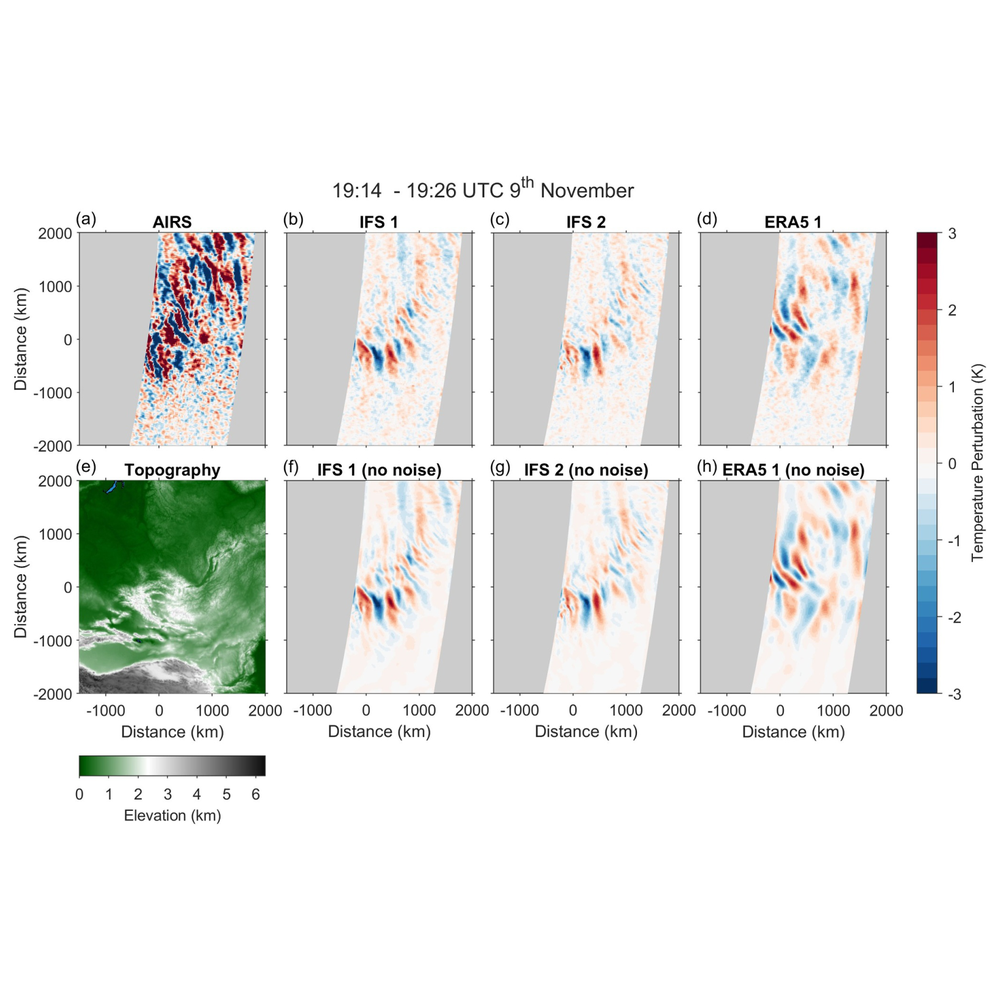 Comparing Gravity Waves in a Kilometre-Scale Run of the ECMWF IFS to AIRS Satellite Observations and ERA5Journal of Geophysical Research: Atmospheres, 2024Increasing model resolution to 1.4 km does not eliminate substantial gravity wave biases: the ECMWF simulation captures where waves occur much better than their amplitudes or momentum fluxes.
- JGR-S
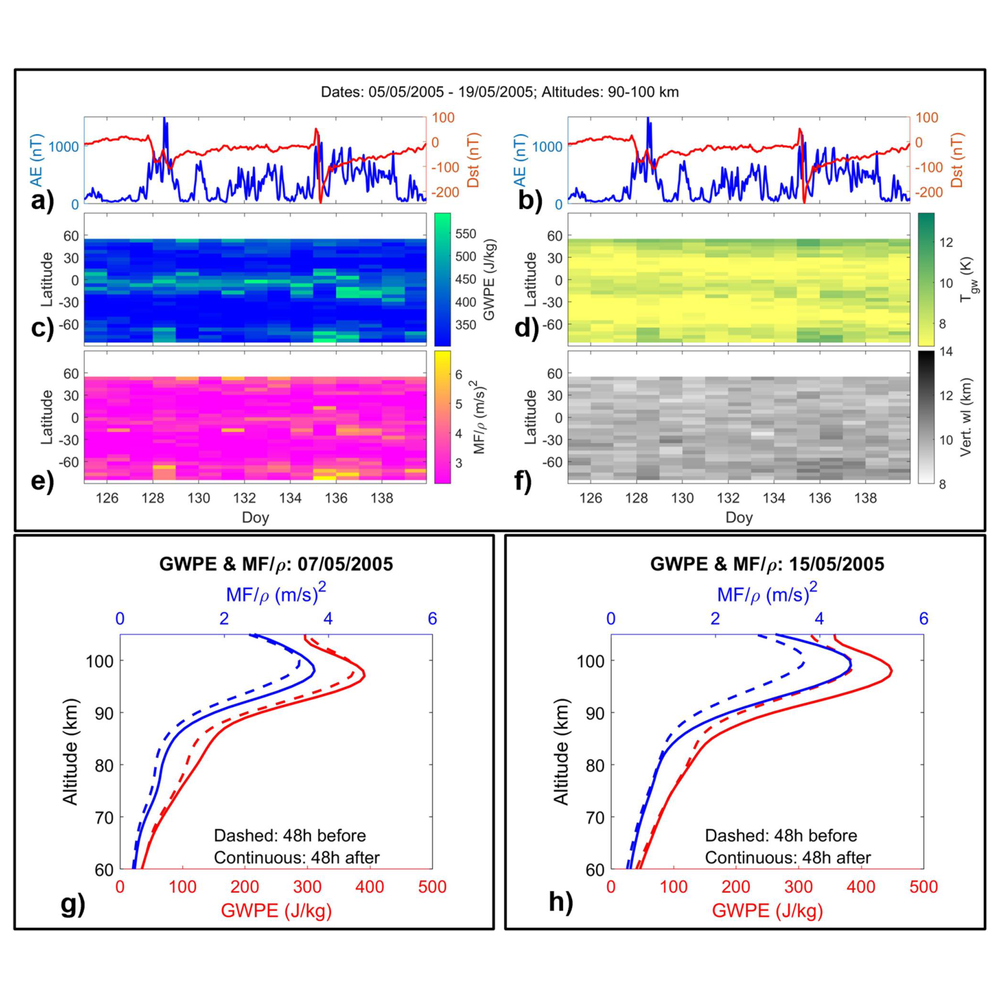 Observations of mesospheric gravity waves generated by geomagnetic activityJournal of Geophysical Research: Space Physics, 2024Gravity waves generated by geomagnetic disturbances can propagate downwards to approximately 80 km altitude, with the clearest responses at high latitudes and outside summer.
- ACP
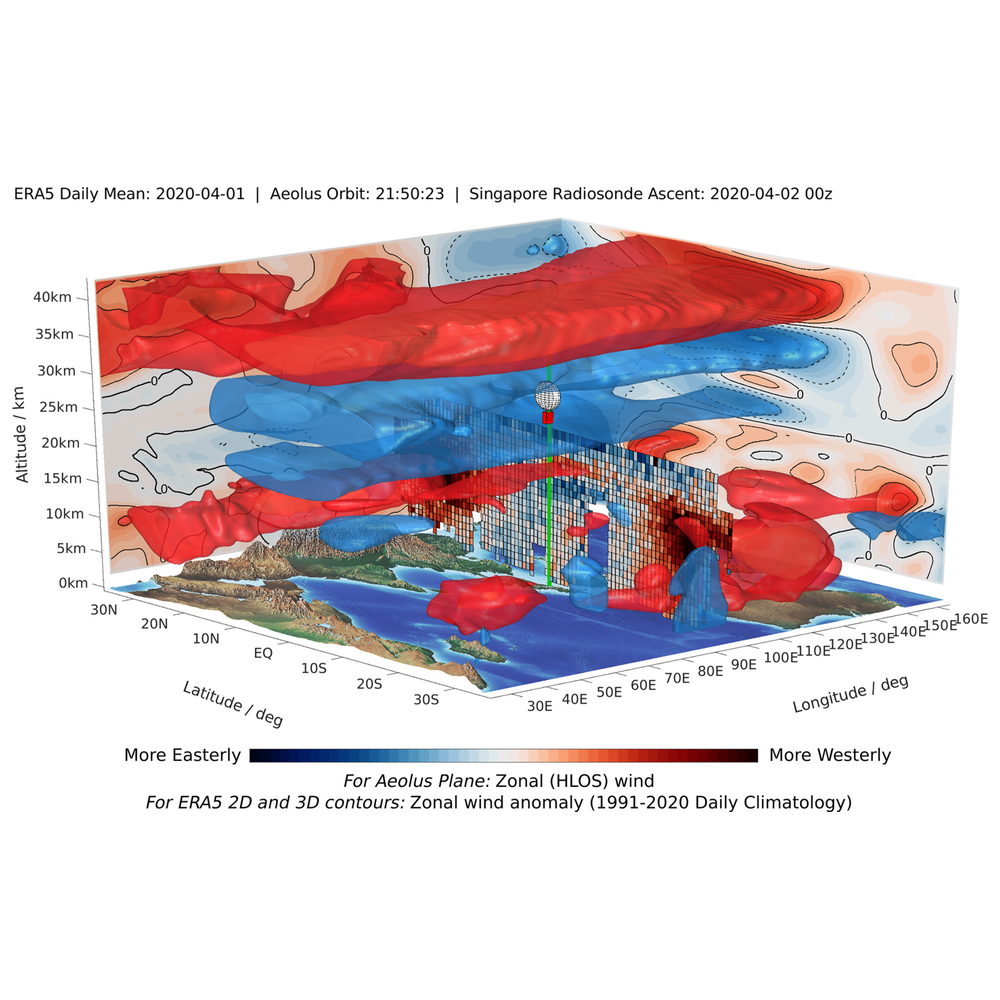 Aeolus wind lidar observations of the 2019/2020 Quasi-Biennial Oscillation disruption with comparison to radiosondes and reanalysisAtmospheric Chemistry and Physics, 2024Satellite wind measurements place the onset of the 2019–2020 QBO disruption five days earlier than ERA5, with stronger equatorial wave activity and sharper wind shear than the reanalysis represents.
- JGR-A
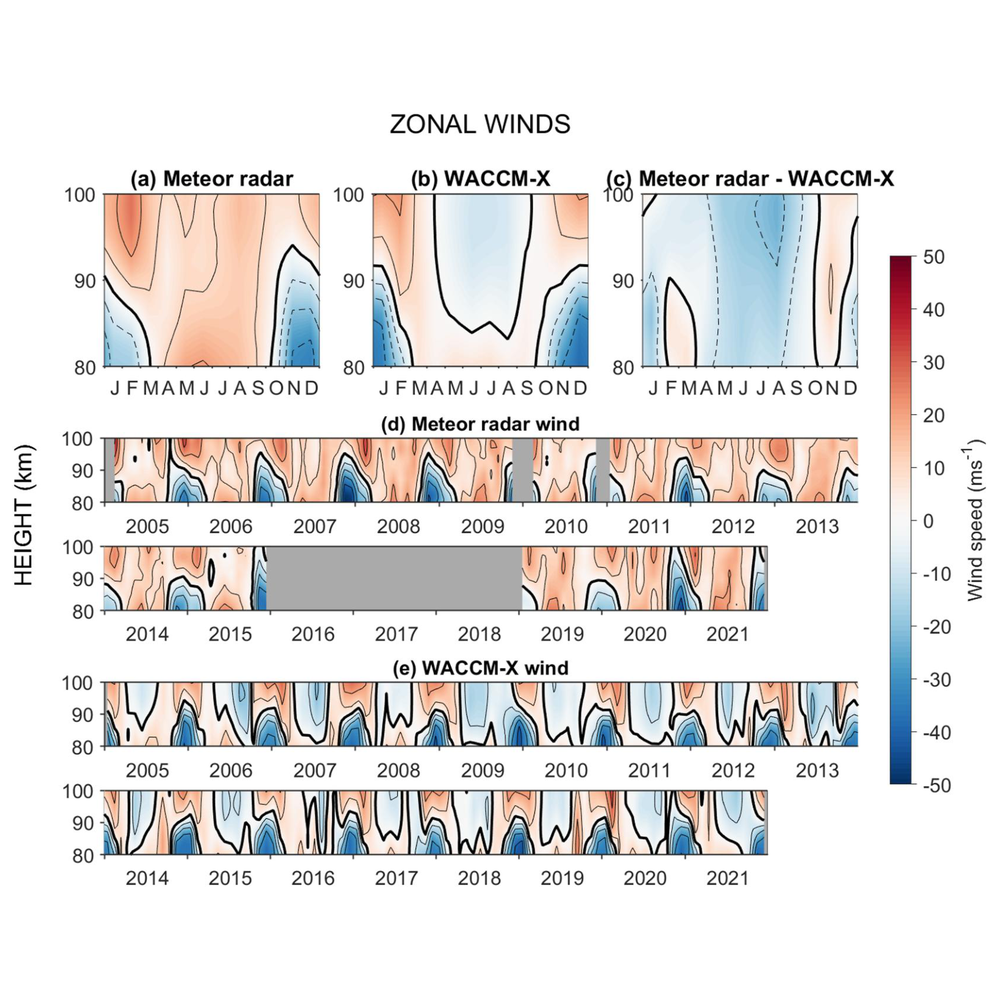 Seasonal and interannual variability of winds in the Antarctic mesosphere and lower thermosphere over Rothera during 2005-2021 in meteor radar observations and WACCM-XJournal of Geophysical Research: Atmospheres, 2024Seventeen years of Antarctic radar measurements show that WACCM-X predicts the opposite direction to observed winter east–west winds and summer north–south winds near 90 km altitude.
- JAS
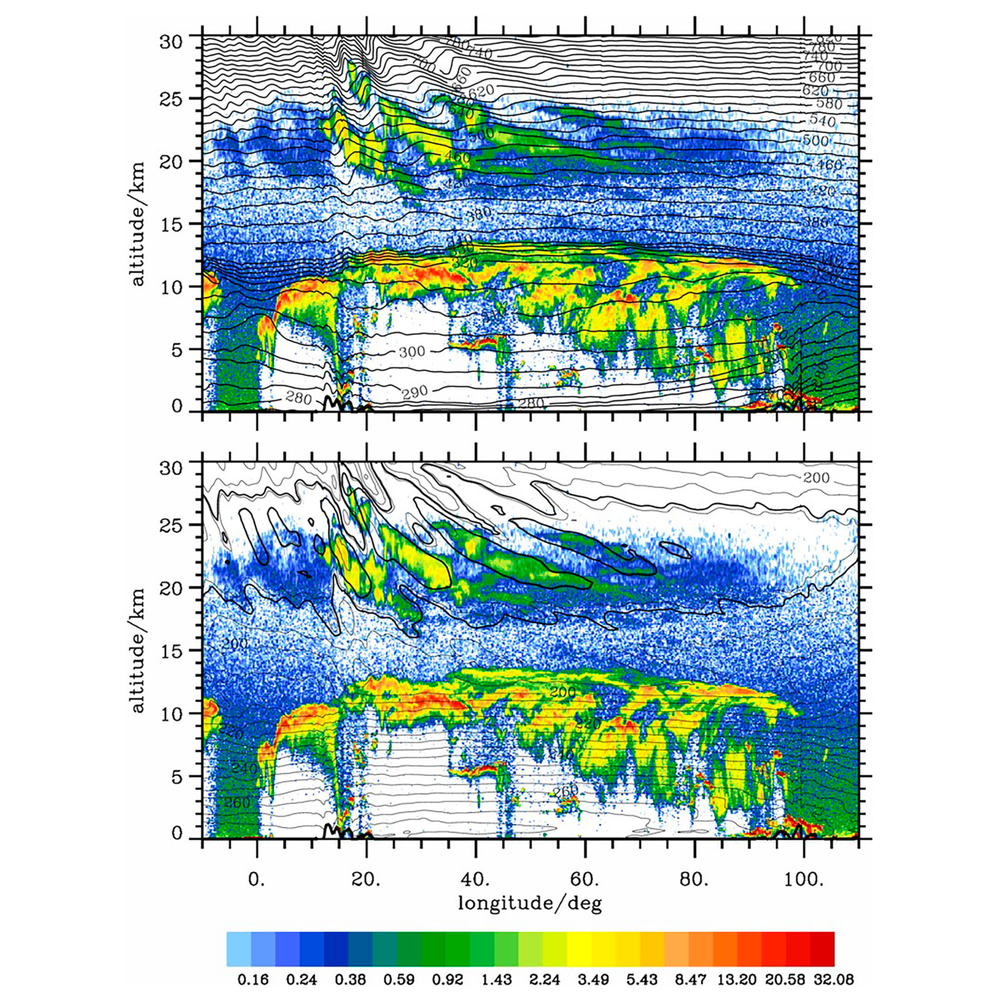 Atmospheric Gravity Waves: Processes and ParameterizationJournal of the Atmospheric Sciences, 2024This review finds that the gravity wave processes represented in current climate and weather models remain inaccurate, introducing uncertainties in projections of atmospheric change, and identifies research priorities for improving them.
2023
- Icarus
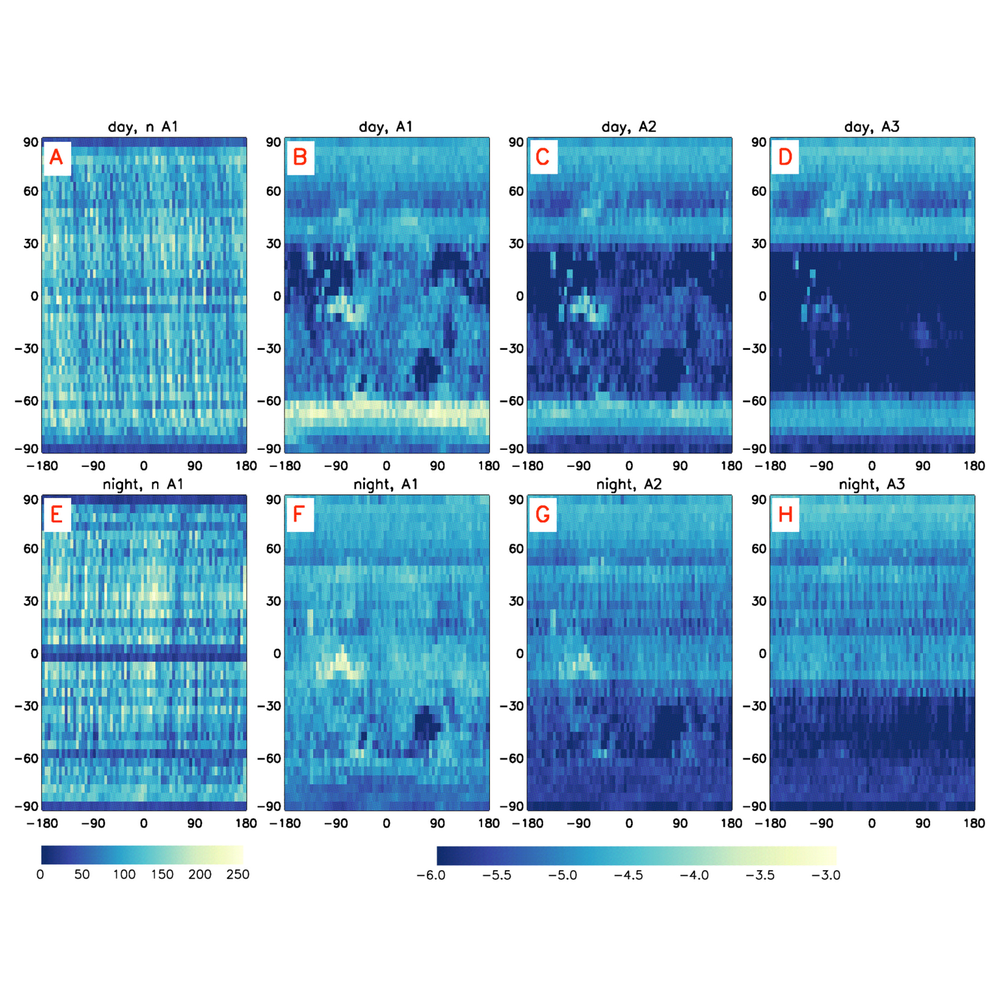 Seasonal Variability of Gravity Wave Activity in Mars’s Lower Atmosphere from MGS–TES Nadir ObservationsIcarus, 2023Satellite measurements show that gravity wave activity in Mars’s lower atmosphere is strongest near rough terrain and weakens substantially during global dust storms, pointing to a major role for mountain-generated waves.
- JGR-A
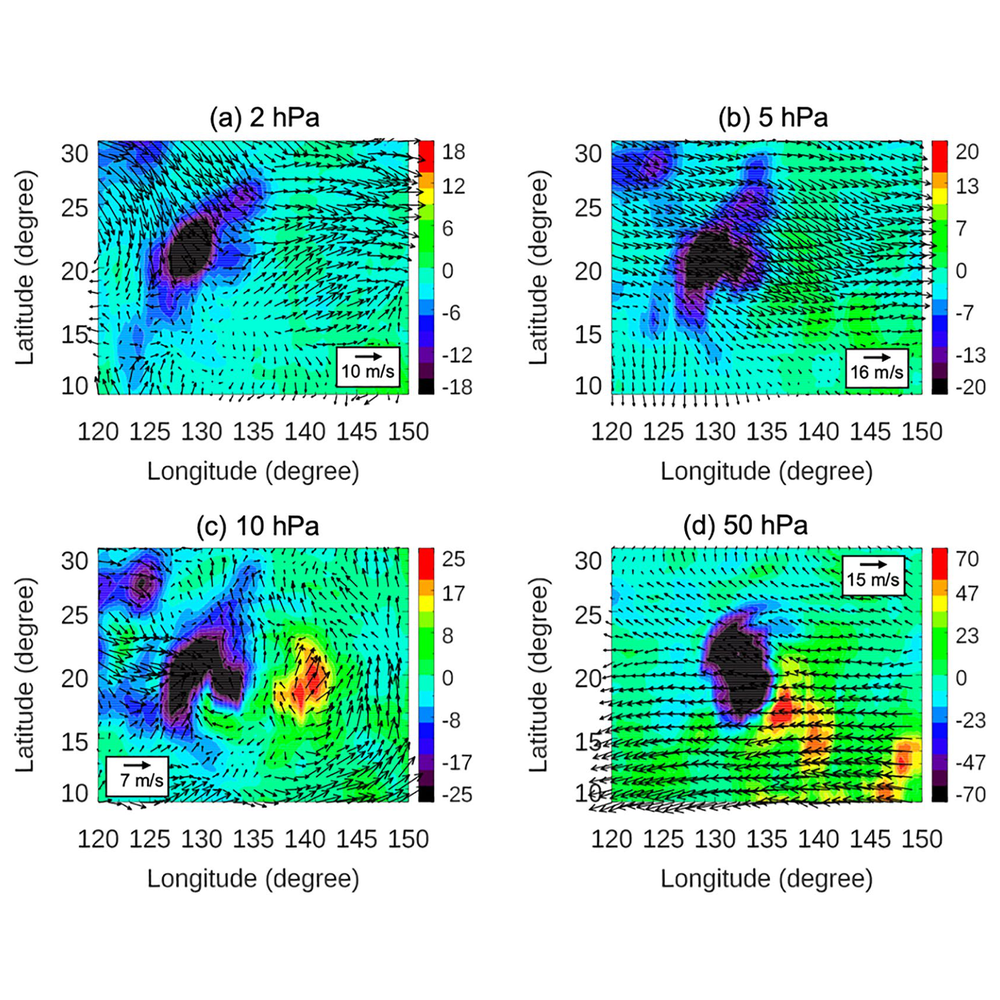 Observations of Typhoon-Generated Gravity Waves from the CIPS and AIRS instruments and comparison to the high-resolution ECMWF modelJournal of Geophysical Research: Atmospheres, 2023Concentric gravity waves from Typhoon Yutu were observed at both 30–40 and 50–55 km altitude and reproduced by models, but across five category-five typhoons their amplitudes depended more on background winds than storm strength.
- JGR-A
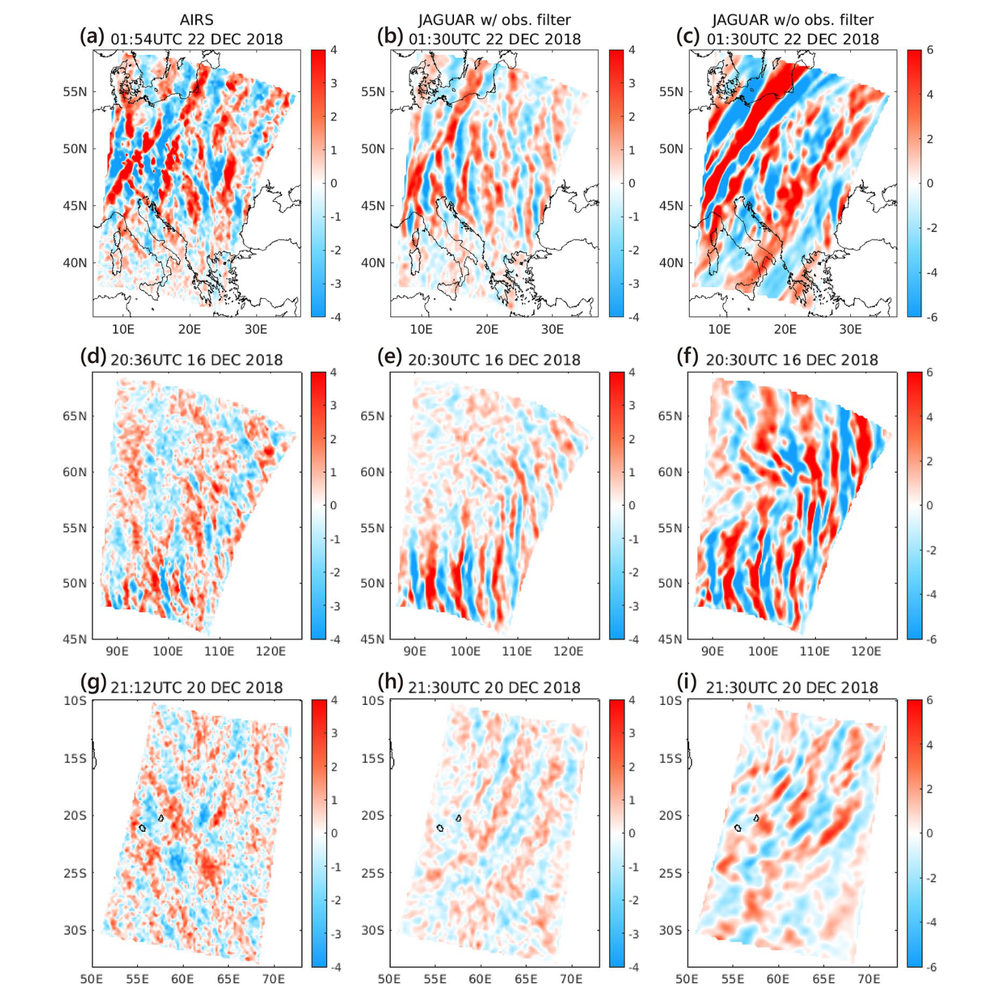 A Comparison of Stratospheric Gravity Waves in a High-Resolution General Circulation Model with 3-D Satellite ObservationsJournal of Geophysical Research: Atmospheres, 2023A high-resolution global model reproduces much of the gravity wave activity seen by satellites during a sudden stratospheric warming, but underestimates tropical waves, probably because it represents their convective sources inadequately.
- PSJA multiannual record of convective instability in Mars’s middle atmosphere from the Mars Climate SounderThe Planetary Science Journal, 2023More than seven Martian years of satellite observations show that convective instability in Mars’s middle atmosphere is usually rare, but can become ten times more likely in some regions during dust storms, potentially greatly increasing gravity wave drag.
- ERL
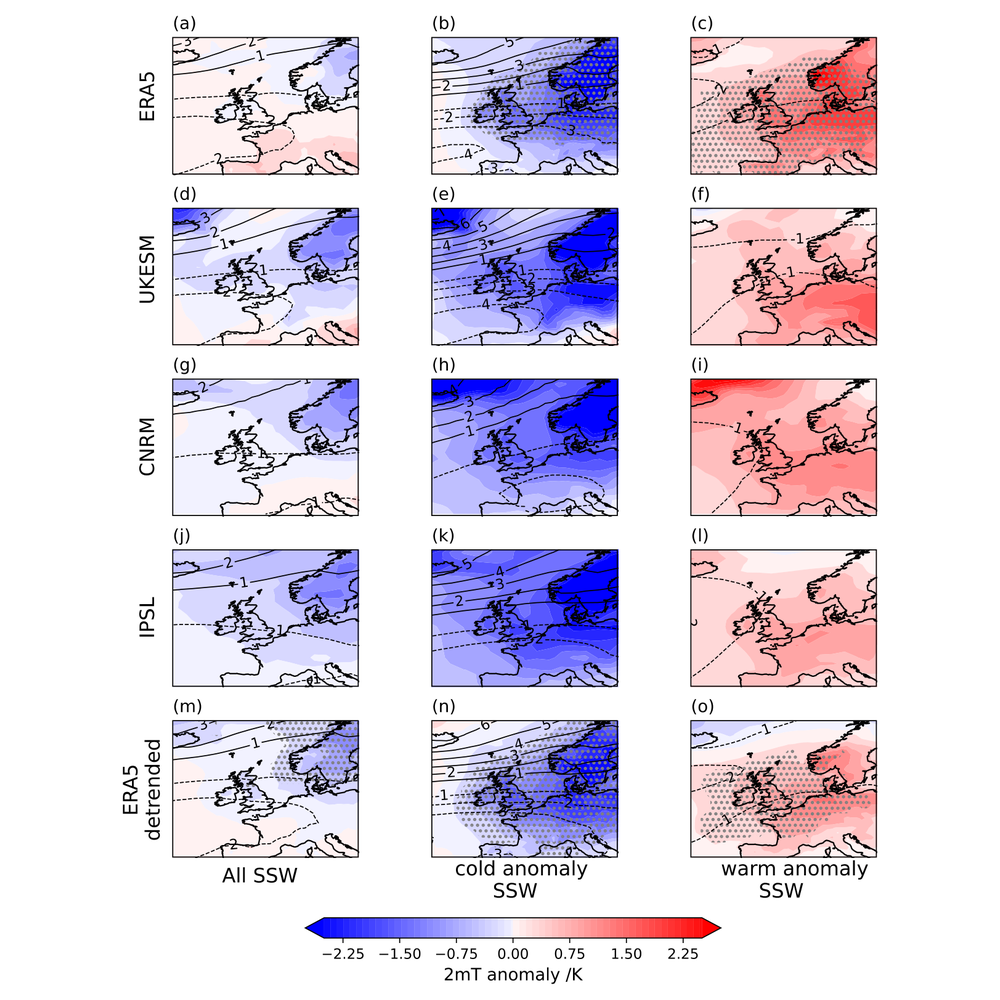 Surface hazards following sudden stratospheric warming eventsEnvironmental Research Letters, 2023Sudden stratospheric warmings are associated with colder European winters on average, but only around 45% are followed by both colder conditions in Britain and central Europe and the associated changes in atmospheric circulation.
- JAS
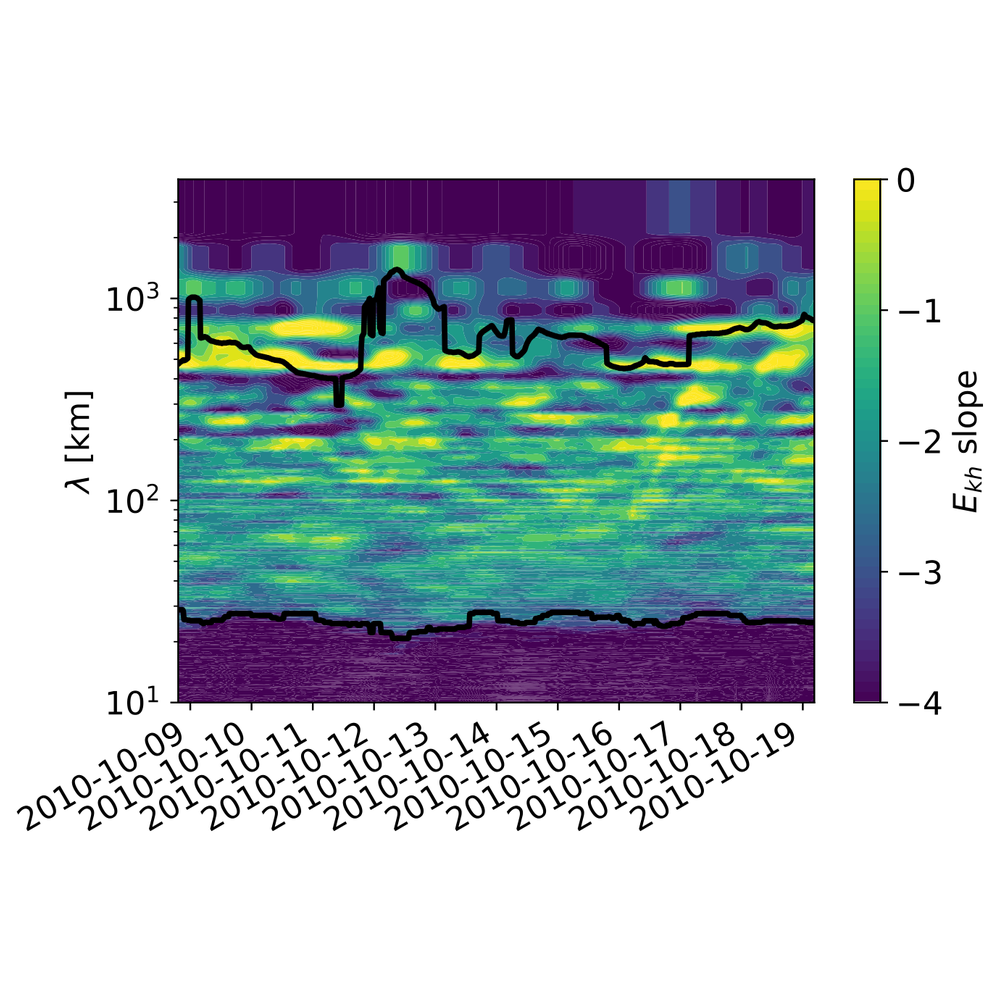 Sensitivity of Mountain Wave Drag Estimates on Separation Methods and Proposed ImprovementsJournal of the Atmospheric Sciences, 2023Calculated mountain wave drag can change substantially depending on how waves are separated from background winds, particularly for horizontally propagating waves; two new methods use the wave spectrum to reduce dependence on arbitrary filtering choices.
- JGR-P
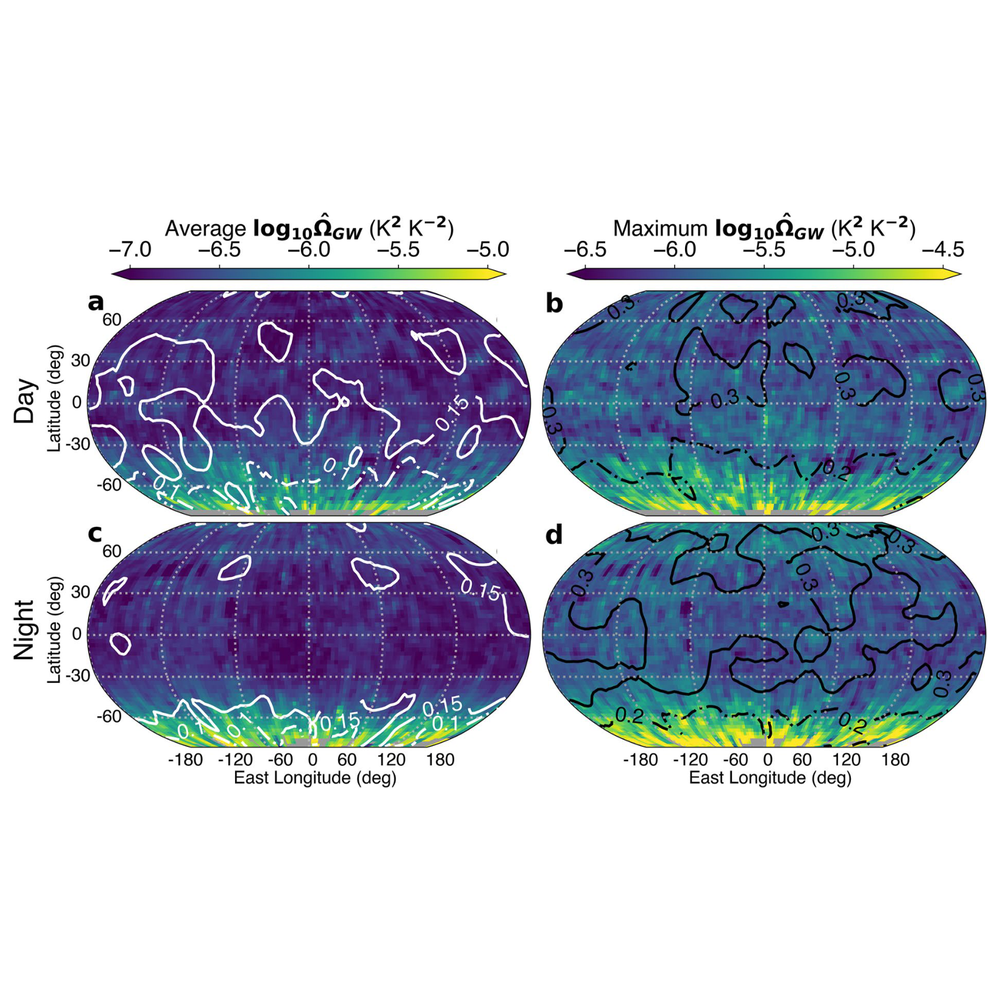 Martian Gravity Waves Observed by the Thermal Emission Imaging System (THEMIS) During Northern SummerJournal of Geophysical Research: Planets, 2023Eight Martian years of thermal images reveal gravity waves at around 25 km altitude in all horizontal orientations, with the strongest activity south of 60° S and little activity in the northern hemisphere during northern summer.
- JGR-S
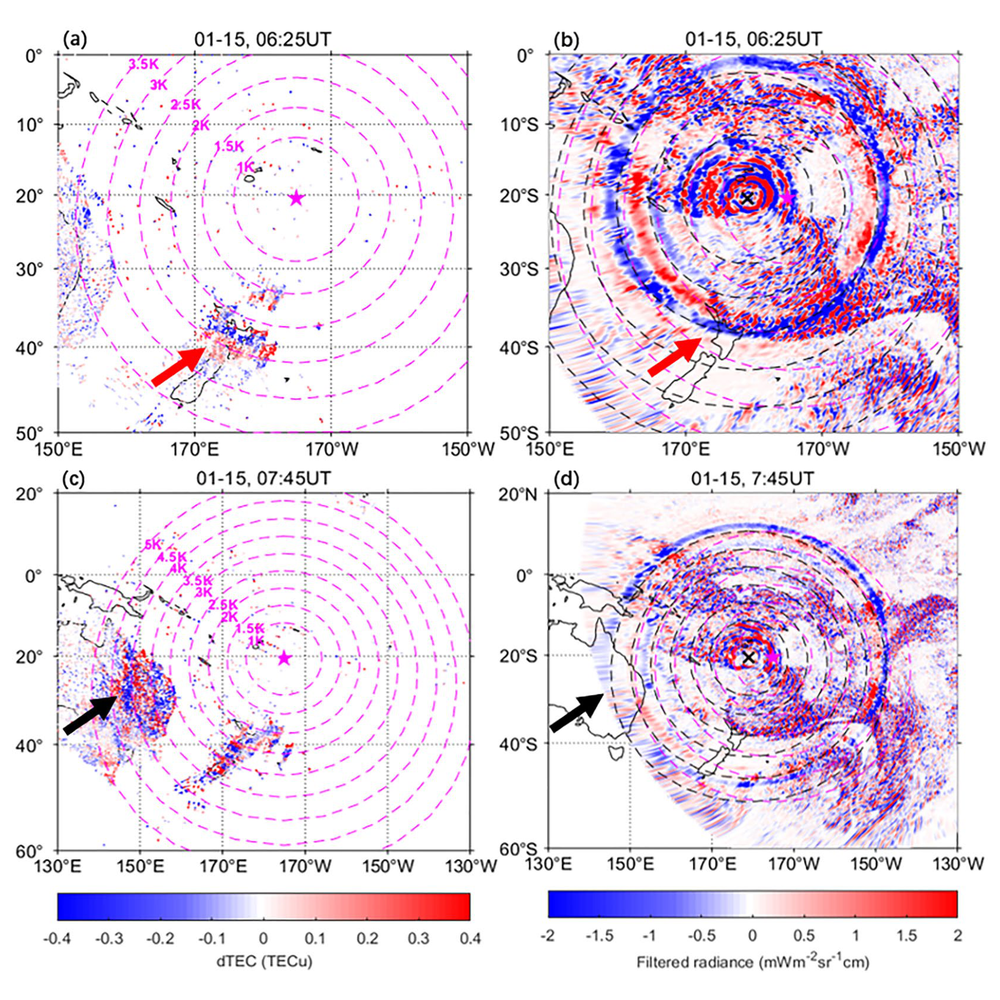 Concentric Traveling Ionospheric Disturbances (CTID) Triggered by the 2022 Tonga Volcanic EruptionJournal of Geophysical Research: Space Physics, 2023The Tonga eruption launched two distinct disturbances through the ionosphere: a fast acoustic wave travelling up to 5,000 km at 610–880 m/s, and a slower wave linked to the atmospheric Lamb wave that persisted for around nine hours.
- npj Microgravity
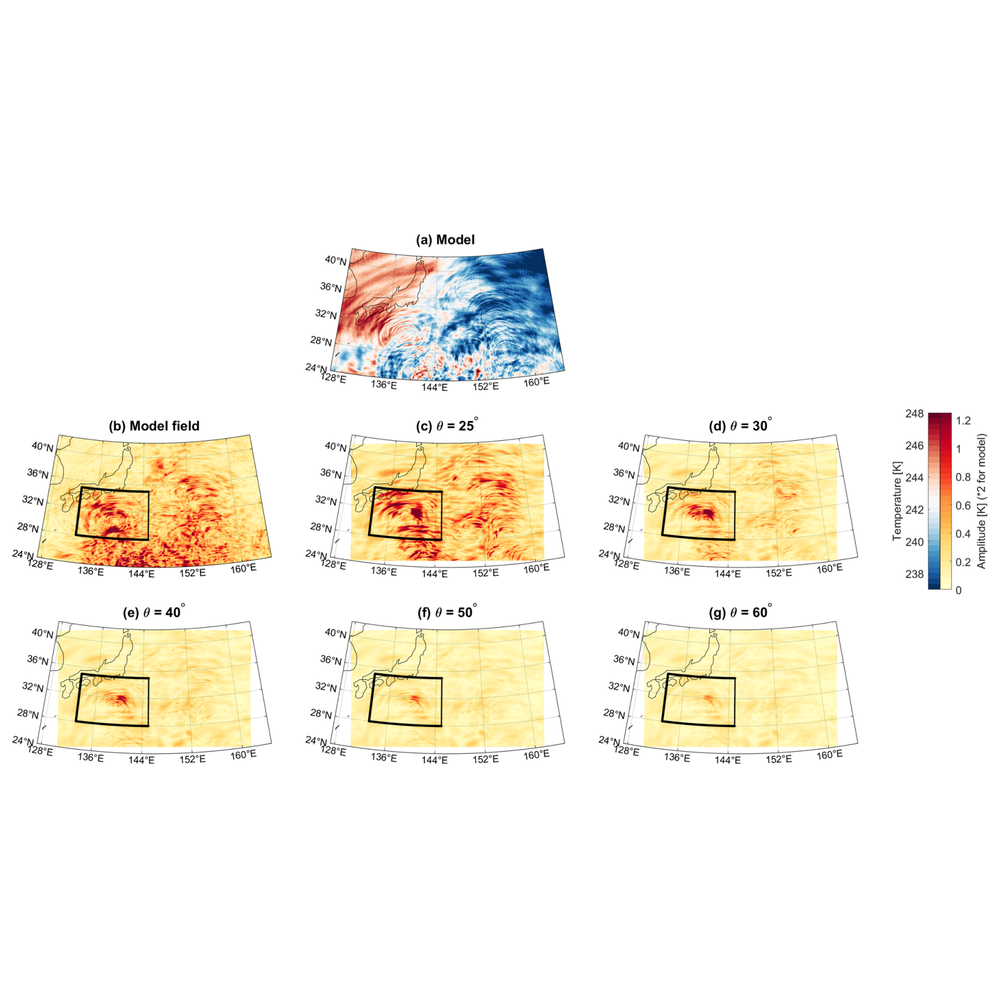 Using Sub-Limb Observations to Measure Gravity Waves Excited by Convectionnpj Microgravity, 2023Simulations show that satellites looking just below the atmospheric limb could detect short-scale gravity waves generated by convection that existing instruments struggle to resolve, helping distinguish the momentum transported by individual storms from that generated by large organised storm systems.
2022
- JGR-A
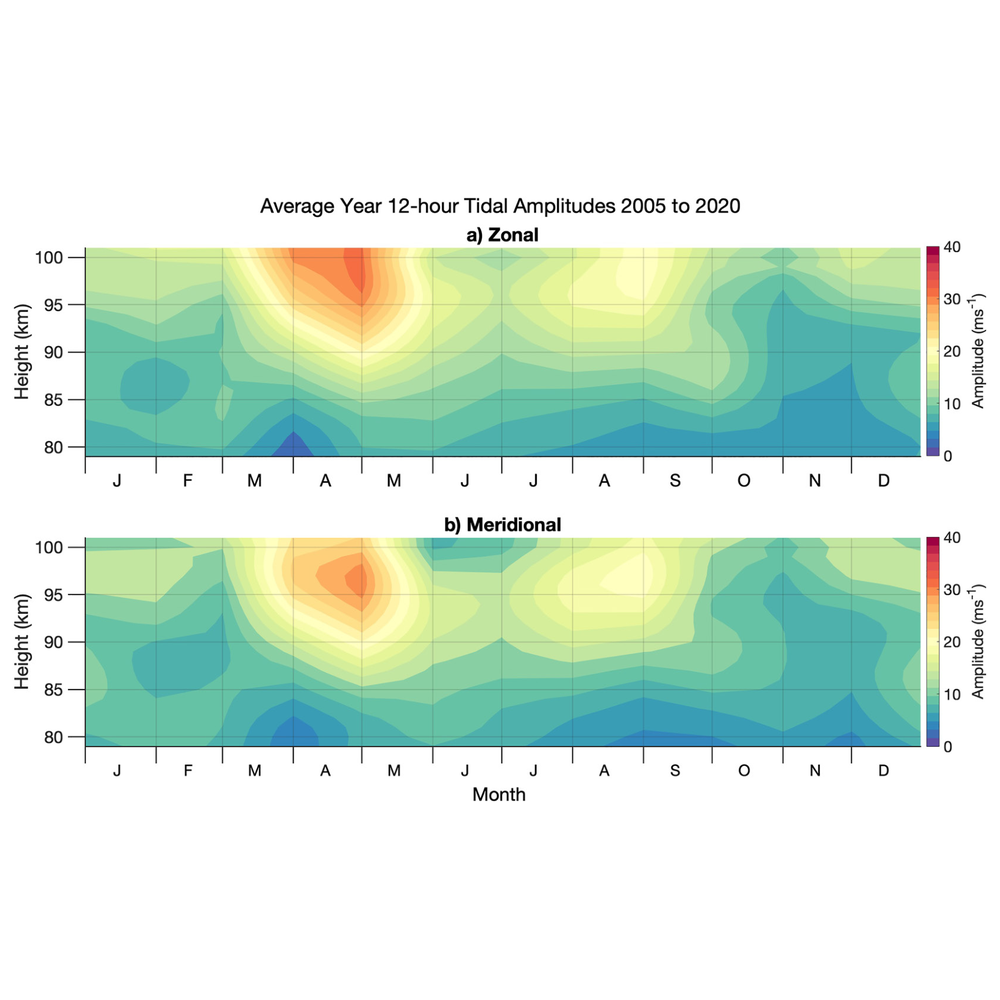 Interannual variability in the 12-hour tide in the mesosphere and lower thermosphere in 15 years of meteor radar observations above Rothera (67^\\circS, 68^\\circW)Journal of Geophysical Research: Atmospheres, 2022Fifteen years of Antarctic radar observations reveal 12-hour atmospheric tides reaching monthly mean amplitudes of 35 m/s near 95 km, with year-to-year variations linked to solar activity, the QBO and the Southern Annular Mode, but not strongly to ENSO.
- PSJ
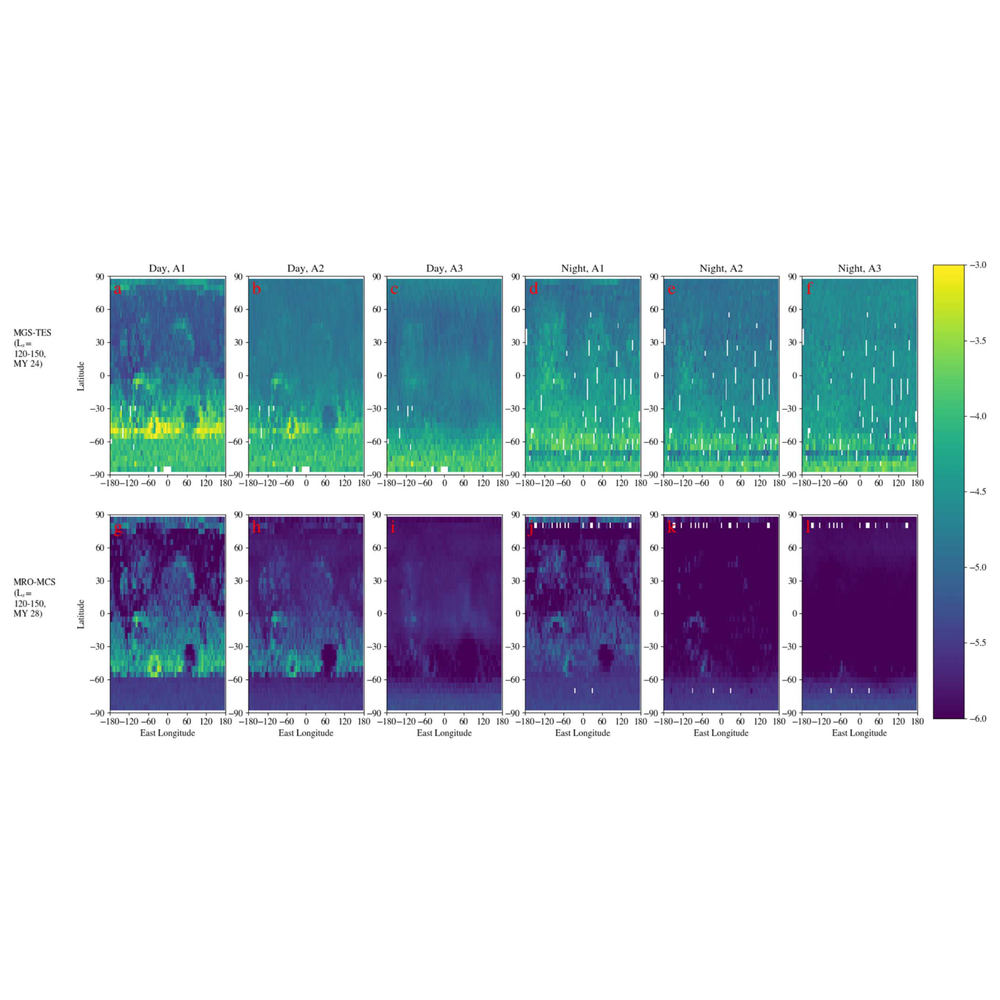 The horizontal wavelength spectrum of gravity wave activity in Mars’s lower atmosphere: the perspective from MGS-TES nadir observationsThe Planetary Science Journal, 2022Much of the previously reported year-to-year variation in Martian gravity wave activity turns out to be an instrumental noise artefact; the genuine small-scale wave population is strongest at horizontal wavelengths below 200 km.
- WCD
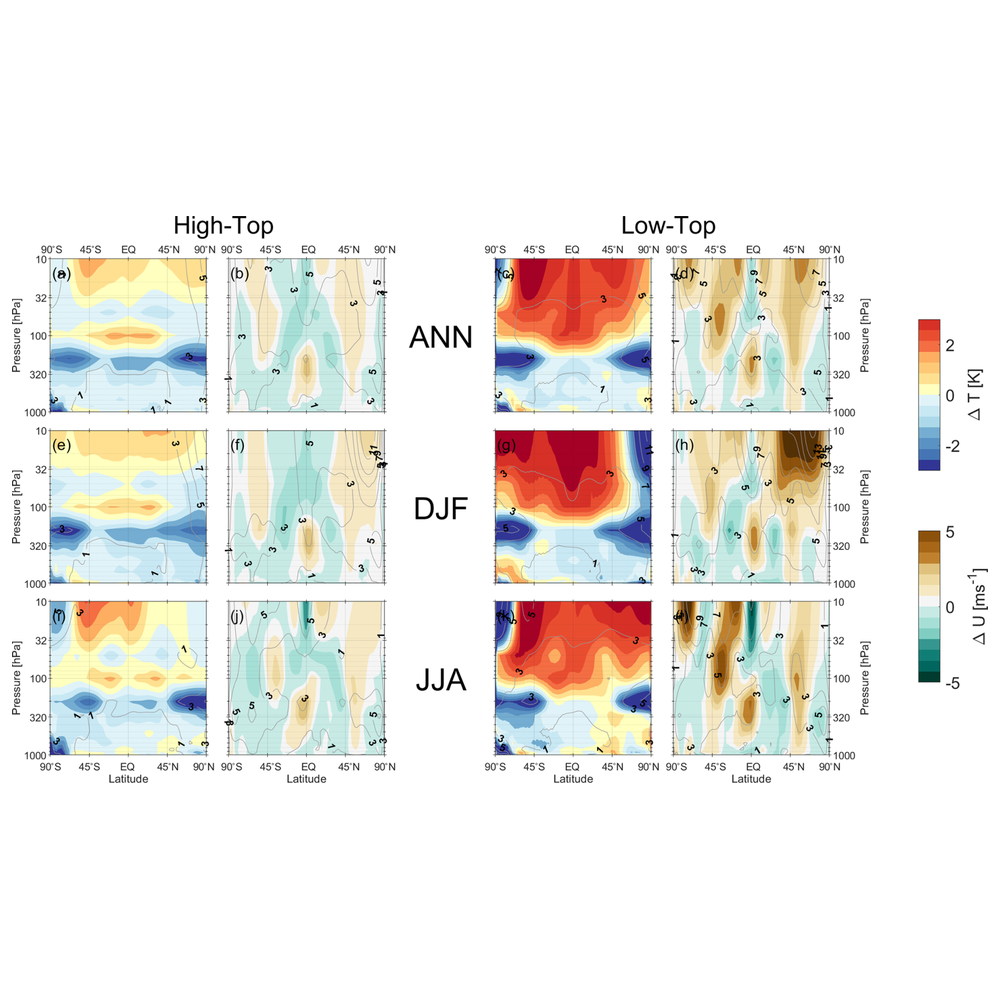 Quantifying stratospheric biases and identifying their potential sources in subseasonal forecast systemsWeather and Climate Dynamics, 2022Across subseasonal forecast systems, winter polar vortices are often too cold and strong, sudden stratospheric warmings too infrequent, and QBO anomalies decay too rapidly, exposing widespread biases that limit the potential for weeks-ahead weather prediction.
- ACP
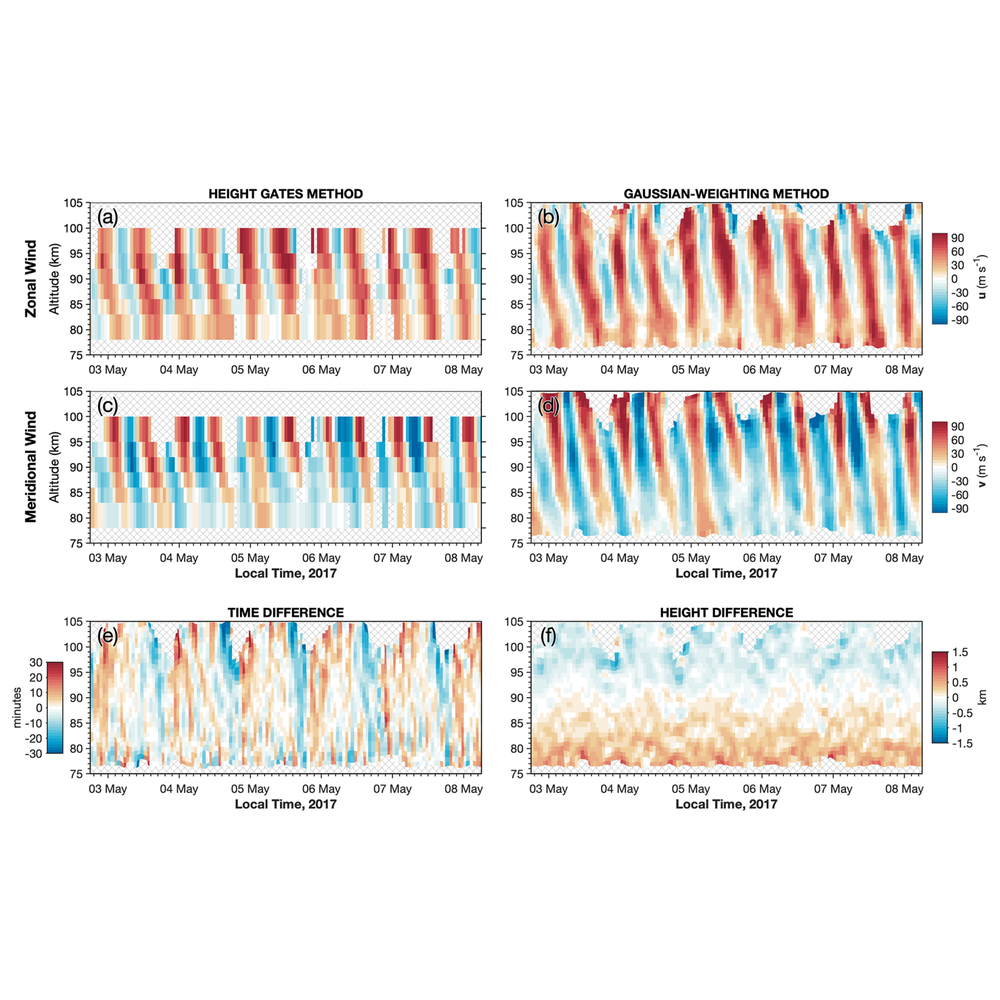 Radar observations of winds, waves and tides in the mesosphere and lower thermosphere over South Georgia island (54S, 36W) and comparison to WACCM simulationsAtmospheric Chemistry and Physics, 2022Observed wintertime mesospheric winds over South Georgia blow in the opposite direction to those predicted by WACCM, potentially reflecting the effects of secondary gravity waves missing from the model.
- AMT
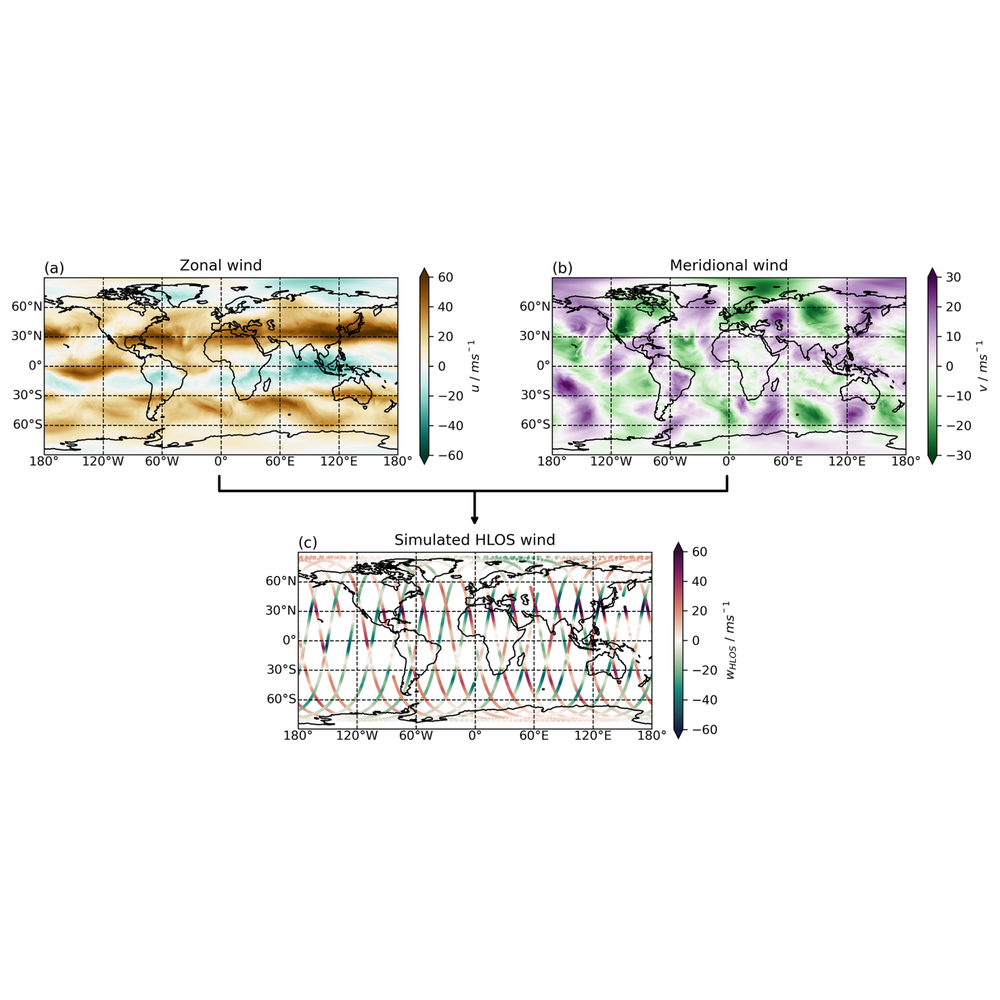 On the derivation of zonal and meridional wind components from Aeolus horizontal line-of-sight windAtmospheric Measurement Techniques, 2022Combining measurements from ascending and descending Aeolus orbits retrieves zonal winds globally with errors below 5 m/s, but comparable meridional wind accuracy is only achieved poleward of 70°.
- JGR-A
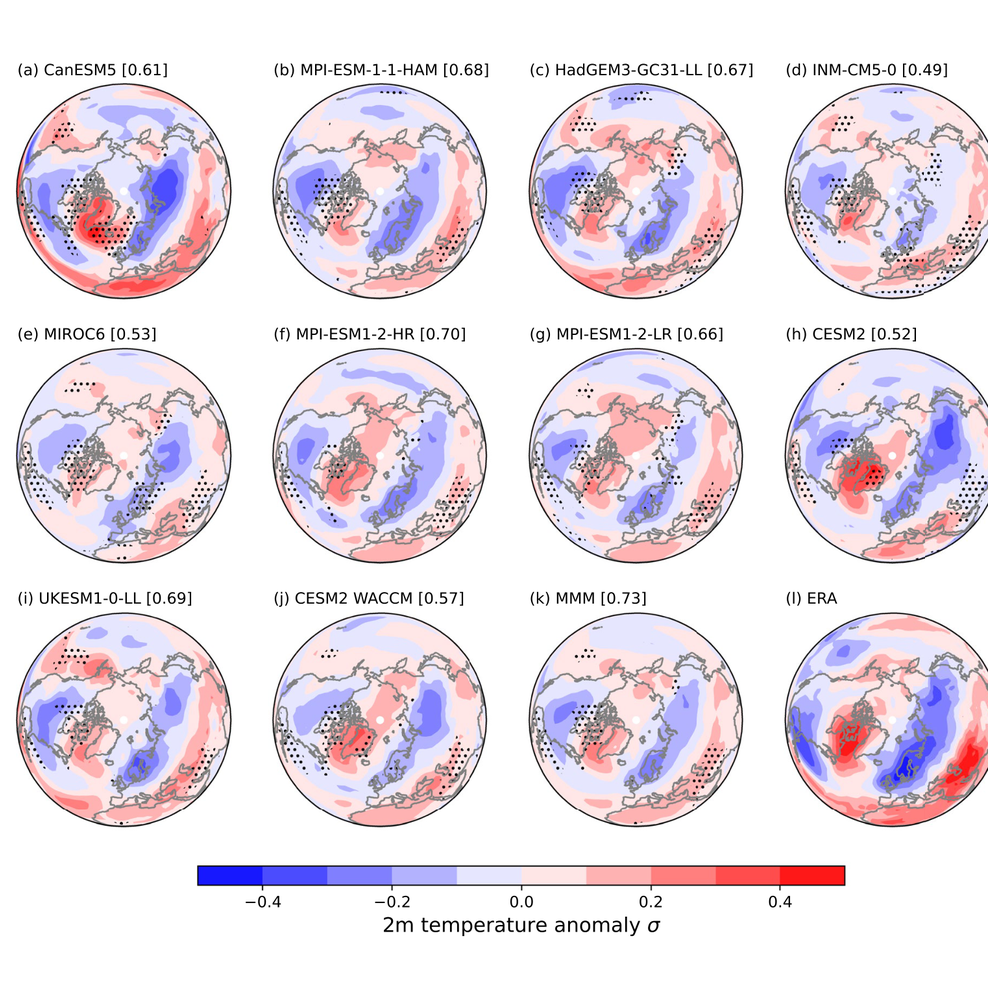 How well are Sudden Stratospheric Warming surface impacts captured in CMIP6 climate models?Journal of Geophysical Research: Atmospheres, 2022Ten climate models capture the broad surface weather response to sudden stratospheric warmings, but reproduce it much better over Siberia and Baffin Bay than over Europe or North America, and underestimate temperature changes in the Middle East and eastern United States.
- PSJ
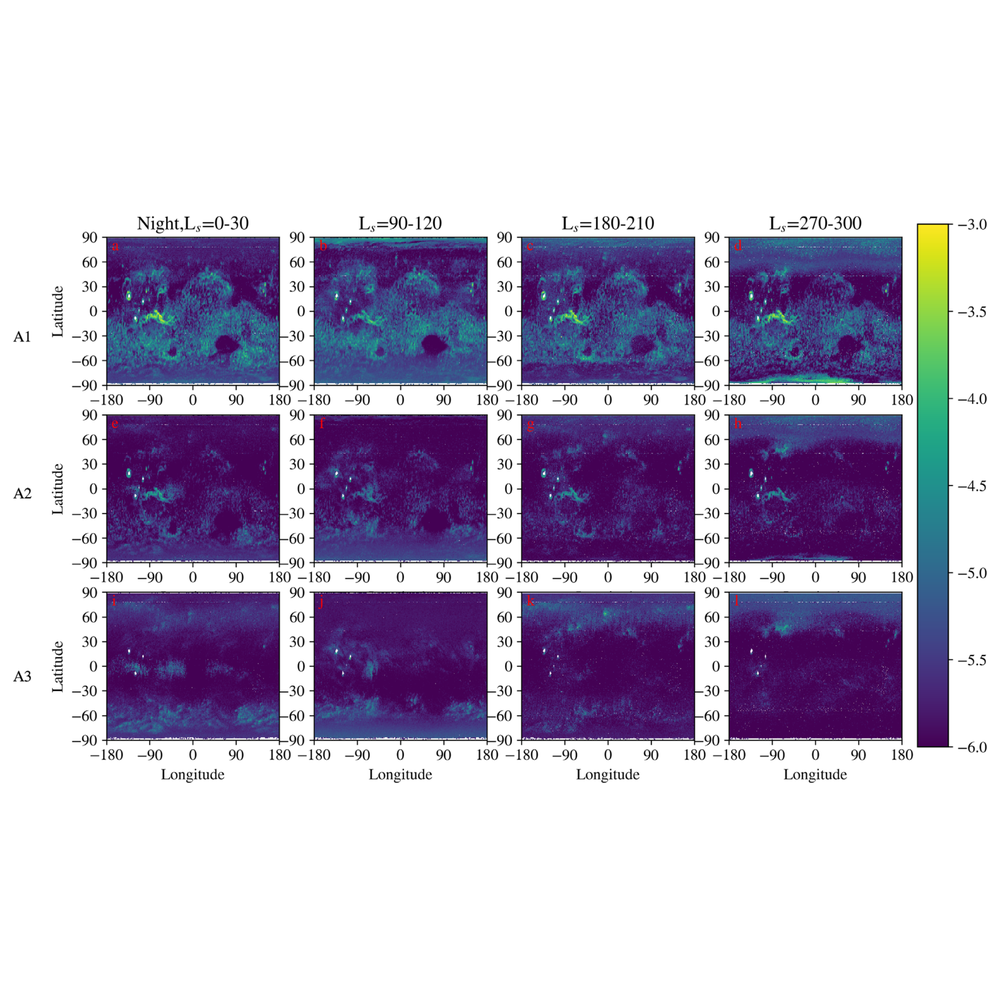 Mars Climate Sounder observations of gravity wave activity throughout Mars’s lower atmosphereThe Planetary Science Journal, 2022Global dust storms approximately halve gravity wave activity near the Martian surface, but also reduce the trapping and filtering of waves propagating upwards through the tropical atmosphere.
- JAS
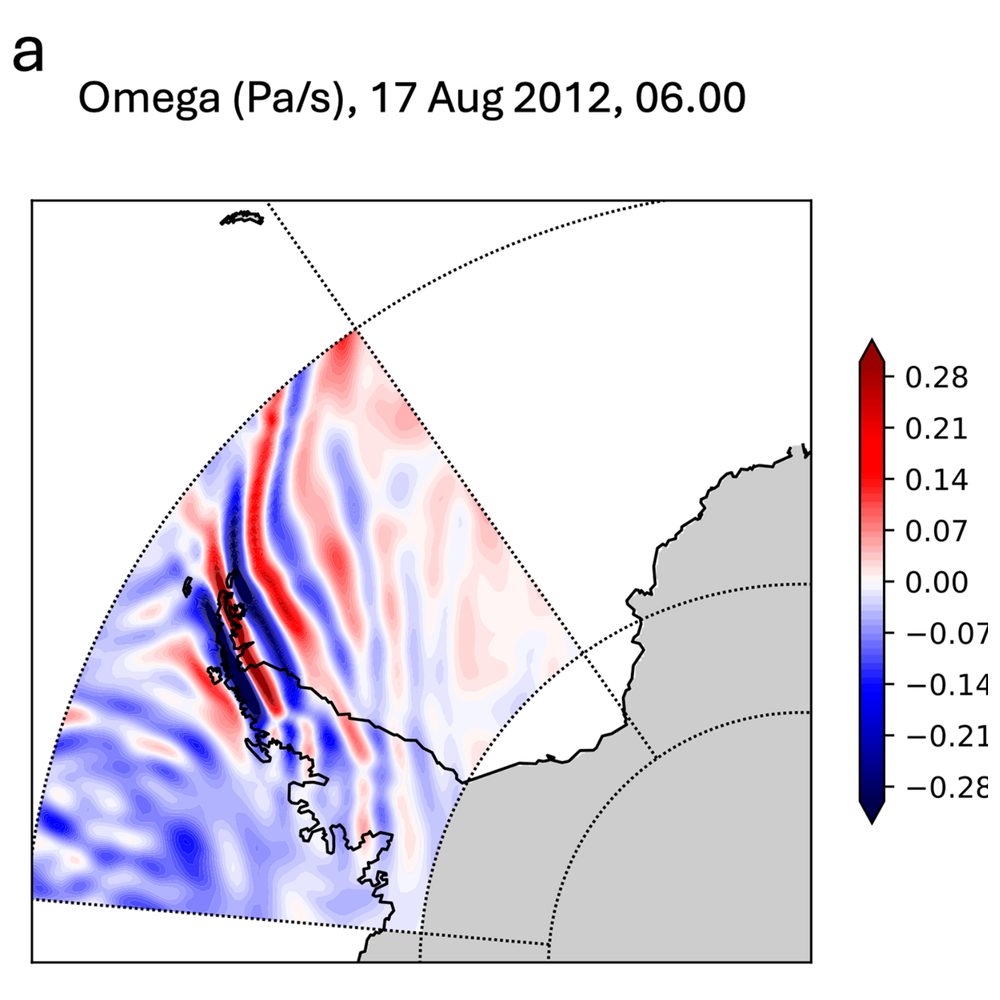
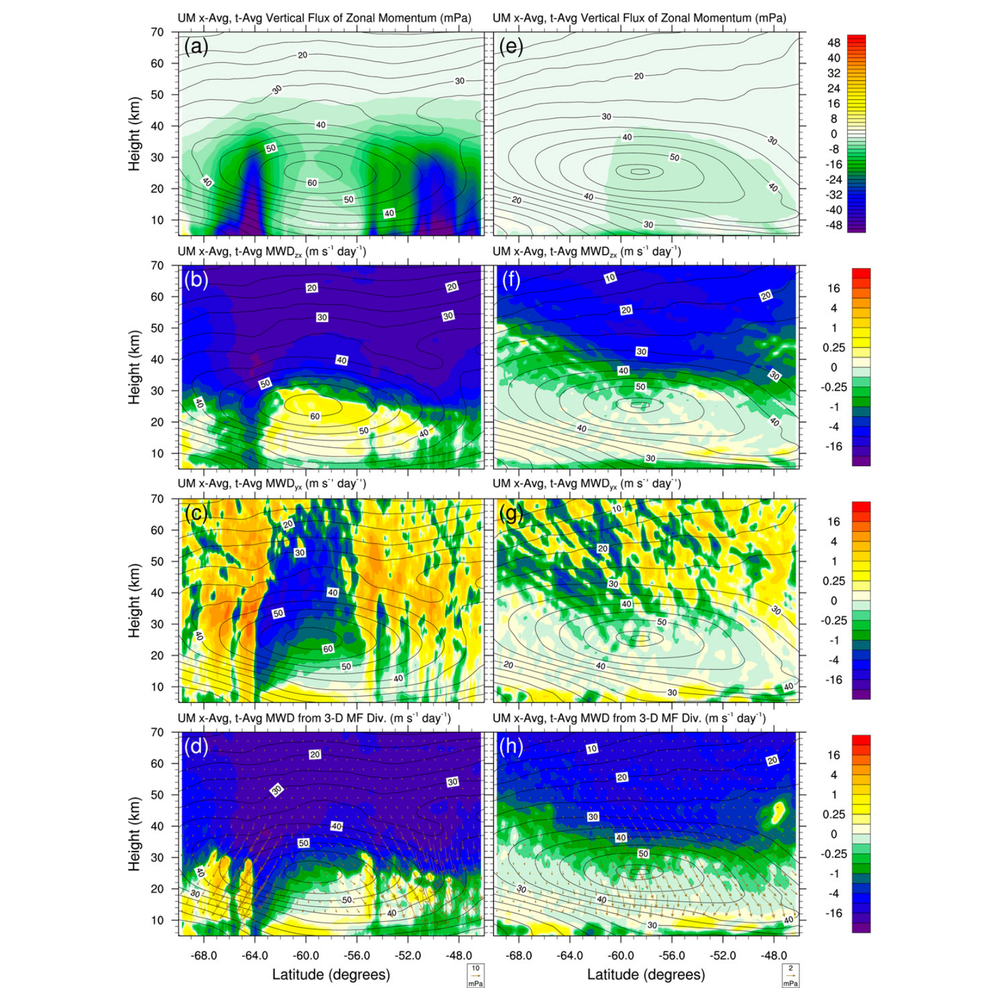 Observed and Modelled Mountain Waves from the Surface to the Mesosphere Near the Drake PassageJournal of the Atmospheric Sciences, 2022Four weather models reproduce the mountain waves observed over the Drake Passage but underestimate their amplitudes even at 3 km resolution; leaving out north–south transport of east–west momentum can even reverse the calculated wave drag.
2021
- GRL
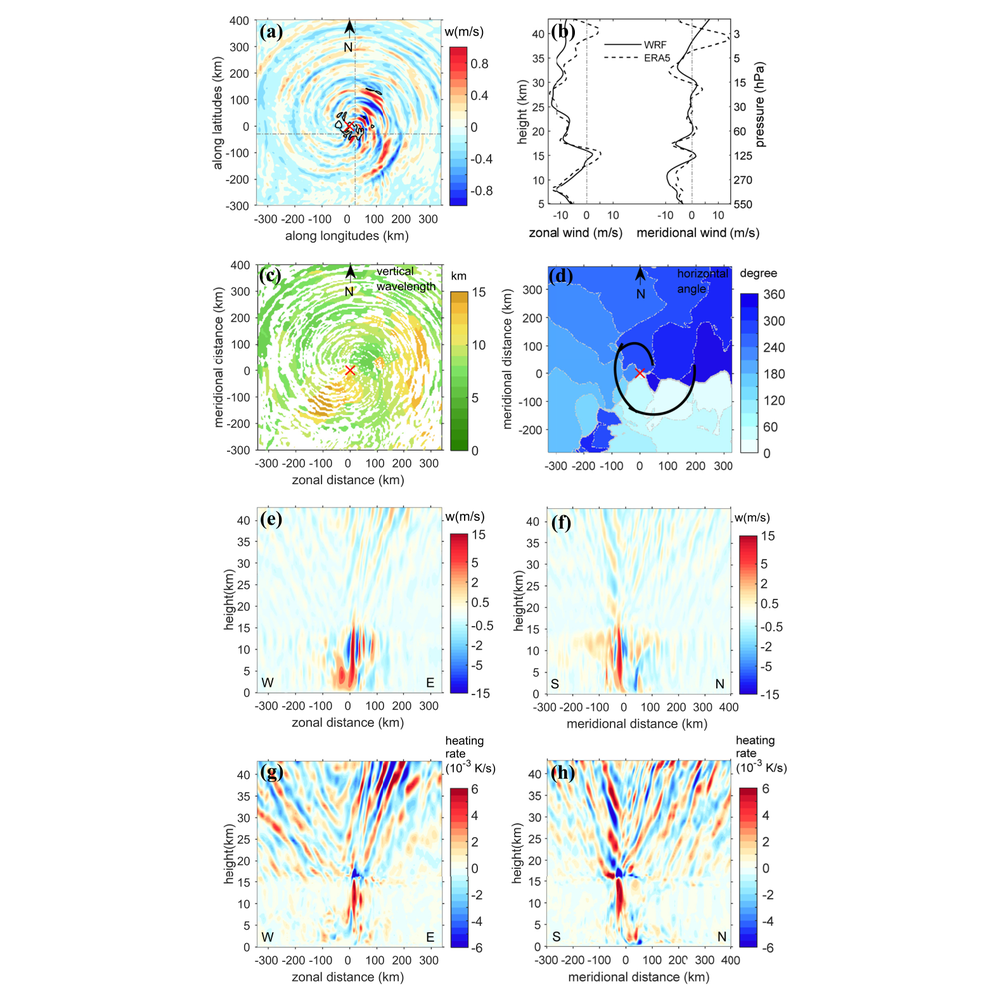 Stratospheric Gravity Waves as a Proxy for Hurricane Intensification: A Case Study of Mesoscale Simulations for Hurricane JoaquinGeophysical Research Letters, 2021Simulations of Hurricane Joaquin show that strong stratospheric gravity waves are more frequent during intensification than weakening and can appear before peaks in hurricane strength, supporting their potential use as a satellite-observable warning of intensification through cloud cover.
- WCD
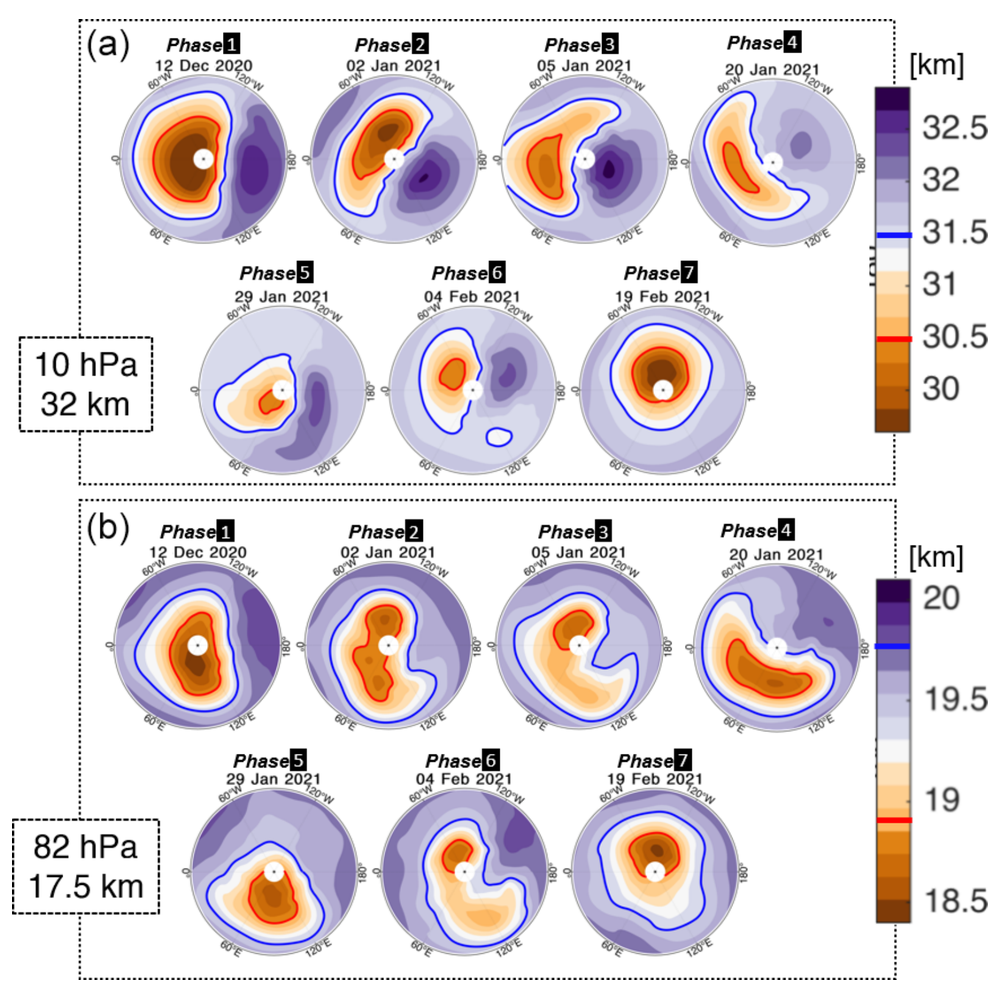 Dynamical and Surface Impacts of the January 2021 Sudden Stratospheric Warming in Novel Aeolus Wind Observations, MLS and ERA5Weather and Climate Dynamics, 2021The first global satellite wind observations of a sudden stratospheric warming reveal that winds reversed in the lower and middle stratosphere in January 2021, with changes reaching to within 2 km of the surface in some regions and possible links to extreme winter weather in Greece and Texas.
- AMT
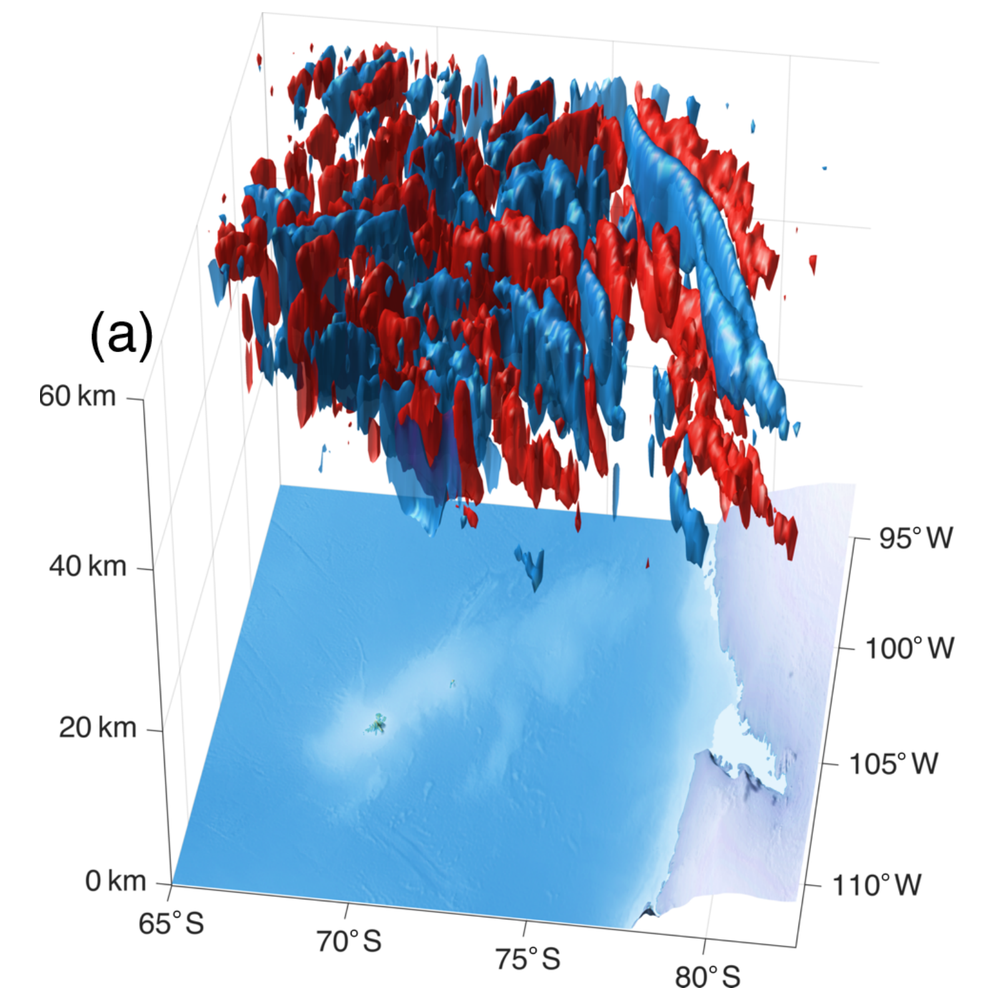 Using Vertical Phase Differences to Better Resolve 3D Gravity Wave StructureAtmospheric Measurement Techniques, 2021A new spectral method uses vertical phase differences to measure gravity wave wavelengths much more accurately, even when the waves extend beyond the depth of atmosphere observed by the instrument.
- GRL
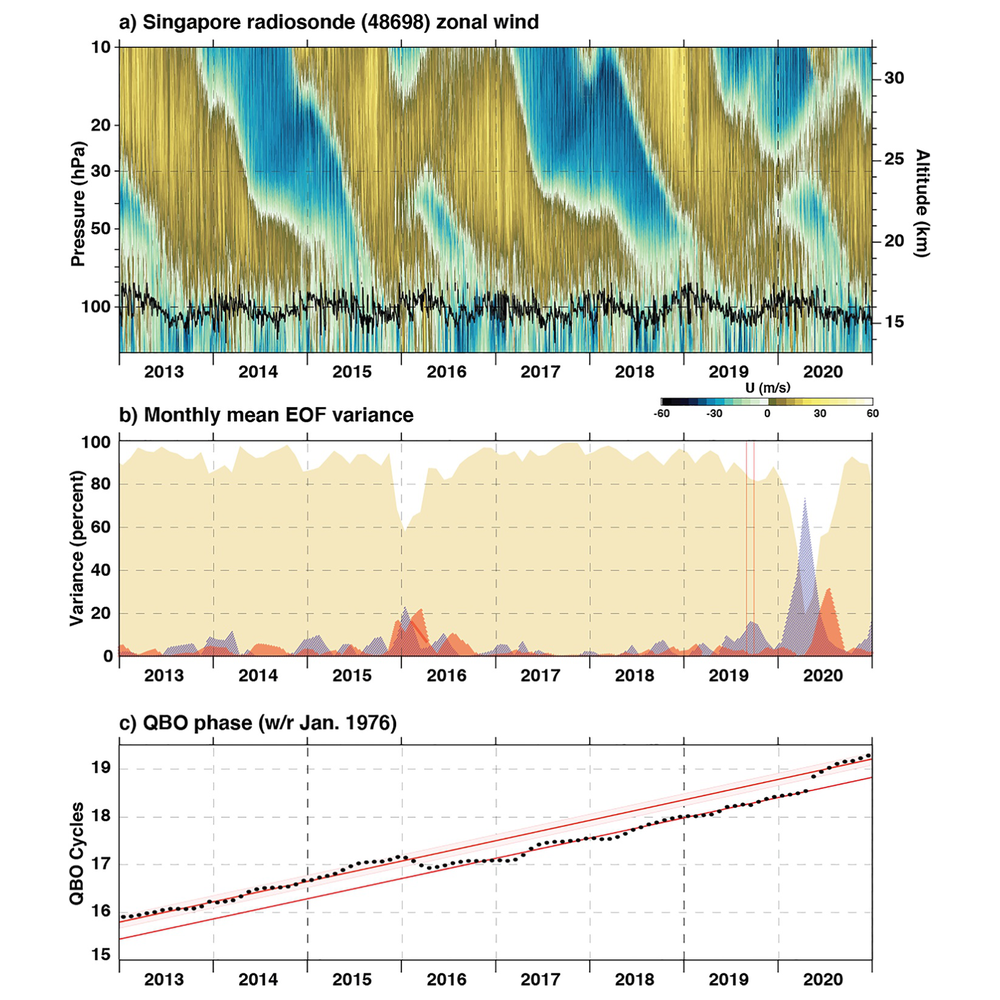 Prospect of Increased Disruption to the QBO in a Changing ClimateGeophysical Research Letters, 2021The 2019–2020 disruption of the regular reversal of tropical stratospheric winds was triggered by waves arriving from the Southern Hemisphere; climate projections suggest such disruptions may become more frequent, reducing predictability years ahead.
- JGR-A
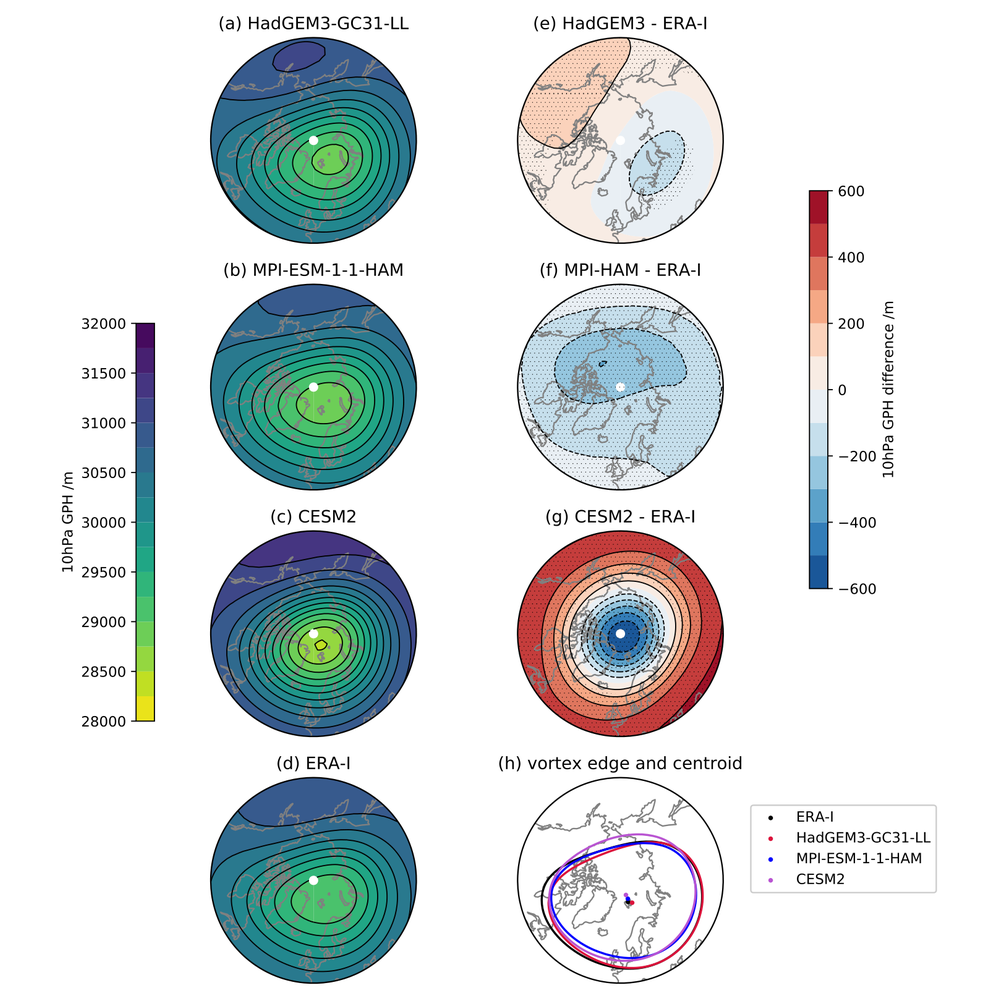 Persistent Model Biases in CMIP6 Representations of Stratospheric Polar Vortex VariabilityJournal of Geophysical Research: Atmospheres, 2021Despite improvements over previous generations, ten CMIP6 climate models still produce too few sudden stratospheric warmings that split the polar vortex, a bias linked to overly circular vortices and excessively strong stratospheric winds.
- ACP
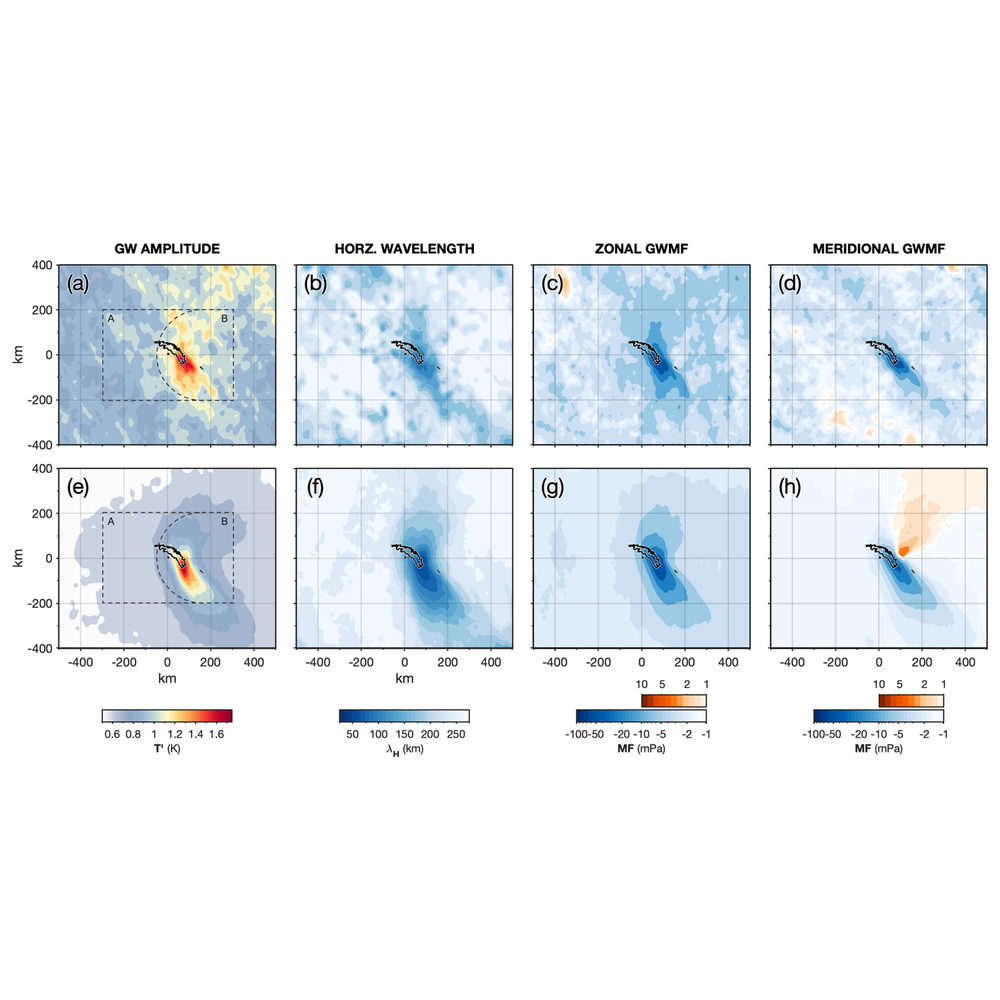 Stratospheric gravity waves over the mountainous island of South Georgia: testing a high-resolution dynamical model with 3D satellite observations and radiosondesAtmospheric Chemistry and Physics, 2021After accounting for the way satellites measure waves, a 1.5 km-resolution model closely matches observed westward gravity wave momentum transport over South Georgia (5.6 versus 5.3 mPa), but underestimates wave activity upwind of the island.
- GRL
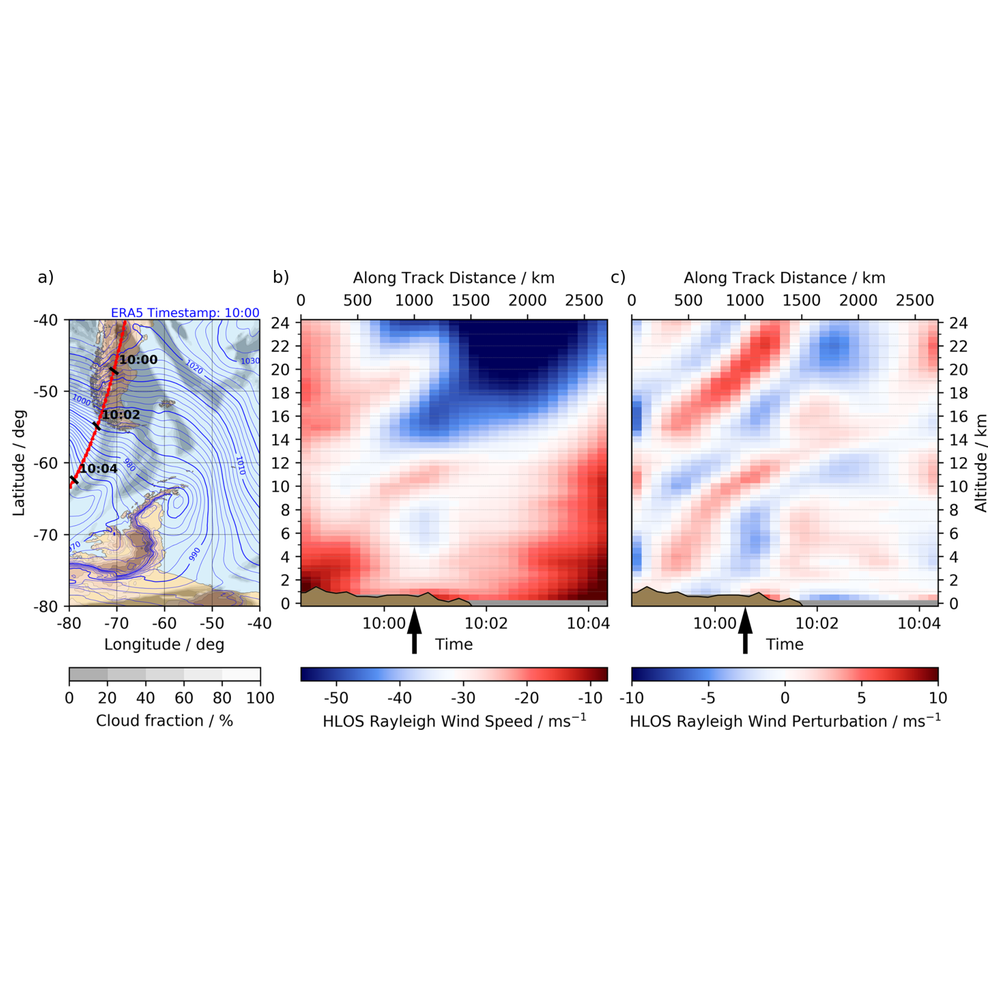 Atmospheric Gravity Waves in Aeolus Wind Lidar ObservationsGeophysical Research Letters, 2021The Aeolus satellite directly measured mountain-wave wind disturbances exceeding 10 m/s over the Andes, with wave structure extending from the surface into the lower stratosphere, demonstrating a new way to observe gravity waves from space.
- Proceedings
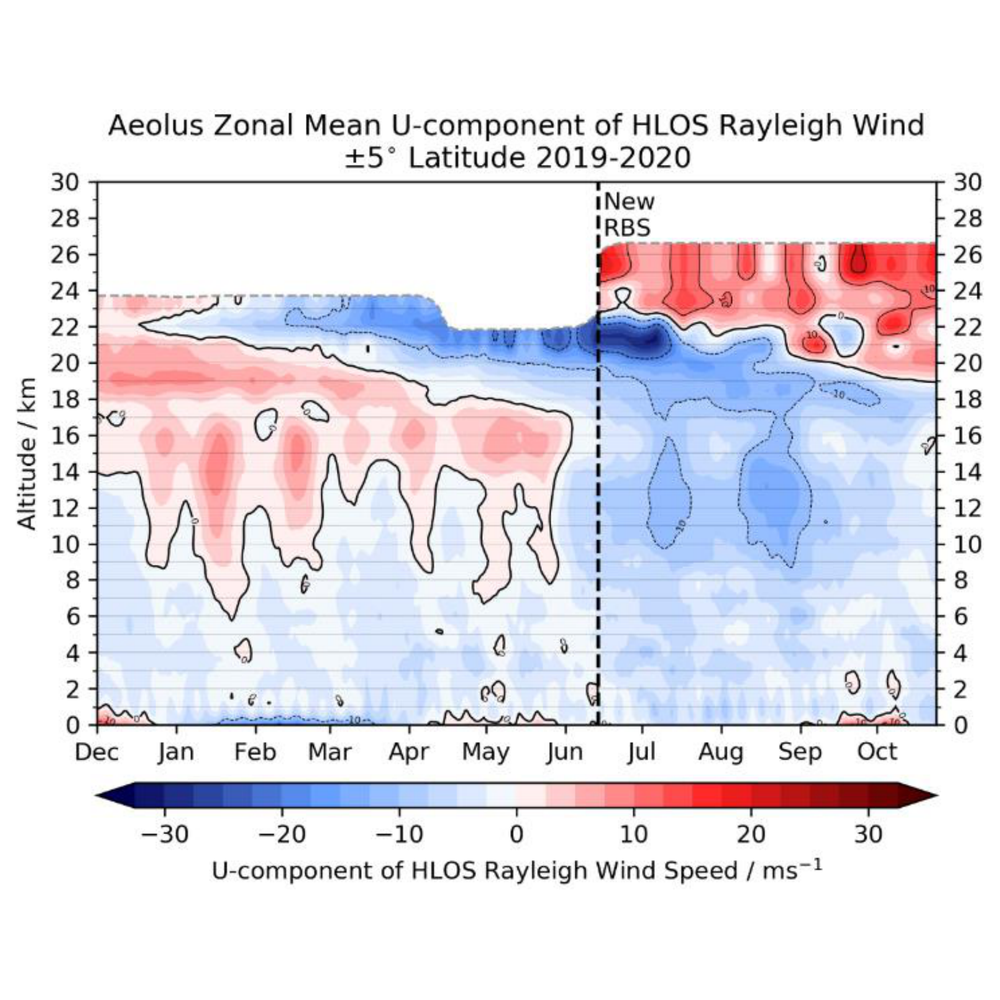 Demonstrated Aeolus Benefits in Atmospheric SciencesIn IEEE International Geoscience and Remote Sensing Symposium (IGARSS), 2021Aeolus wind observations improved operational forecasts at four weather centres and enabled new measurements of gravity waves and tropical wind reversals, while its optical measurements helped track smoke from the 2020 Australian bushfires.
2020
- JGR-A
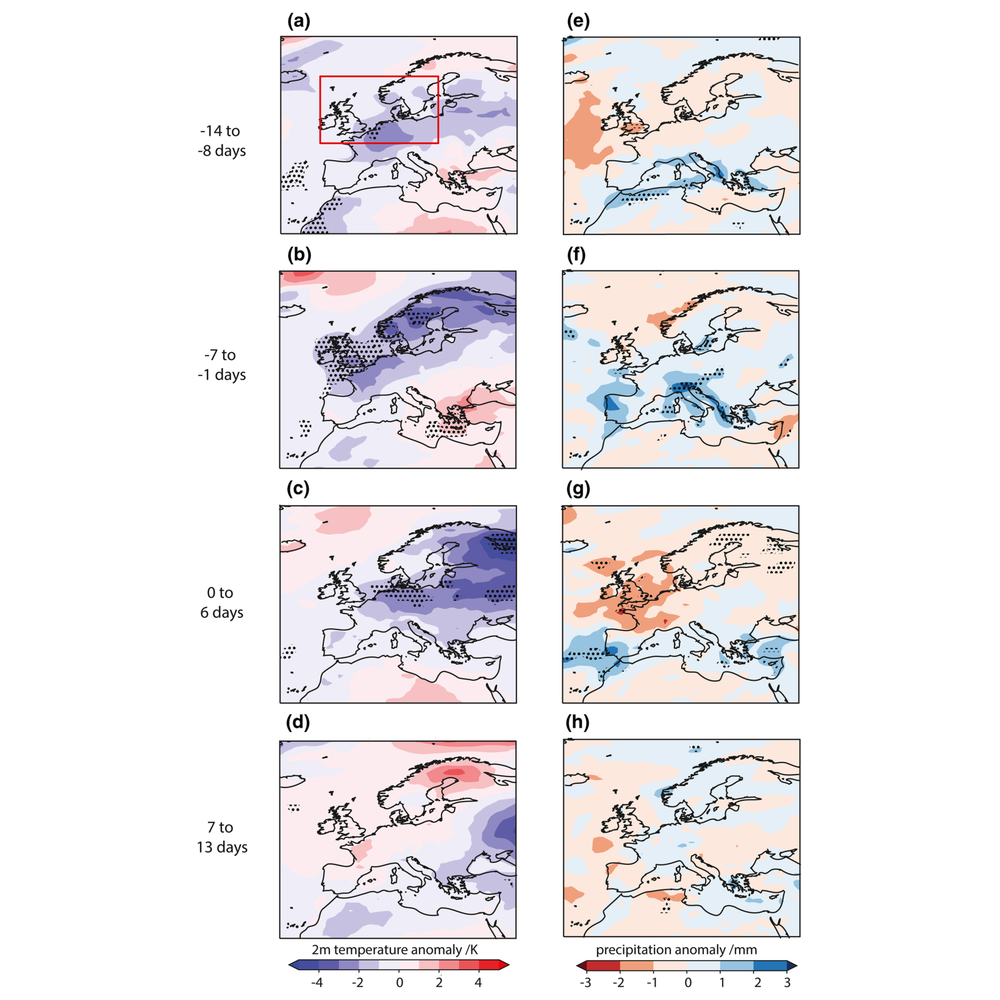 Tracking the Stratosphere-Surface Impact of Sudden Stratospheric WarmingsJournal of Geophysical Research: Atmospheres, 2020A new method identifies when individual sudden stratospheric warmings influence surface weather, revealing that polar-vortex splitting events have an impact about a week earlier than displacements and are followed by colder conditions in north-west Europe.
- GRL
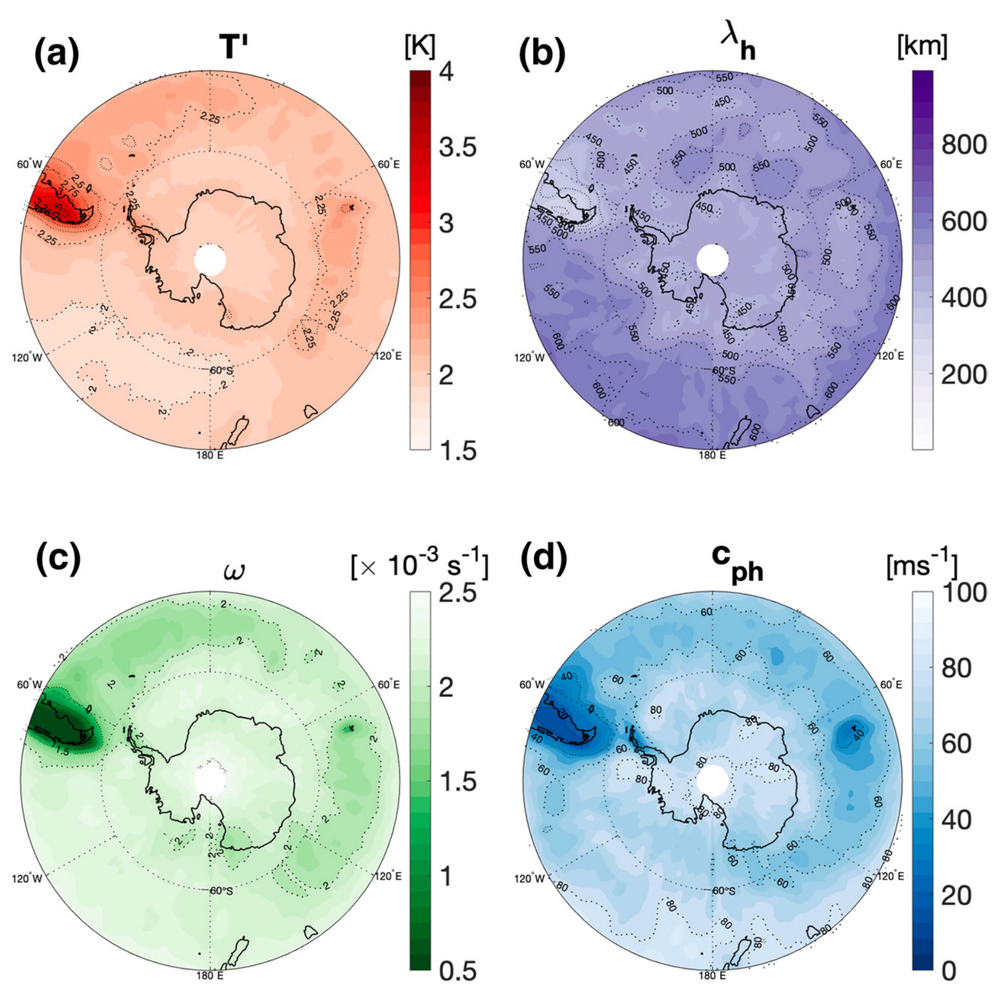 Determining gravity wave sources and propagation over the Southern Ocean by ray-tracing AIRS measurementsGeophysical Research Letters, 2020Tracing more than 30 million satellite-observed gravity waves back to their sources shows that waves travel hundreds of kilometres horizontally and converge towards 60° S, providing quantitative evidence against the common climate-model assumption that they propagate only vertically.
- JASTP
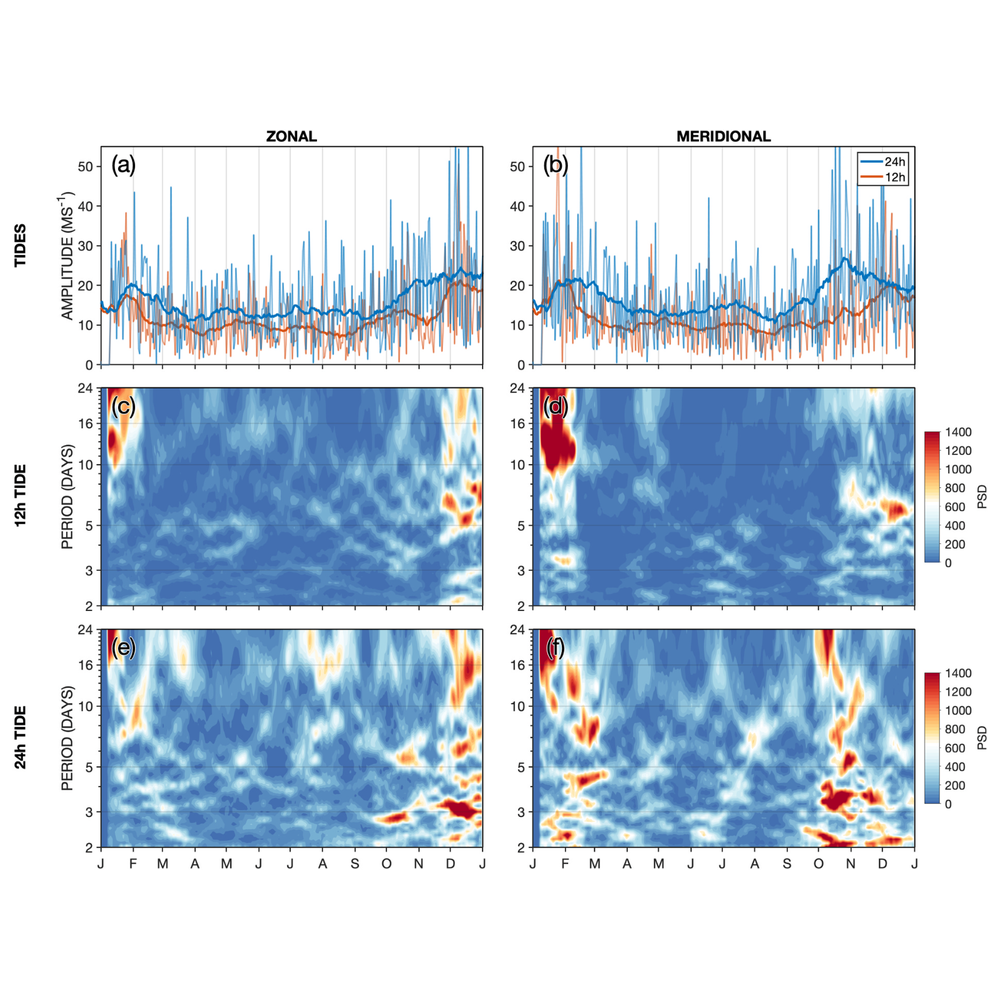 Winds and tides of the Antarctic mesosphere and lower thermosphere: One year of meteor-radar observations over Rothera (68^\\circS, 68^\\circW) and comparisons with WACCM and eCMAMJournal of Atmospheric and Solar-Terrestrial Physics, 2020Antarctic radar observations reveal 12-hour atmospheric tides reaching around 40 m/s near the equinoxes, with amplitudes increasing sharply between 80 and 100 km; WACCM misses both features and neither WACCM nor eCMAM reproduces the strong wintertime eastward winds.
- GRL
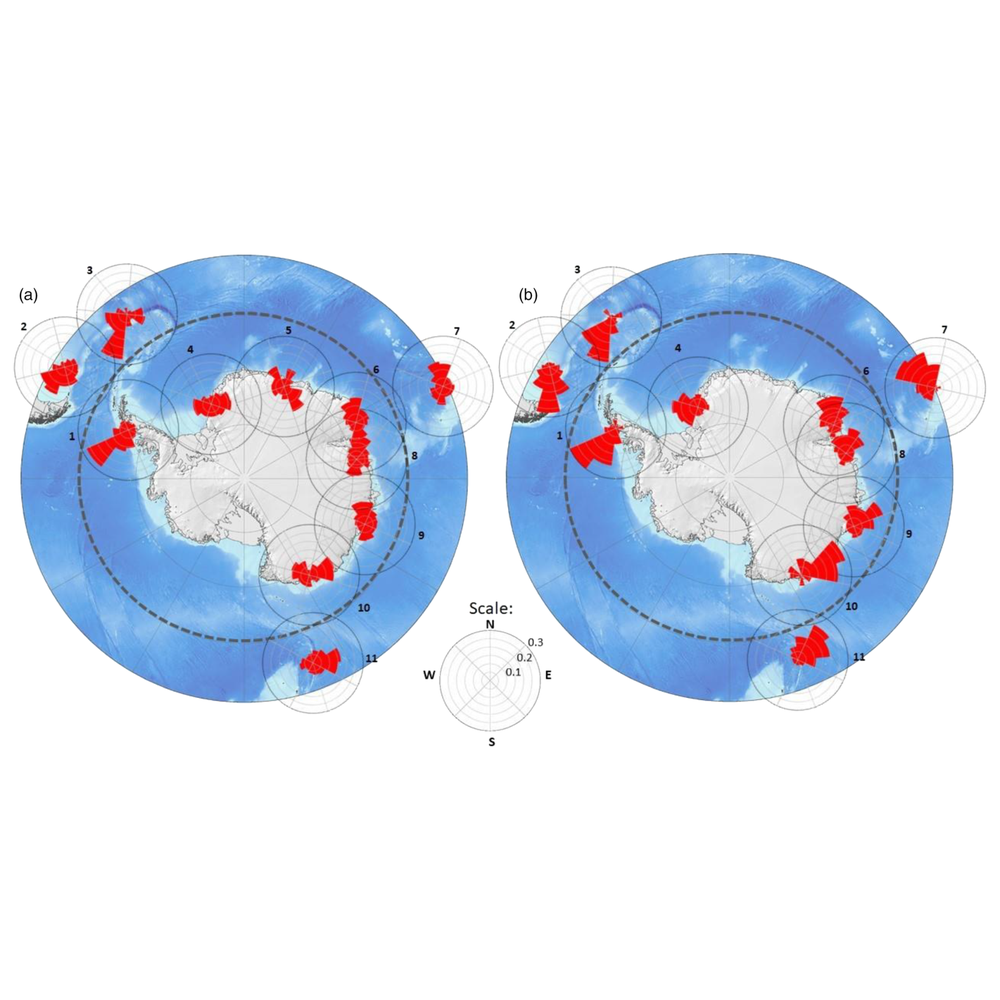 Radiosonde Observations of a Wintertime Meridional Convergence of Gravity Waves Around 60^\\circS in the Lower StratosphereGeophysical Research Letters, 2020Radiosondes at 11 Antarctic and sub-Antarctic sites show that short-vertical-wavelength gravity waves converge towards 60° S in winter, providing independent evidence that the Southern Ocean wave hotspot is fed by sources outside the region.
- JGR-A
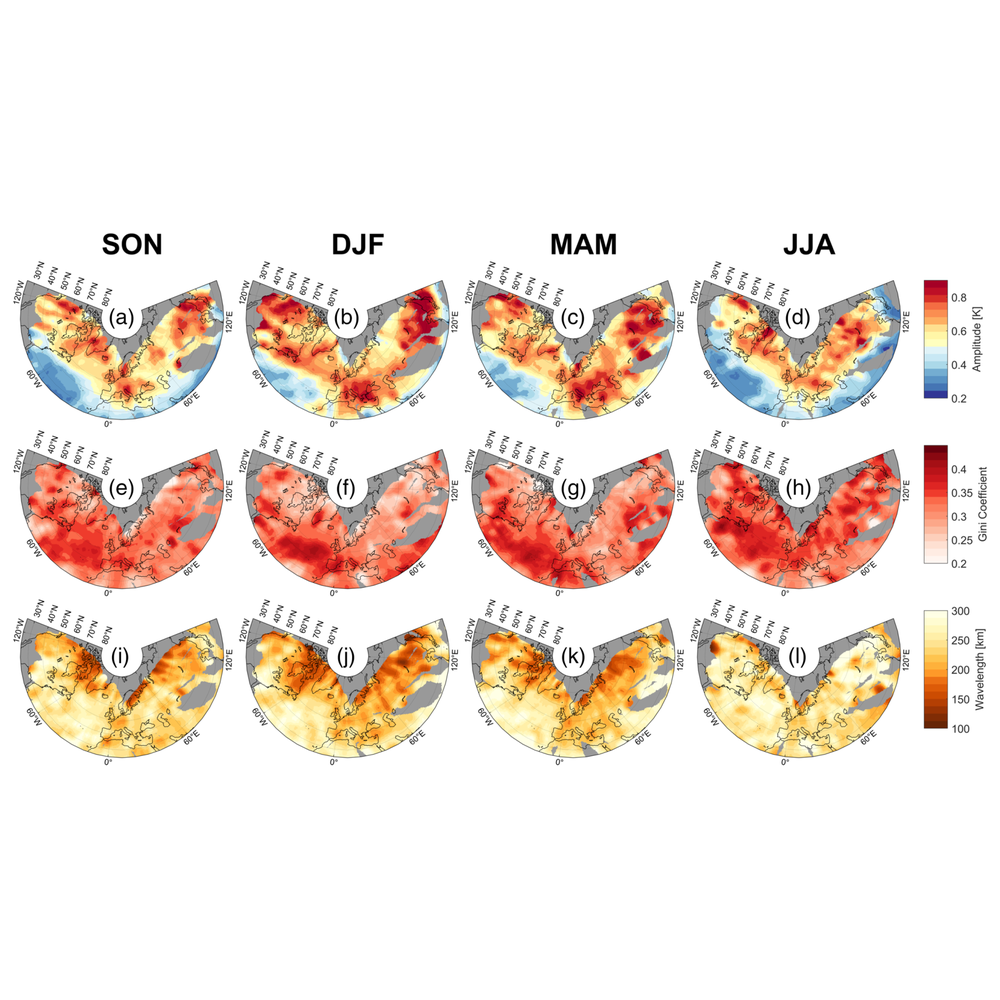 Multi-Decadal Measurements of UTLS Gravity Waves Derived from Commercial Flight DataJournal of Geophysical Research: Atmospheres, 2020Twenty-six years of aircraft measurements reveal ENSO-related changes of approximately 25% in upper-tropospheric gravity wave activity, but no statistically significant QBO signal.
2019
- ACP
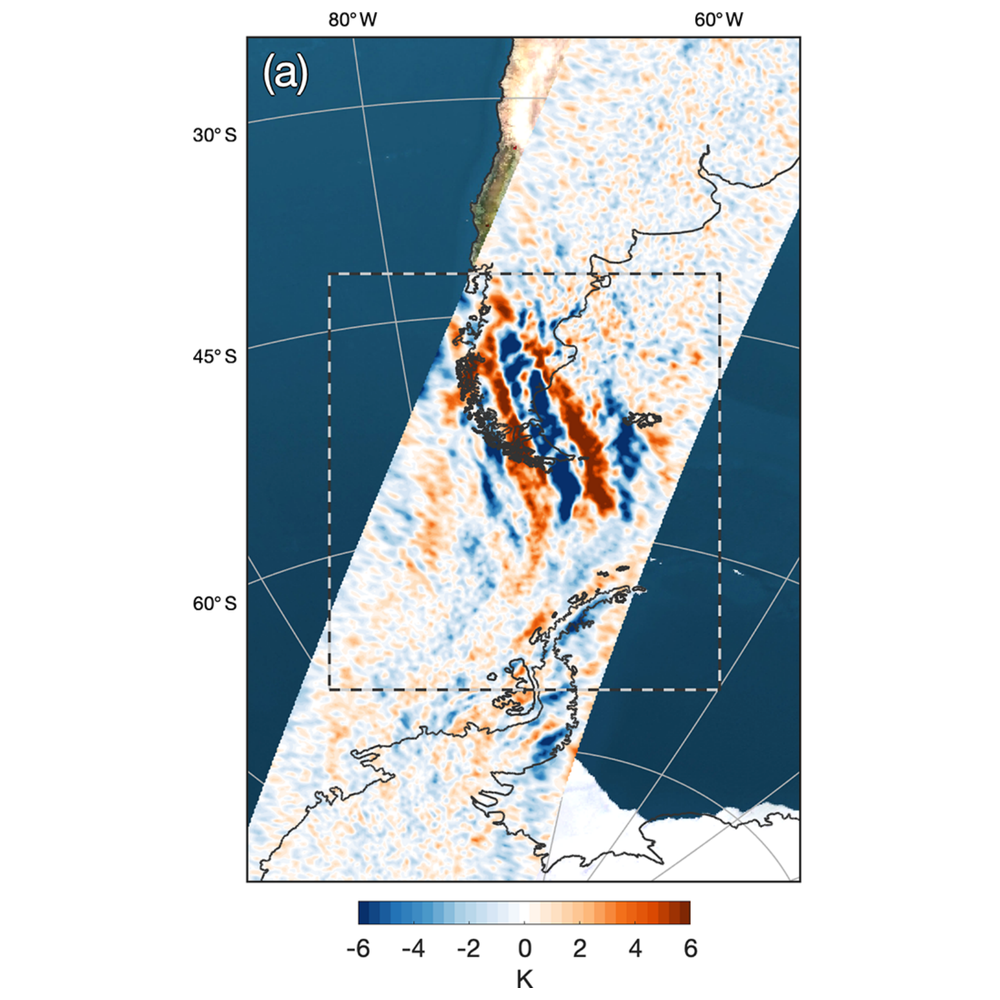 Gravity waves in the winter stratosphere over the Southern Ocean: high-resolution satellite observations and 3-D spectral analysisAtmospheric Chemistry and Physics, 2019Satellite measurements show that 60–80% of wintertime east–west gravity wave momentum transport around 60° S occurs over the open Southern Ocean rather than mountain ranges, with waves converging on this latitude from both north and south.
- QJRMS
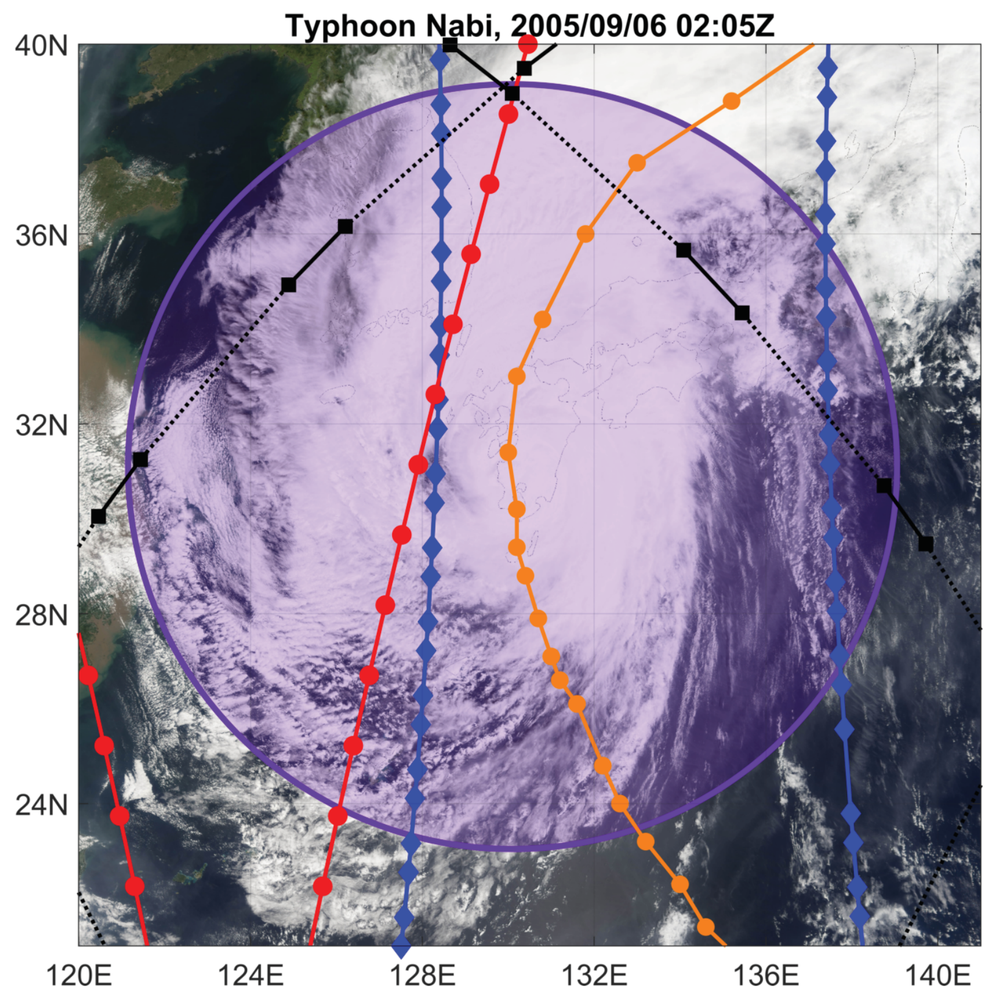 Quantifying the global impact of tropical cyclone-associated gravity waves using HIRDLS, MLS, SABER and IBTrACSQuarterly Journal of the Royal Meteorological Society, 2019Stratospheric gravity waves are around 15% stronger above tropical cyclones that subsequently become major hurricanes, suggesting a possible way to anticipate intensification using satellite observations through cloud cover.
- ACP
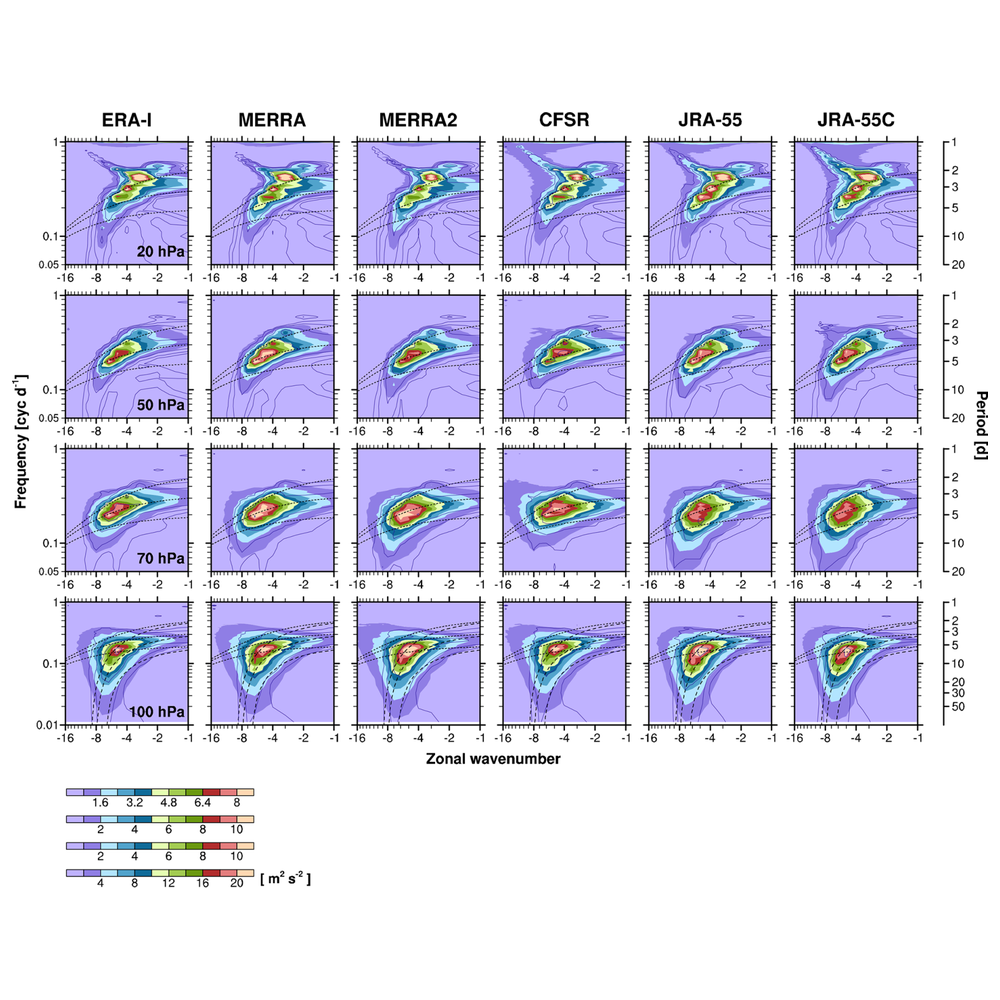 Comparison of equatorial wave activity in the tropical tropopause layer and stratosphere represented in reanalysesAtmospheric Chemistry and Physics, 2019Most reanalyses show increases of 15–50% in equatorial wave activity over 30 years, but the apparent Kelvin wave trend largely disappears when satellite observations are excluded, suggesting that changes in the observing system may be mistaken for genuine atmospheric trends.
- Radio Sci.
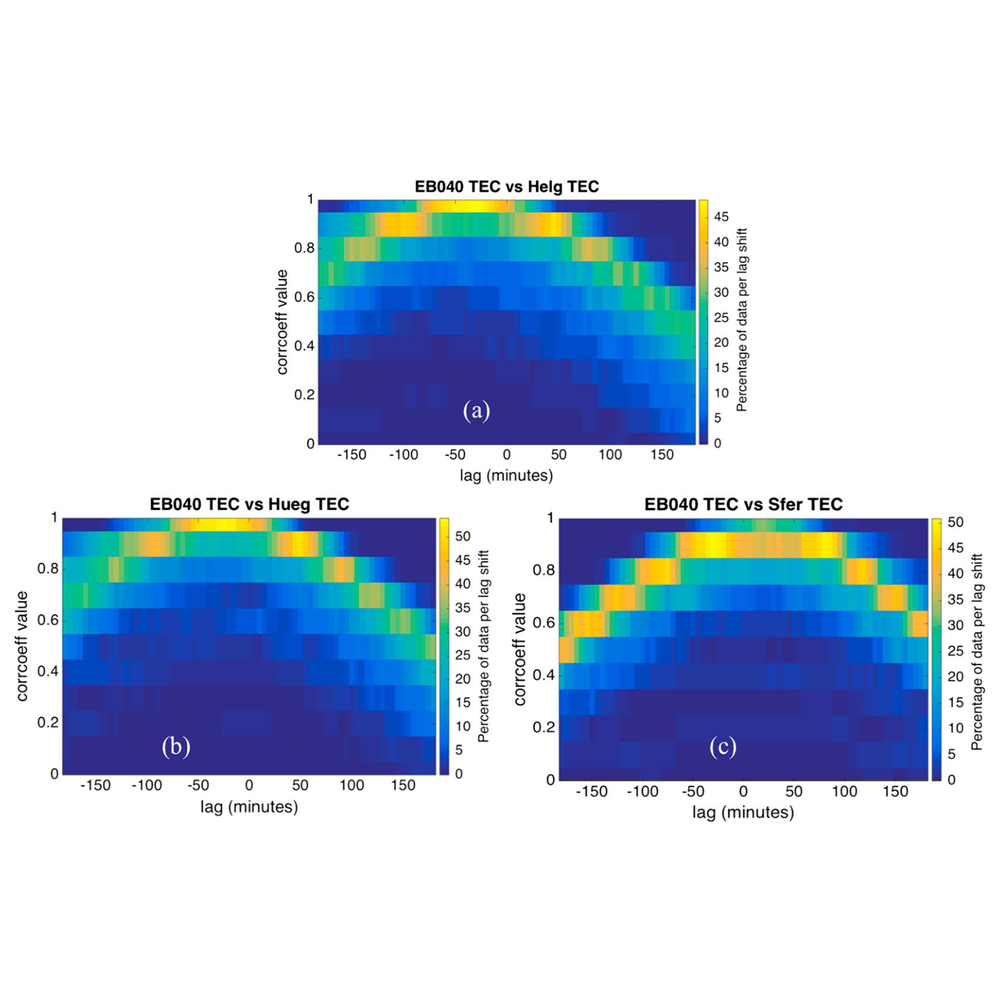 Measurement of ionospheric total electron content using single frequency geostationary satellite observationsRadio Science, 2019A new technique measures the ionosphere’s electron content from single-frequency signals transmitted by geostationary satellites, agreeing with independent observations but requiring receivers with highly stable clocks.
2018
- BAMS
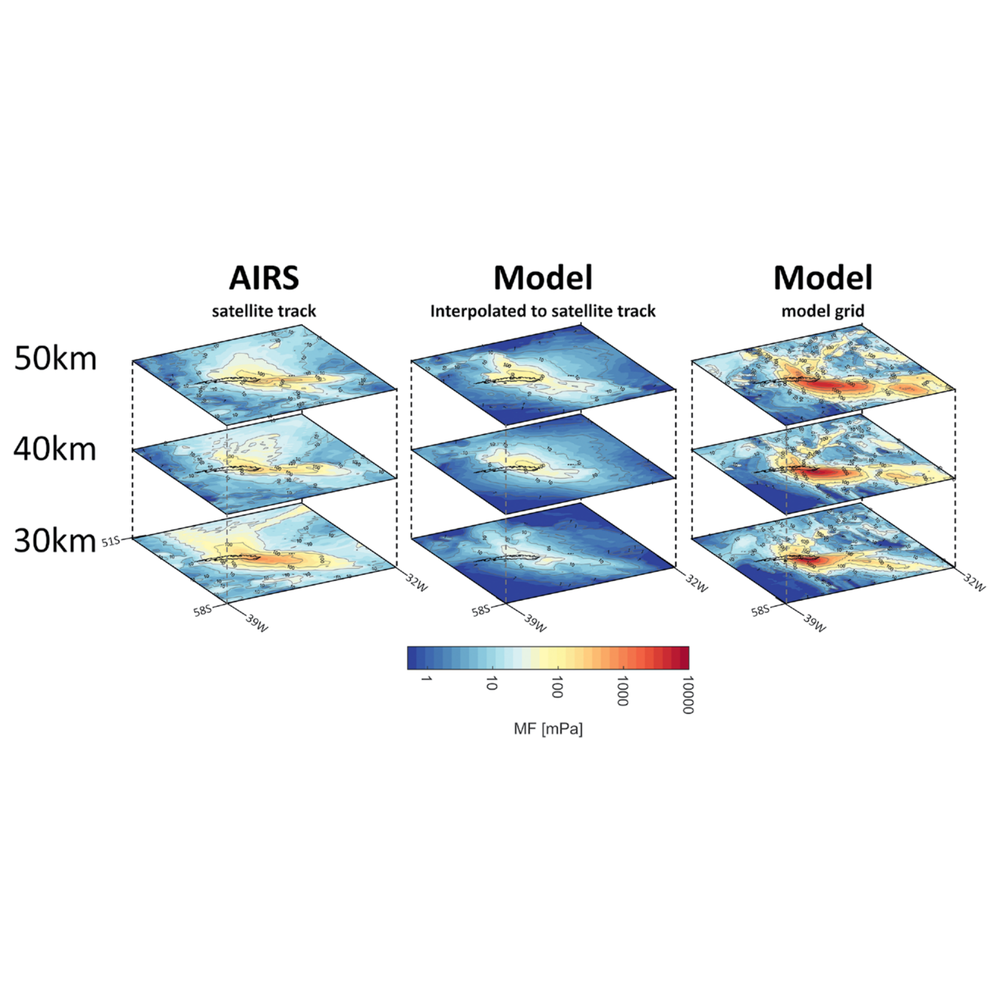 SG-WEX – a means for improved analysis of gravity waves and low-level wind impacts generated from mountainous islandsBulletin of the American Meteorological Society, 2018Satellite observations and high-resolution models agree much more closely on gravity waves over South Georgia once differences in their spatial resolution are accounted for, suggesting that satellites may substantially underestimate the momentum transported by smaller waves.
2017
- QJRMS
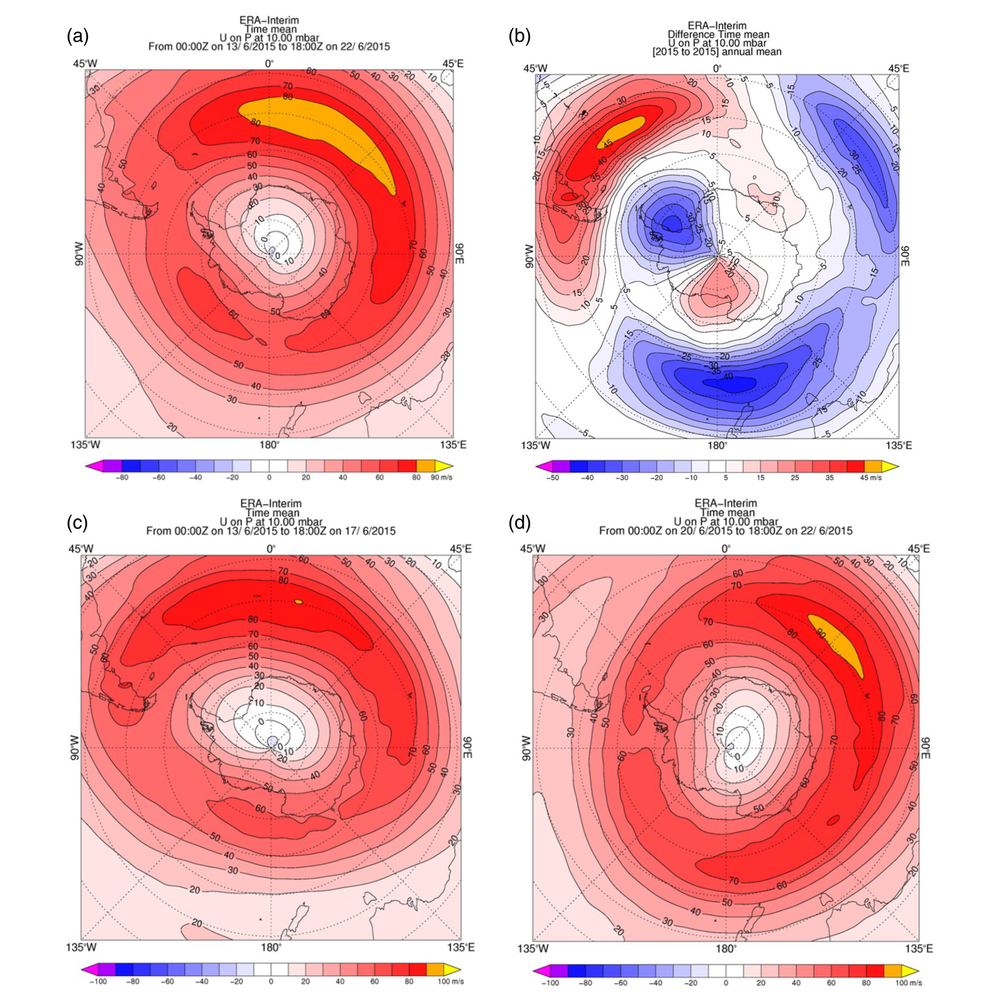 The South Georgia Wave Experiment (SG-WEX): Radiosonde observations of gravity waves in the lower stratosphere. Part 1: Energy density, momentum flux and wave propagation directionQuarterly Journal of the Royal Meteorological Society, 2017During winter over South Georgia, gravity wave momentum flux was nearly four times its summer value (8.7 versus 2.3 mPa), and two-thirds of observed waves propagated downwards, suggesting additional wintertime wave sources.
- ACP
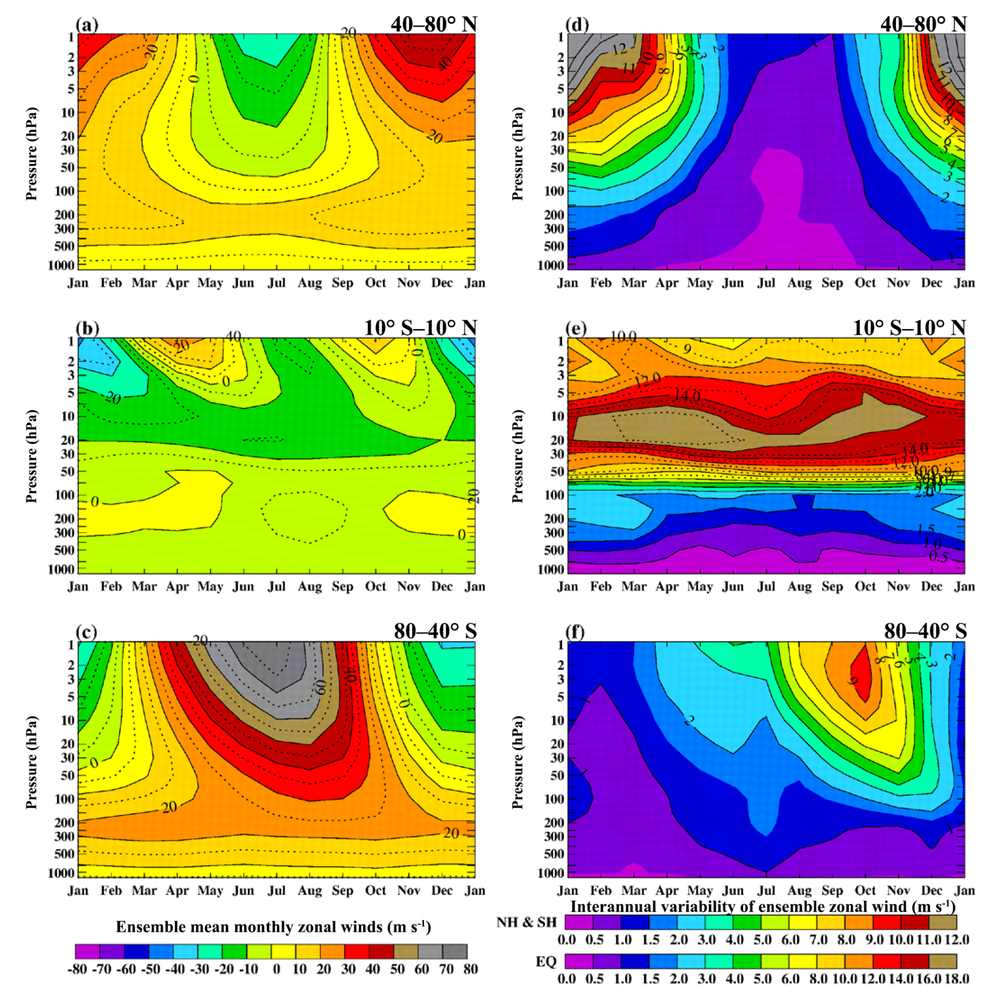 Climatology and Interannual Variability of Dynamic Variables in Multiple Reanalyses Evaluated by the SPARC Reanalysis Intercomparison Project (S-RIP)Atmospheric Chemistry and Physics, 2017Modern atmospheric reanalyses agree closely on temperatures up to about 30 km altitude but diverge higher up, with an abrupt change around the 1998 transition between satellite observing systems that complicates estimates of long-term climate trends.
2016
- AMT
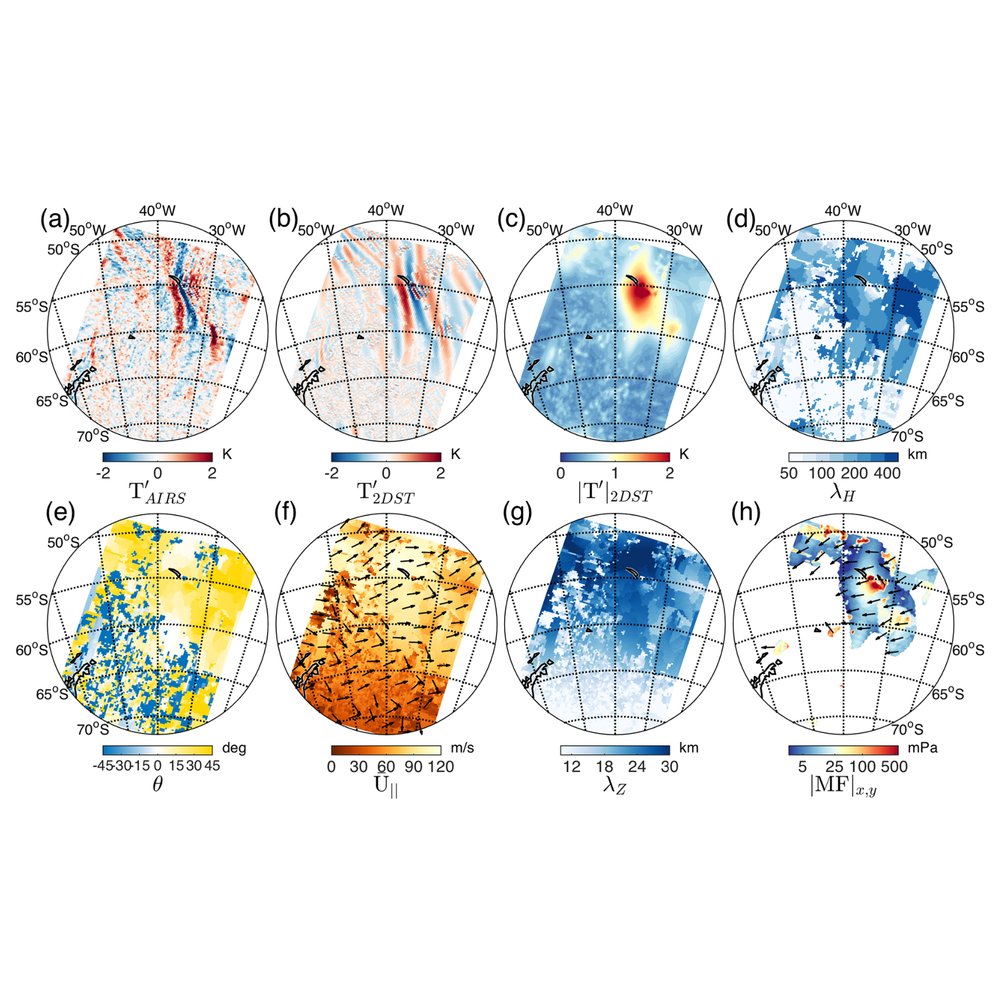 A two-dimensional Stockwell Transform method for gravity wave analysis of AIRS temperaturesAtmospheric Measurement Techniques, 2016A new two-dimensional analysis of AIRS satellite images measures gravity wave amplitudes, wavelengths and propagation directions together, while an elliptical spectral window sharply reduces the underestimation of wave amplitudes by previous methods.
- GRL
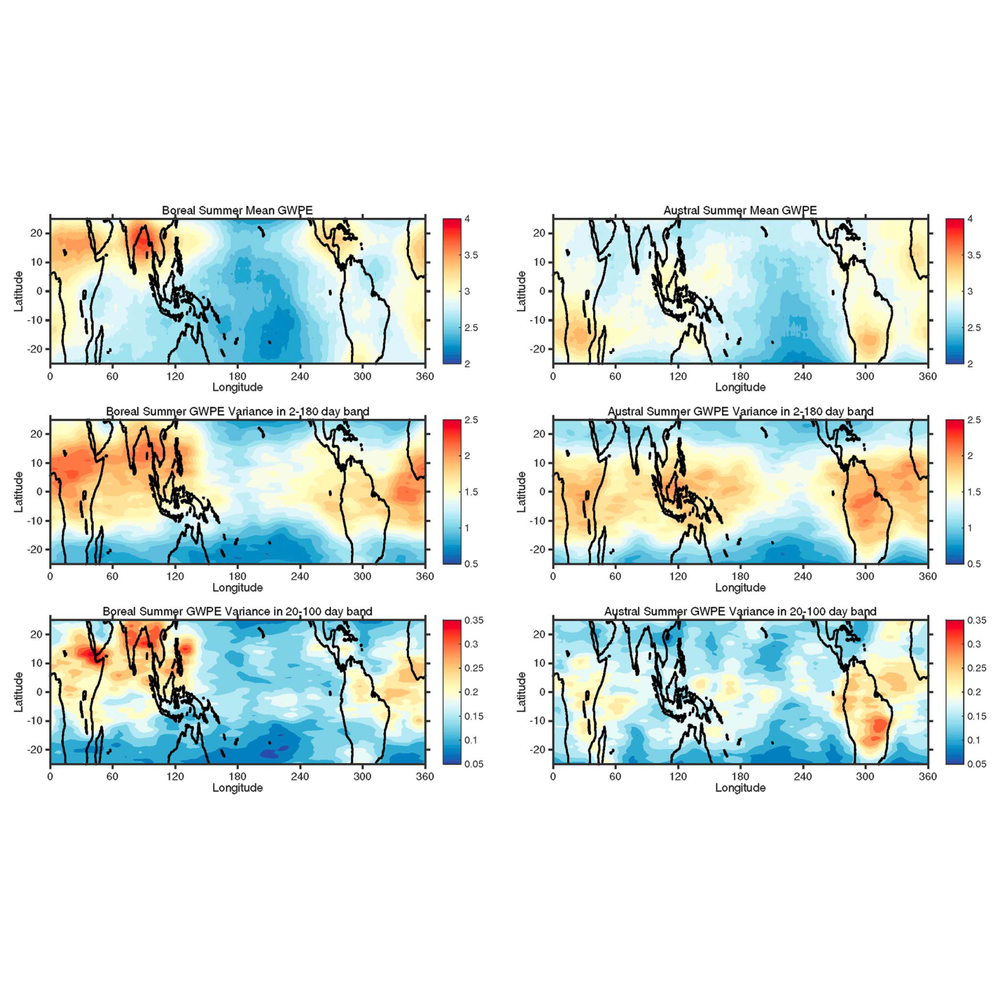 Does the Madden-Julian Oscillation Modulate Stratospheric Gravity Waves?Geophysical Research Letters, 2016Satellite observations reveal that the Madden–Julian Oscillation changes tropical stratospheric gravity wave energy by about 5–10%, with the pattern suggesting that changing winds filter upward-propagating waves rather than simply changing their generation by convection.
- AnGeo
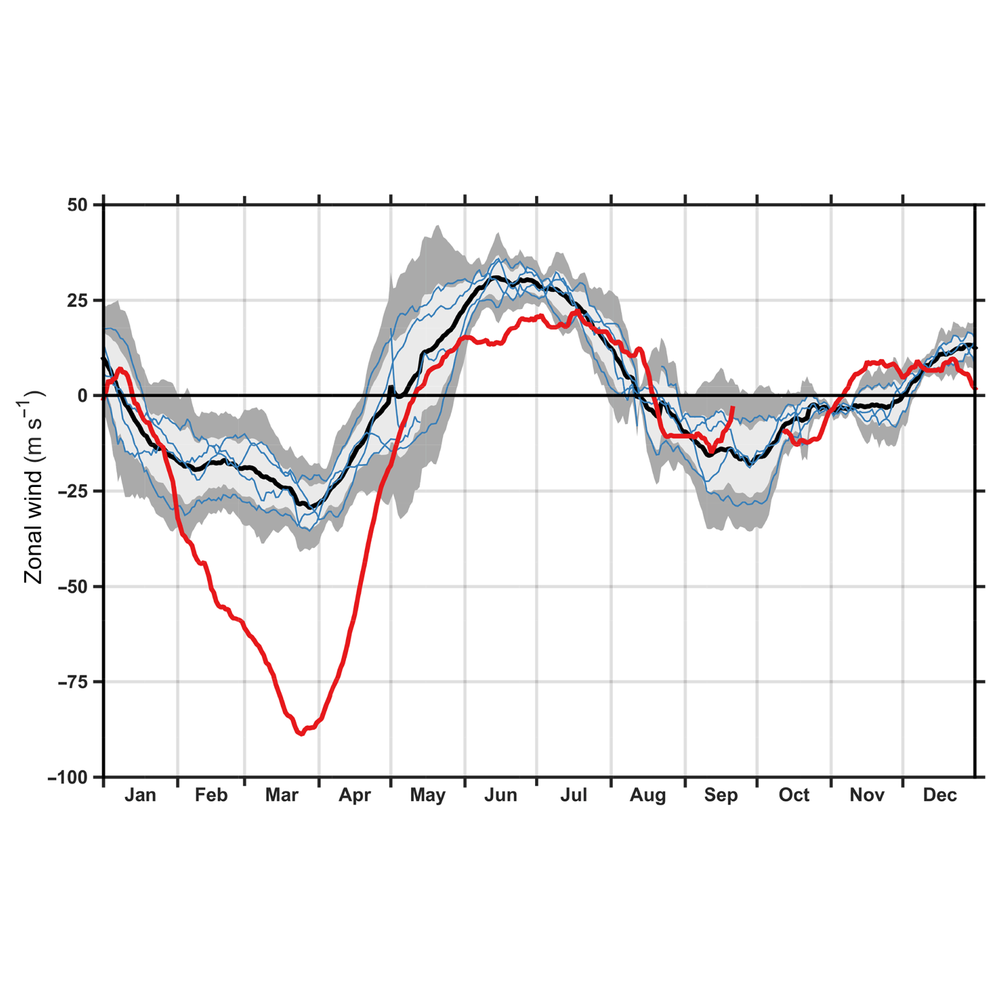 Gravity wave momentum fluxes in the mesosphere over Ascension Island (8S, 14W) and the anomalous zonal winds of the Semi-Annual Oscillation in 2002Annales Geophysicae, 2016Strong gravity wave momentum fluxes over Ascension Island cannot, on their own, account for the anomalous mesospheric winds observed during the semiannual oscillation.
2015
- ACP
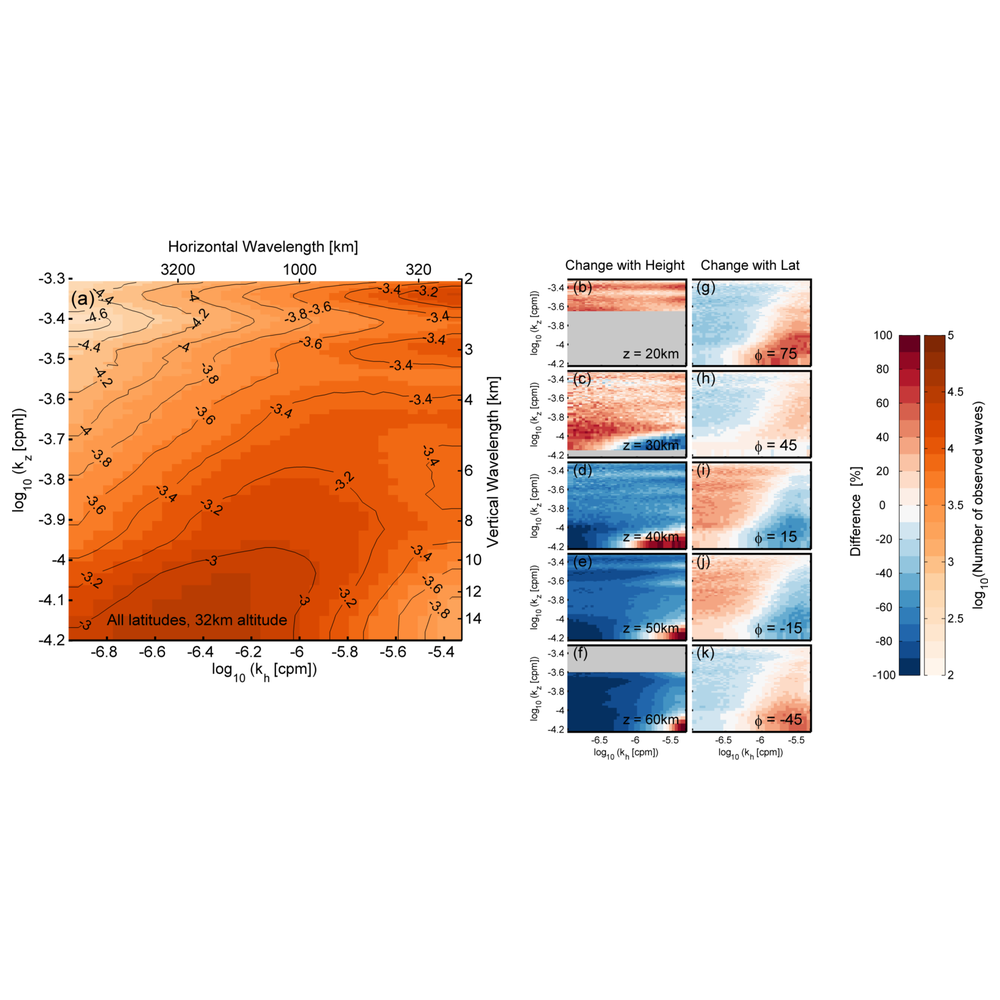 Global distributions of overlapping gravity waves in HIRDLS dataAtmospheric Chemistry and Physics, 2015Global differences in gravity wave activity reflect changes in the distribution of wave wavelengths, not simply the number of waves. The Southern Andes hotspot, for example, contains relatively few waves carrying unusually large momentum fluxes.
2014
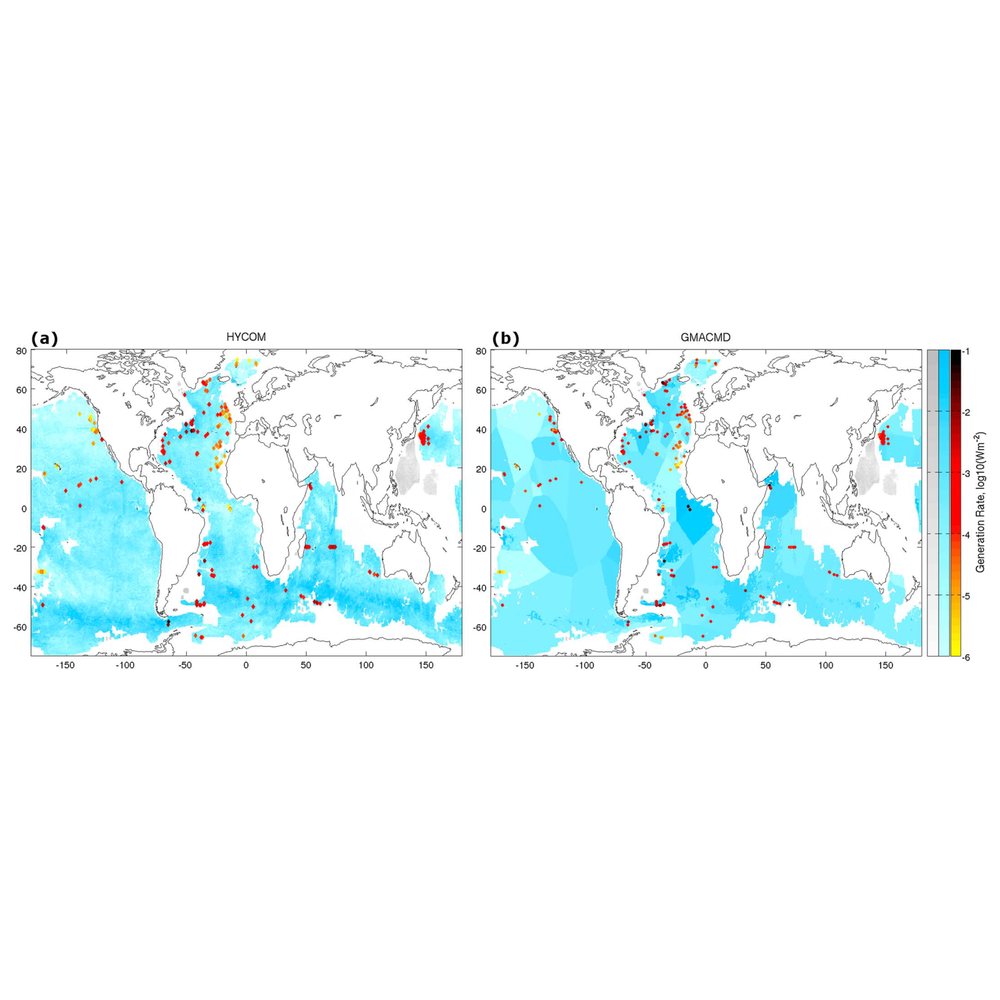
- GRL
2013
- GRL
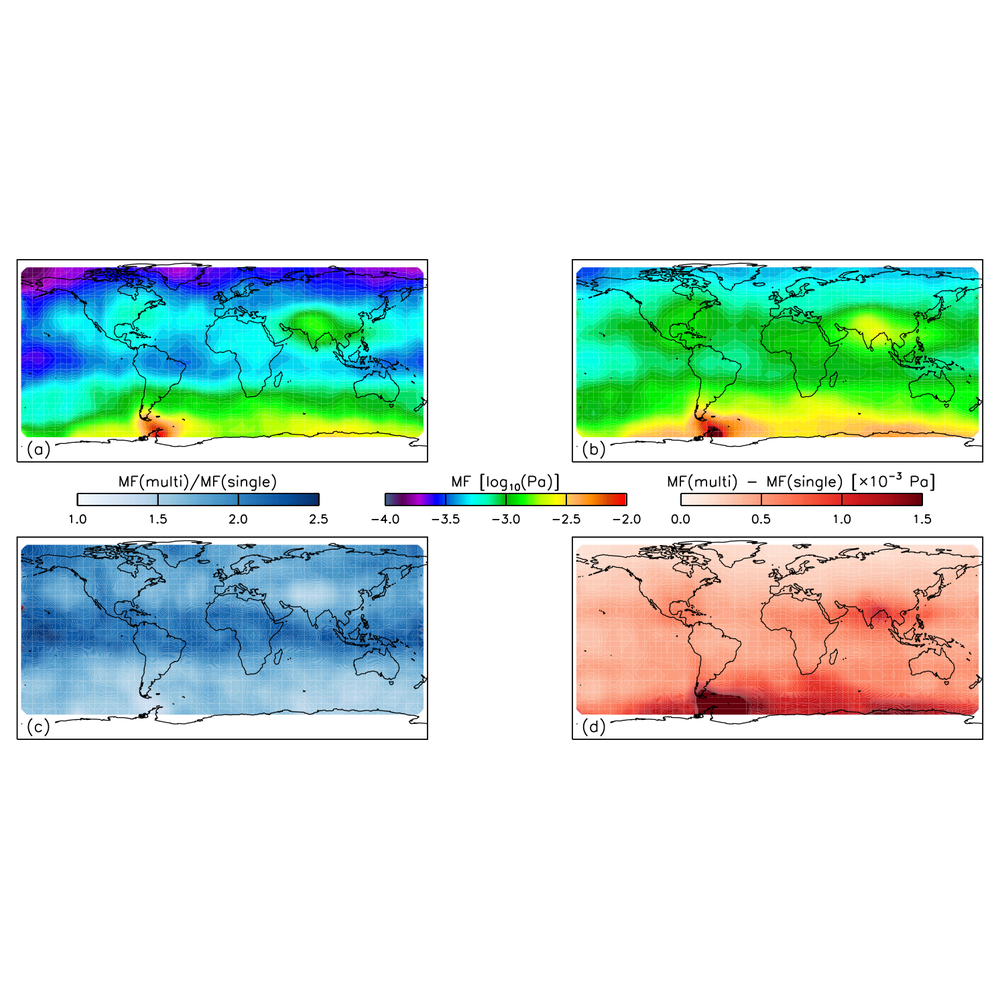 Detecting overlapping gravity waves using the S-TransformGeophysical Research Letters, 2013Detecting multiple gravity waves overlapping in the same satellite temperature profile increases estimated global momentum flux between 20 and 30 km by 68%, revealing substantial contributions from smaller waves missed by conventional methods.
- JPO
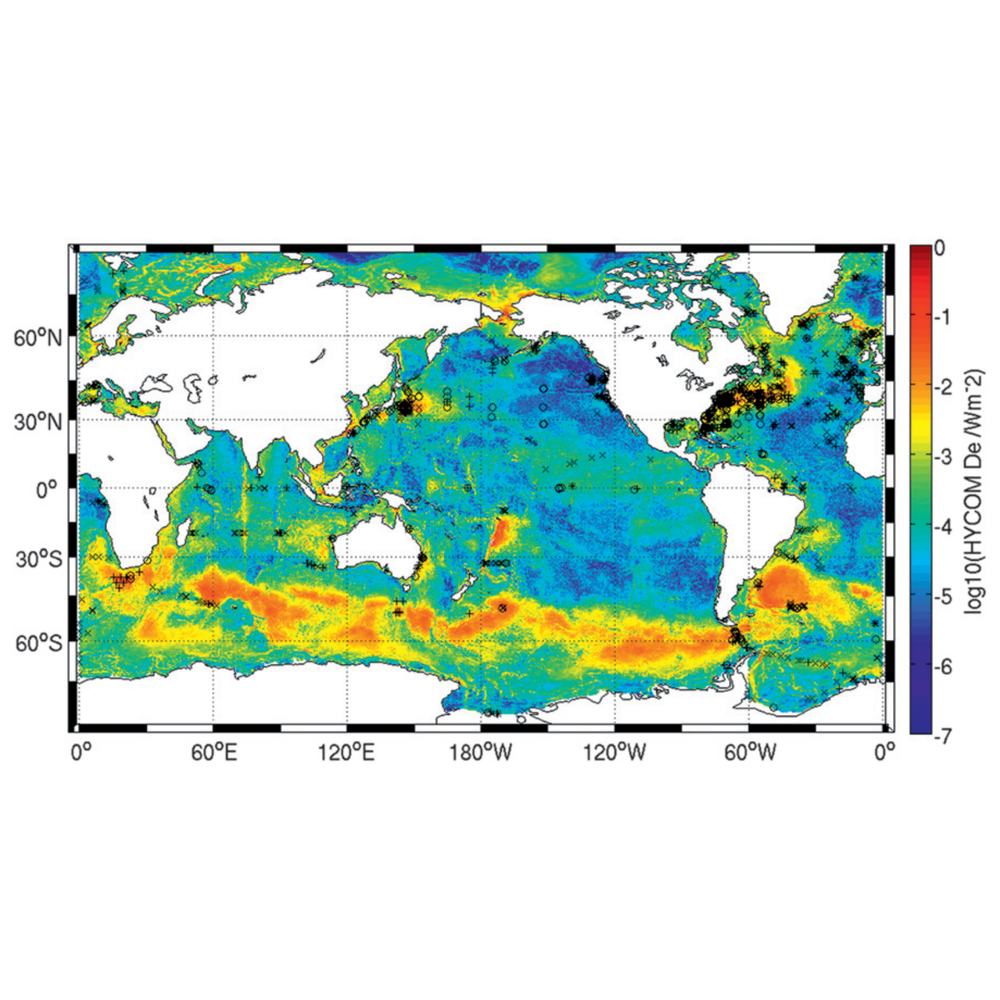 Global observations of ocean-bottom subinertial current dissipationJournal of Physical Oceanography, 2013Analysis of the world’s largest archive of ocean current measurements estimates that friction at the ocean floor dissipates about 0.65 TW of energy globally, establishing a quantitative constraint on an otherwise poorly measured component of ocean energy loss.
2012
- Icarus
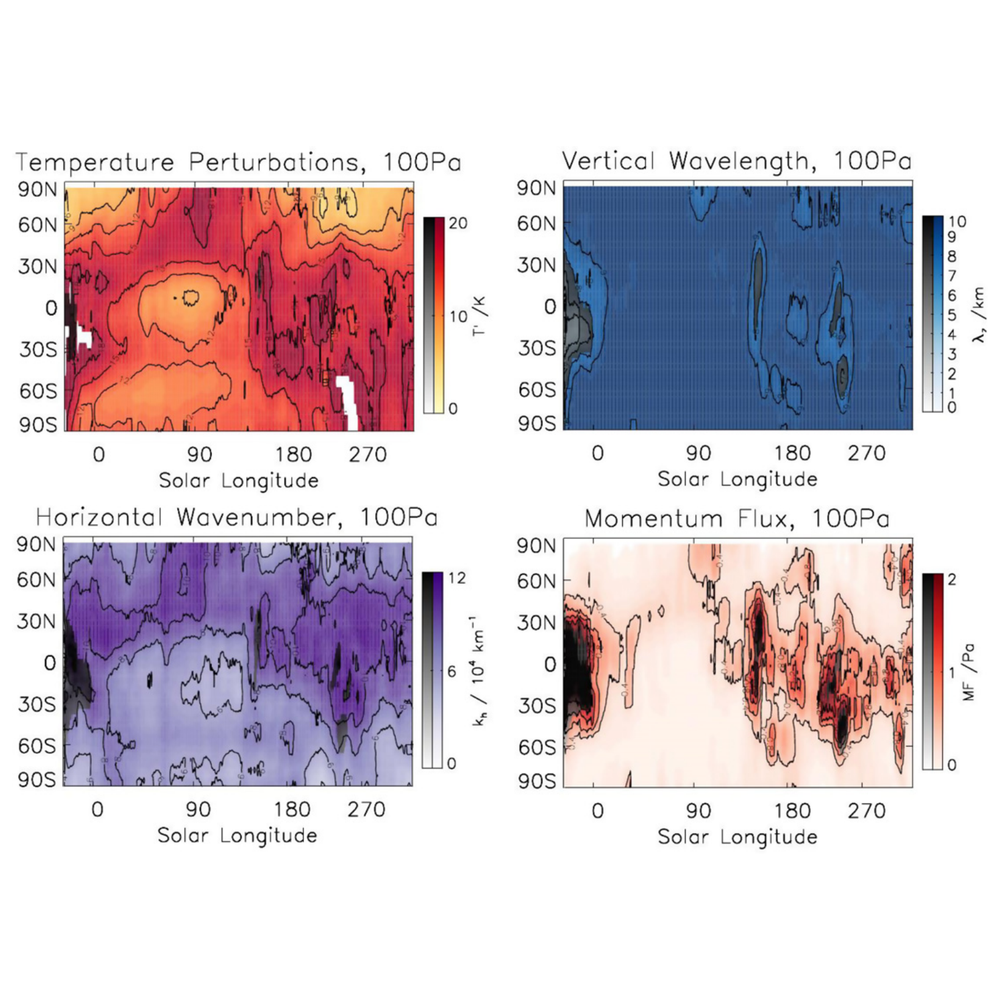 A one-year seasonal analysis of martian gravity waves using MCS DataIcarus, 2012A Martian year of satellite observations reveals gravity wave momentum fluxes much larger than at comparable altitudes on Earth, with the strongest activity in the tropics and variations dominated by the seasons rather than mountain ranges.
- JGR-O
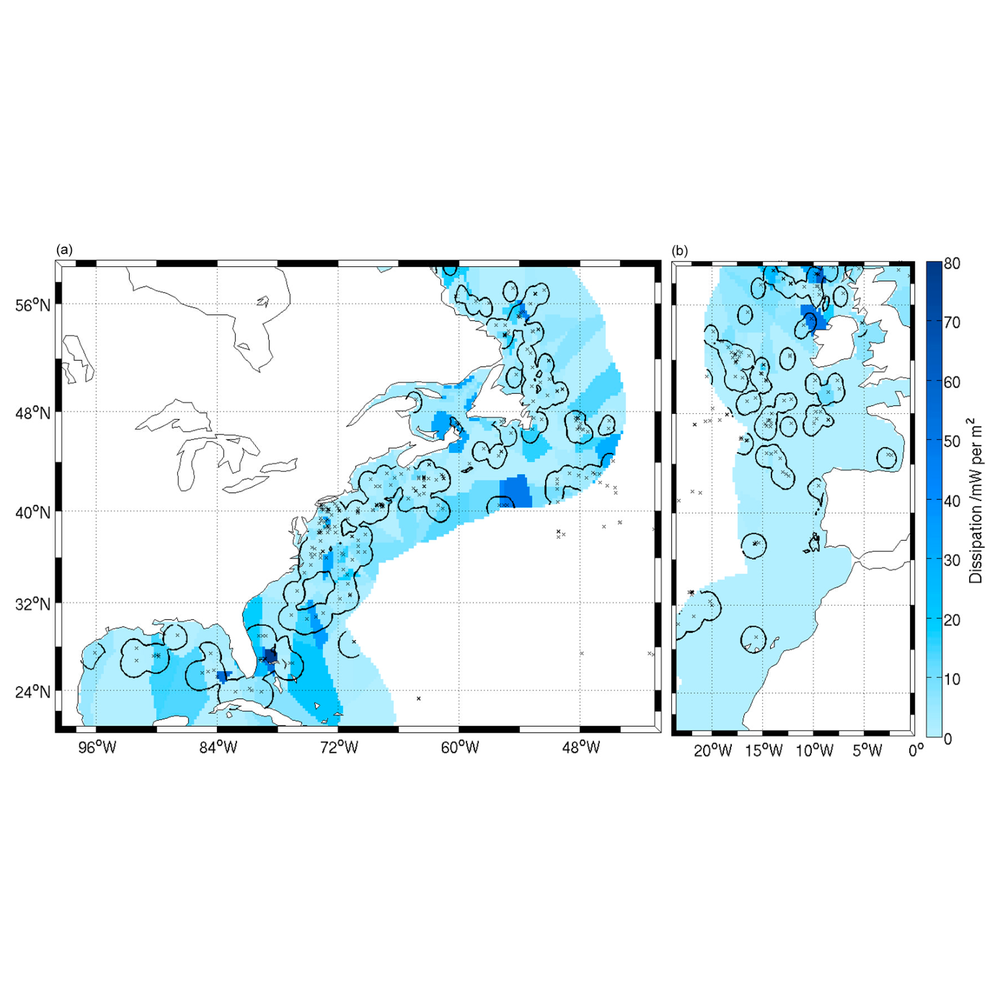 Bottom dissipation of subinertial currents at the Atlantic zonal boundariesJournal of Geophysical Research: Oceans, 2012Ocean current measurements show that friction against the western North Atlantic seabed dissipates 31–47 GW of energy, equivalent to 40–60% of wind energy input across the entire basin, with most dissipation occurring in waters shallower than 500 m.
2011
- JGR-A
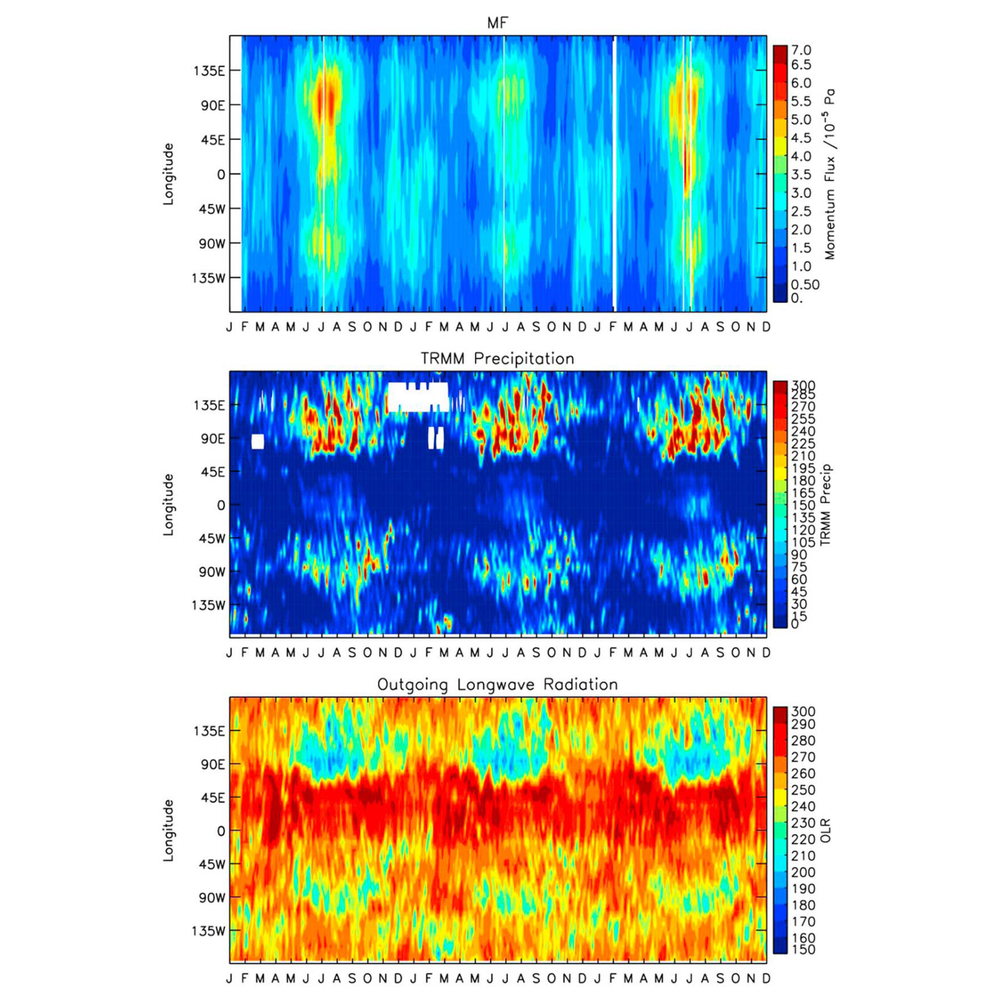 HIRDLS observations of gravity wave momentum fluxes over the monsoon regionsJournal of Geophysical Research: Atmospheres, 2011Satellite observations show that the northern tropical monsoon season increases stratospheric gravity wave momentum flux by approximately 50%, delivering nearly half the annual total in just over one-third of the year.
- AMT
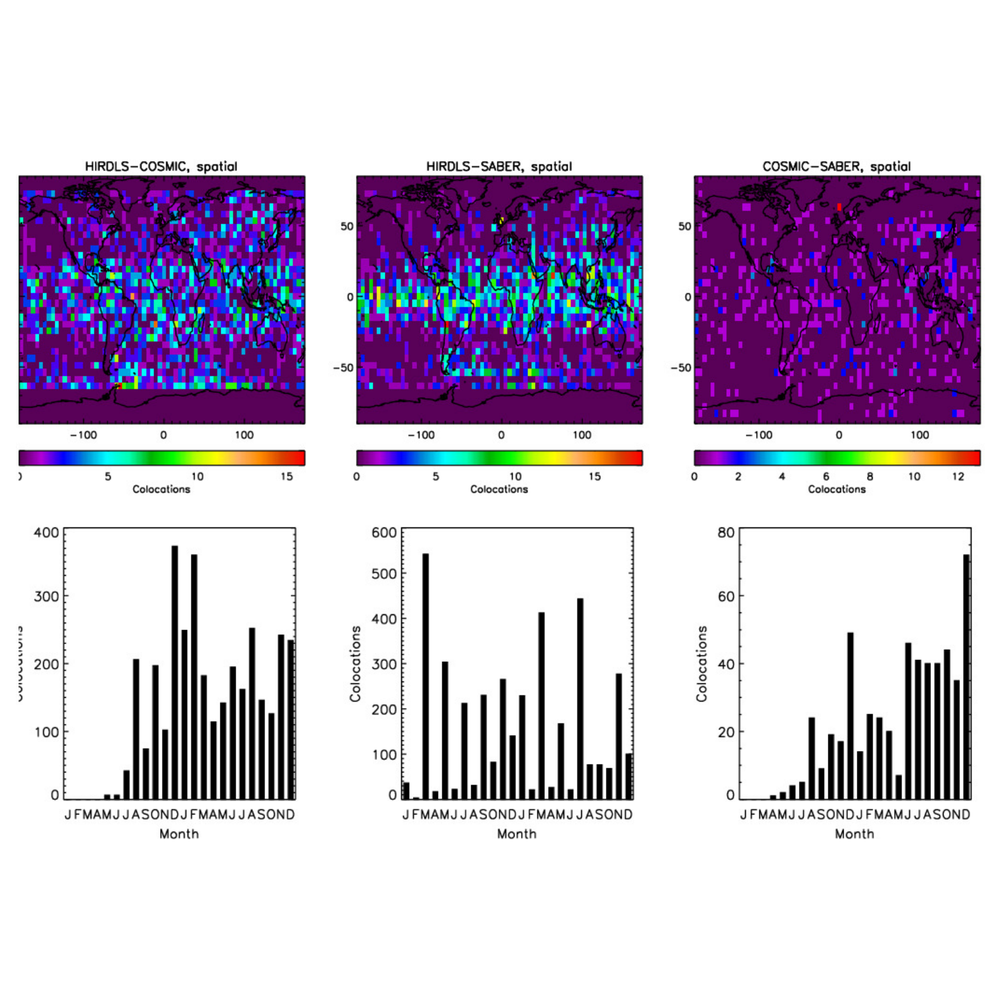 Intercomparisons of HIRDLS, COSMIC and SABER for the detection of stratospheric gravity wavesAtmospheric Measurement Techniques, 2011Even after accounting for differences in vertical resolution, three satellite instruments agree on gravity wave amplitudes and vertical wavelengths in only about half of matched observations; COSMIC tends to detect stronger, shorter-wavelength fluctuations.
2010
- JGR-A
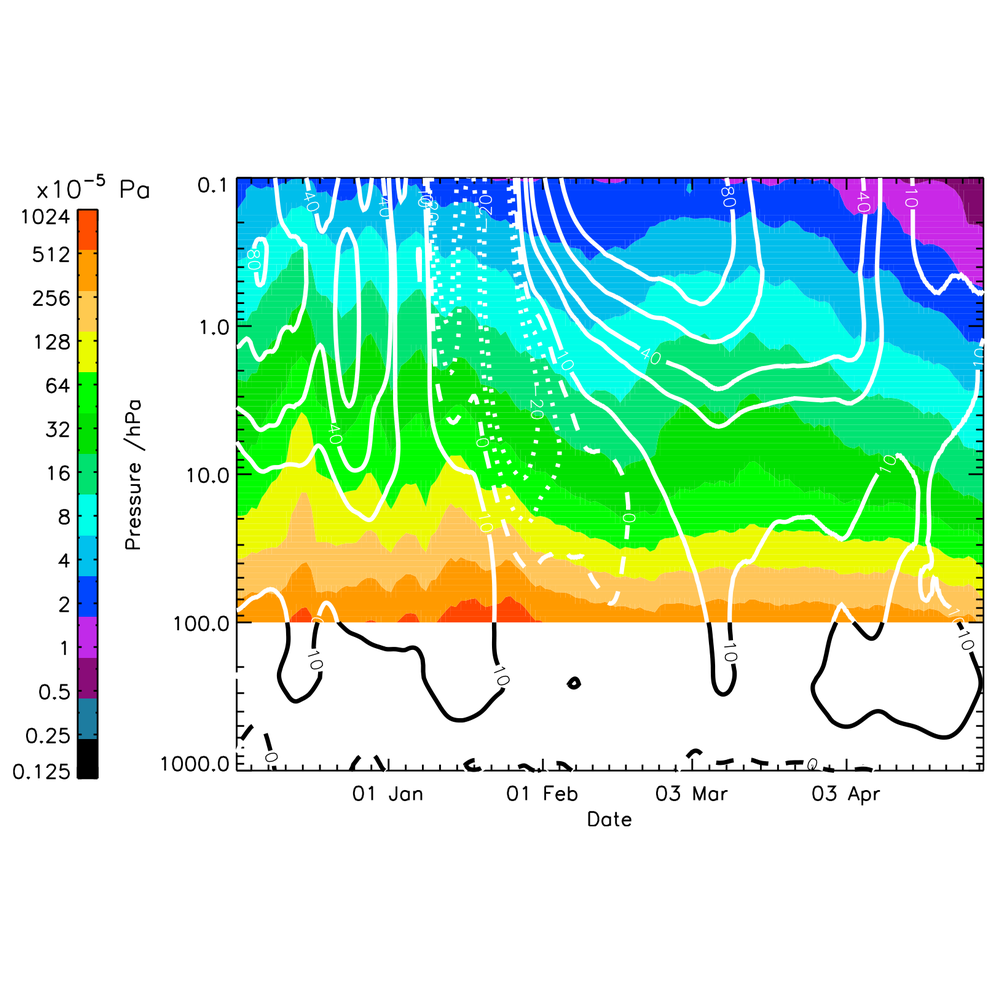 HIRDLS Measurements of gravity wave activity in the 2006 Arctic stratosphereJournal of Geophysical Research: Atmospheres, 2010Satellite observations of the 2006 Arctic sudden stratospheric warming directly show changing winds filtering gravity waves as the polar vortex broke down, observationally confirming a mechanism previously inferred primarily from atmospheric models.
2006
- ProceedingsSLODAR as turbulence monitor for free space optical communicationsIn Proceedings of SPIE, 2006A turbulence-monitoring technique developed for astronomical telescopes can also measure the distribution of atmospheric distortion along horizontal paths, offering a way to characterise the conditions affecting free-space laser communications.
2005
- Proceedings
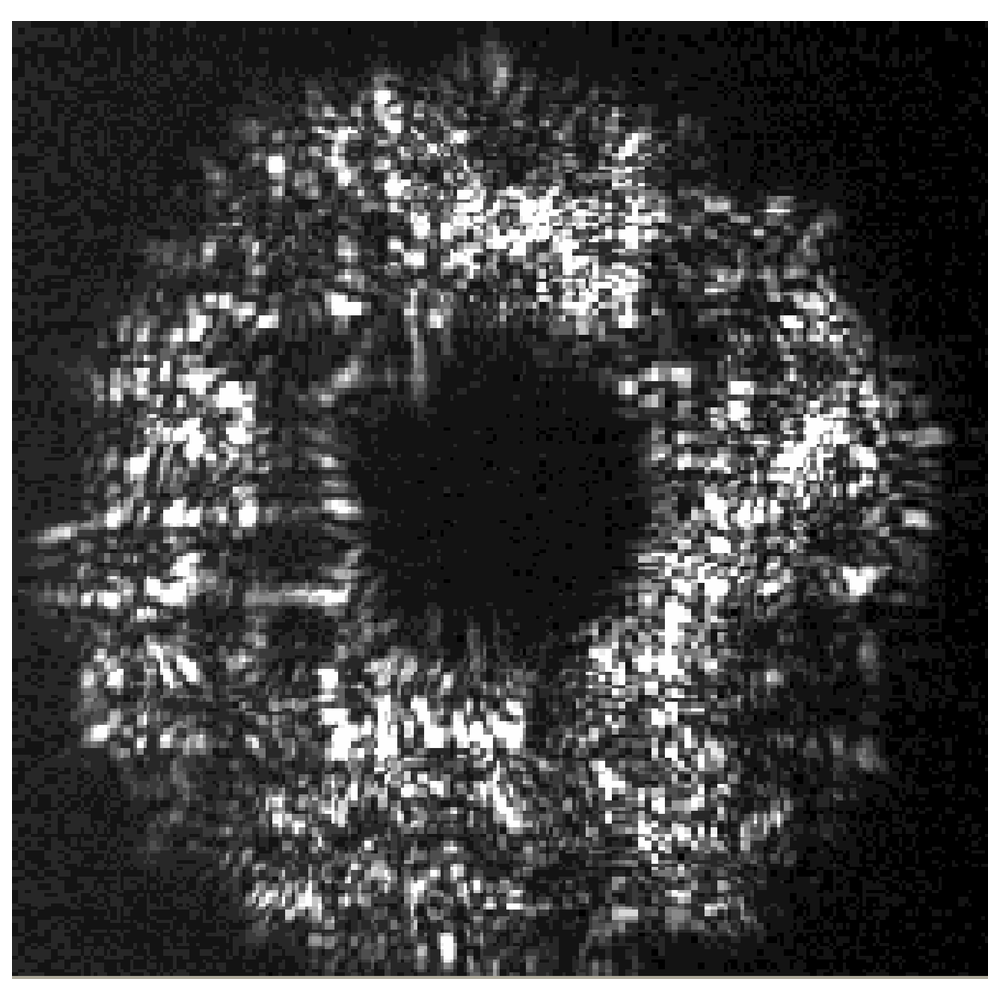 Horizontal turbulence measurements using SLODARIn Proceedings of SPIE, 2005Adapting the SLODAR method to horizontal observations makes it possible to locate turbulent regions along an optical path using correlations between measured light-wavefront slopes, rather than treating turbulence as a single path-averaged quantity.