Projects
An overview of my funded research projects, past and present, to give a flavour of the research we do.
Current projects
Seeing the Unseen
Making the invisible waves in our atmosphere measurable.
Funder: Leverhulme Trust
Scheme: Research Project Grant
Period: February 2026 – September 2030
Investigator: Corwin Wright (University of Bath, PI)
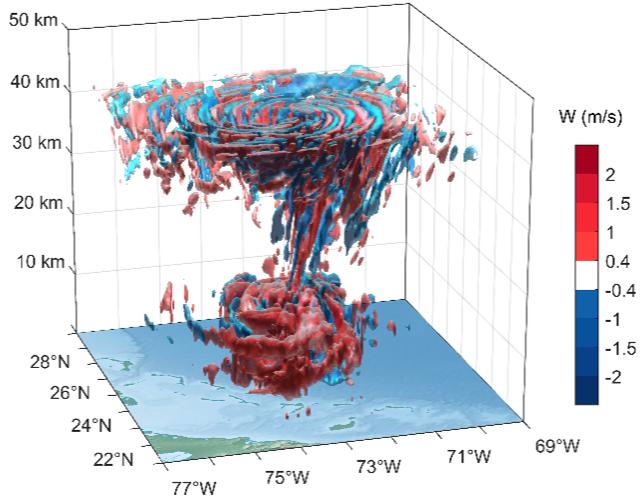
Atmospheric gravity waves transport energy and momentum throughout the atmosphere, but individual observing systems can measure only a limited part of their spectrum. Seeing the Unseen combines satellite and ground-based observations with high-resolution atmospheric modelling to overcome these observational limitations and build a more complete, uncertainty-quantified picture of global gravity wave activity. The resulting measurements will help us better understand atmospheric dynamics, assess how gravity waves are represented in numerical models, and investigate whether stratospheric gravity wave activity can provide useful information about tropical cyclone intensification.
STRAT-NAV
Using atmospheric gravity waves to keep high-altitude aircraft flying for longer.

Funder: Advanced Research and Invention Agency (ARIA)
Programme: Enduring Atmospheric Platforms
Period: 2026–2029
Role: Co-Investigator
Investigators: Neil Hindley (University of Bath, PI) · Hilary Costello (Limosaero) · Matthew Scutter (SkySight) · Graham Spelman (Limosaero) · Tim Banyard (University of Bath) · Corwin Wright (University of Bath) · Tracy Moffat-Griffin (British Antarctic Survey)
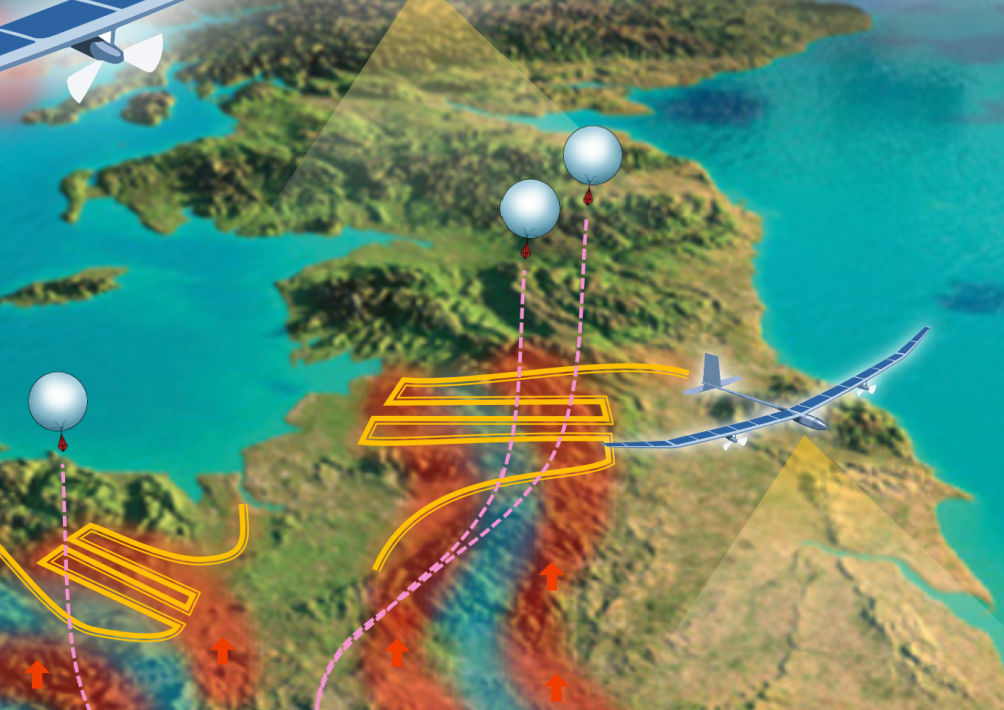
Stratospheric Navigation and Gravity Wave Soaring for Enduring Atmospheric Platforms (STRAT-NAV) aims to help high-altitude aircraft exploit atmospheric gravity waves to extend their flight endurance. By combining ultra-high-resolution atmospheric modelling, observations and intelligent flight-path optimisation, the project will develop forecasts of wave activity that allow aircraft to gain energy from naturally occurring upward air motions. This could substantially reduce the energy requirements of high-altitude platforms, particularly during winter when solar power is limited, supporting longer-duration operations for communications and atmospheric monitoring.
TEAMx-FLOW
Understanding how mountains shape atmospheric circulation across scales.
Funder: Natural Environment Research Council (NERC)
Programme: TEAMxUK: Quantifying Atmospheric Processes in Mountainous Regions
Period: November 2024 – April 2028
Role: Co-Investigator
Investigators: Andrew Orr (British Antarctic Survey, PI) · Neil Hindley (University of Bath) · Andrew Ross (University of Leeds) · Corwin Wright (University of Bath)
Collaborating organisation: Met Office
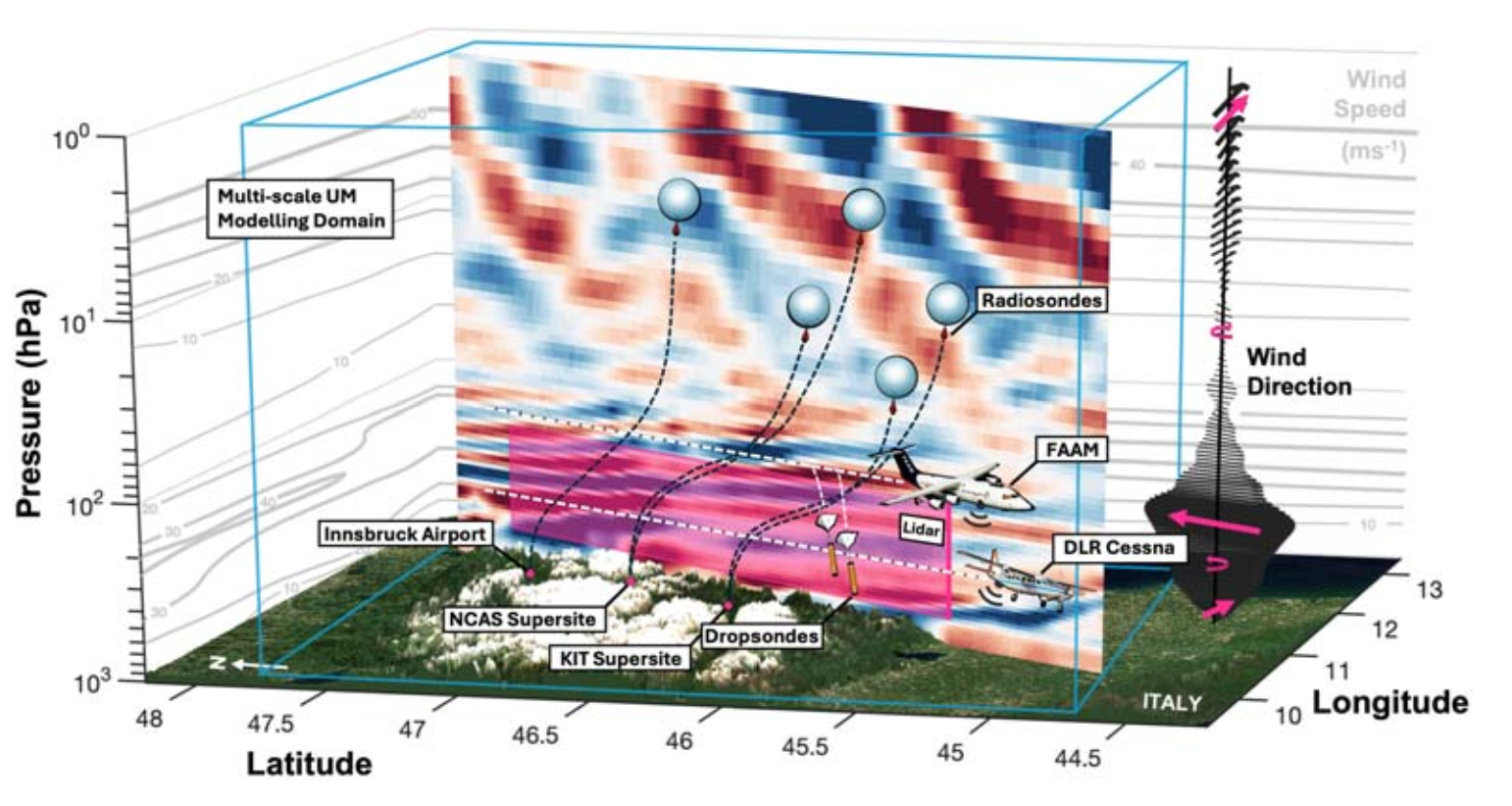
Flow Dynamics, Scale Interactions and Mountain Waves for TEAMx-UK (TEAMx-FLOW) investigates how mountainous terrain affects atmospheric circulation through gravity waves, flow blocking and other drag processes. Using observations from the international TEAMx field campaign in the Alps alongside numerical simulations, the project examines how orographic drag is partitioned between resolved and parameterised processes, and how changing wind direction with altitude influences gravity wave propagation and breaking. The results will support improved representation of mountainous terrain in weather and climate models, particularly the Met Office’s next-generation modelling system.
DRIIVE
Understanding how the atmosphere and space weather drive ionospheric variability.
Funder: Natural Environment Research Council (NERC)
Scheme: Highlight Topic
Period: 2022–2027
Role: Co-Investigator
Selected investigators: Andrew Kavanagh (British Antarctic Survey, PI) · Corwin Wright (University of Bath) · wider multi-institutional consortium (20 investigators in total)
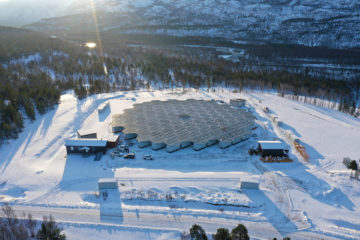
Drivers and Impacts of Ionospheric Variability with EISCAT-3D (DRIIVE) investigates how the ionosphere responds to forcing from both space and the underlying atmosphere. Using the EISCAT radar system alongside complementary observations and numerical models, the project examines processes that produce ionospheric variability on small spatial and temporal scales. Our contribution focuses particularly on the role of atmospheric waves in coupling the lower atmosphere to the ionosphere, with implications for understanding space weather and its effects on satellite navigation and communications.
Gravity Wave Impacts, from Short to Long Timescales
Understanding how small atmospheric waves influence weather and climate across timescales.

Funder: Royal Society
Scheme: University Research Fellowship (renewal)
Period: 2022–2026
Investigator: Corwin Wright (University of Bath, PI)
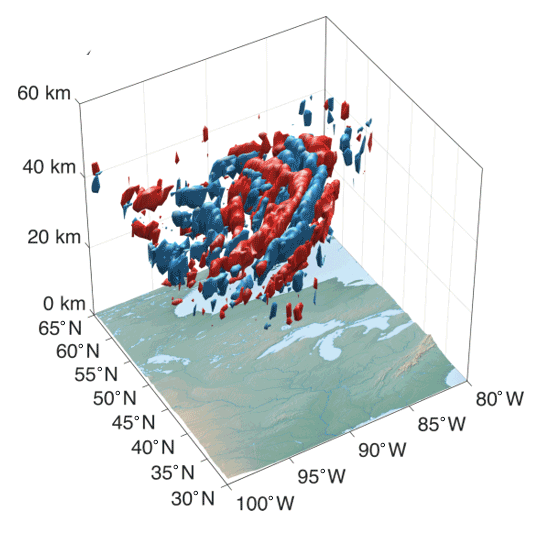
This project continued my Royal Society University Research Fellowship (see below), investigating how atmospheric gravity waves influence circulation and variability over timescales ranging from individual weather events to long-term climate variations. Building on advances in satellite measurement and three-dimensional wave analysis, the research explored the global distribution and impacts of gravity waves, their interactions with larger-scale atmospheric processes, and their representation in numerical models. The fellowship supported the development of new observational methods and their application to fundamental questions in atmospheric dynamics.
Earlier projects
MesoS2D
Improving our ability to predict the least-understood layer of the atmosphere.
Funder: Natural Environment Research Council (NERC)
Scheme: Discovery Science Large Grant
Period: 2021–2026
Role: Co-Investigator
Investigators: Tracy Moffat-Griffin (British Antarctic Survey, PI) · Andrew Kavanagh (British Antarctic Survey) · Daniel Marsh (University of Leeds) · Corwin Wright (University of Bath)
Mesospheric Sub-seasonal to Decadal Predictability (MesoS2D) aimed to understand the processes controlling variability in the mesosphere, approximately 50–95 km above the Earth’s surface. Combining satellite observations, ground-based radar measurements and whole-atmosphere numerical modelling, the project investigated how gravity waves, atmospheric tides and space weather influence this poorly understood region. By identifying the physical drivers of variability from weeks to decades, it sought to improve our ability to predict mesospheric conditions and understand the coupling between the lower atmosphere and near-Earth space environment.
Investigation of PMSEs Along the Geomagnetic Field Direction
Probing the polar summer mesosphere using powerful atmospheric radars.
Instrument: European Incoherent Scatter (EISCAT) radar facilities
Allocation: 36 hours of observing time
Period: 2023–2024
Role: Co-Investigator
Investigators: V. Lakshmi Narayanan (University of Bath, PI) · Andrew Kavanagh (British Antarctic Survey) · Corwin Wright (University of Bath)
Polar mesospheric summer echoes (PMSEs) are strong radar returns from the cold summer mesosphere, associated with small-scale plasma structures and ice particles at altitudes around 80–90 km. This observing programme used allocated EISCAT radar time to investigate how PMSE measurements vary with radar pointing direction relative to the Earth’s magnetic field. The measurements were intended to help constrain the physical processes producing these echoes and improve understanding of small-scale structure and dynamics near the boundary between the neutral atmosphere and ionosphere.
An Airglow Imager for Halley Research Station, Antarctica
Observing atmospheric waves above one of the world’s most remote research stations.
Funder: Royal Society
Scheme: Research Enhancement Award
Period: 2020–2023
Investigator: Corwin Wright (University of Bath, PI)
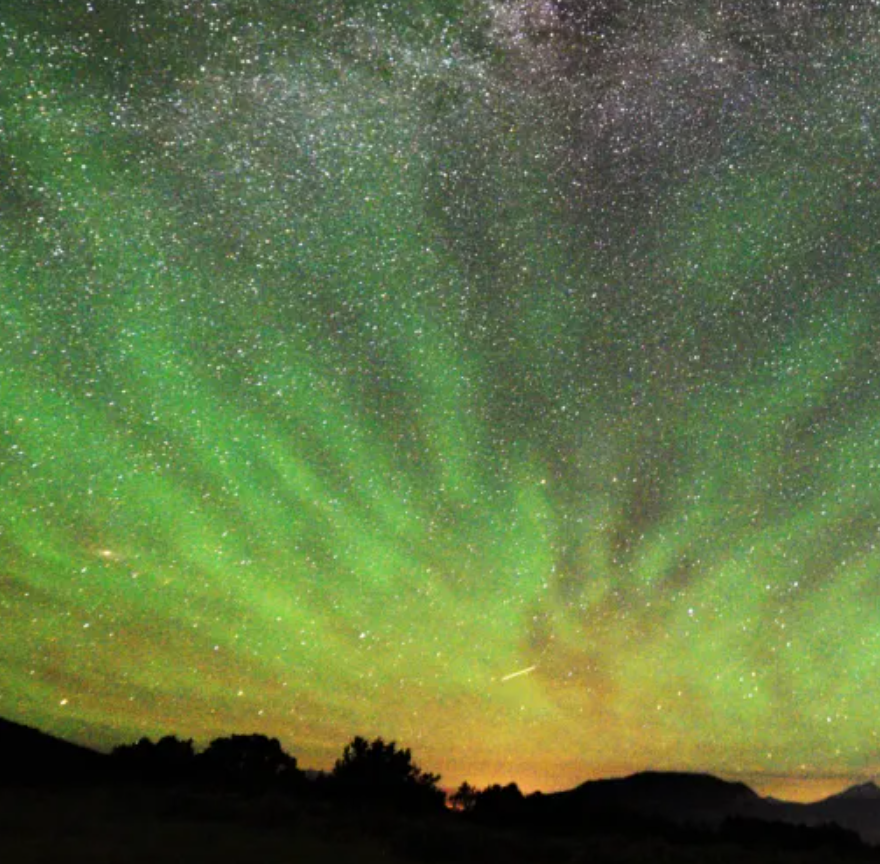
This project supported the development of an airglow imaging capability for Halley Research Station in Antarctica. Airglow observations offer a way to visualise atmospheric structures in the mesosphere and lower thermosphere, including gravity waves that are otherwise difficult to measure directly. The aim was to strengthen observational coverage of atmospheric wave activity at high southern latitudes, providing measurements complementary to satellite and radar datasets and supporting studies of how atmospheric disturbances propagate into the upper atmosphere.
PEGASUS
Investigating the atmospheric waves responsible for dramatic disruptions of the polar vortex.
Funder: Natural Environment Research Council (NERC)
Scheme: New Investigator Grant
Period: 2019–2023
Role: Principal Investigator
Investigators: Corwin Wright (University of Bath, PI) · Gavin Esler (University College London) · Dann Mitchell (University of Bristol) · Nicholas Mitchell (University of Bath)
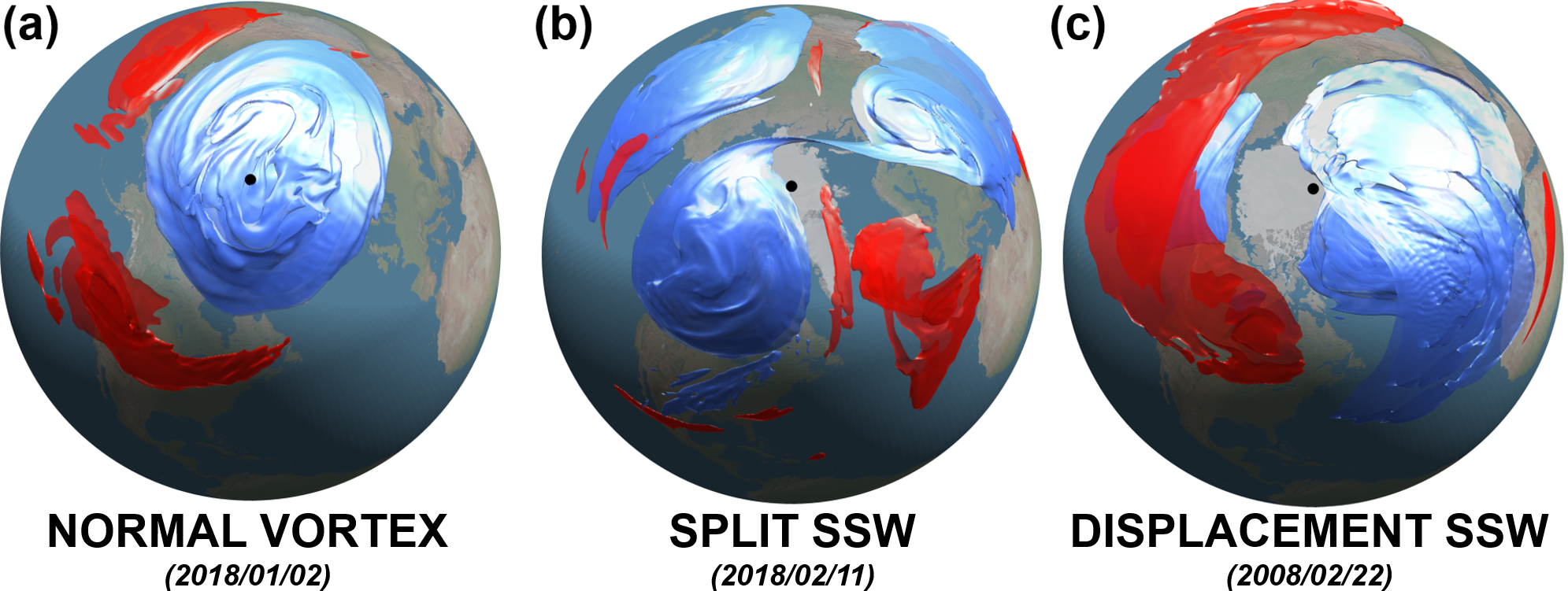
Planetary and Gravity Waves as Drivers of Sudden Stratospheric Warmings (PEGASUS) investigated the role of atmospheric waves in producing sudden stratospheric warmings, events in which the polar stratospheric circulation can weaken dramatically or reverse. Combining satellite observations, numerical modelling and atmospheric dynamics theory, the project examined how planetary waves and gravity waves interact during these events and how their effects propagate through the atmosphere. The research sought to improve understanding of the connections between stratospheric variability, surface weather and the upper atmosphere.
SEQUOIA
Understanding the atmospheric waves that drive the tropical stratosphere’s changing winds.
Funder: Royal Society
Scheme: Research Grant
Period: 2018–2023
Investigator: Corwin Wright (University of Bath, PI)
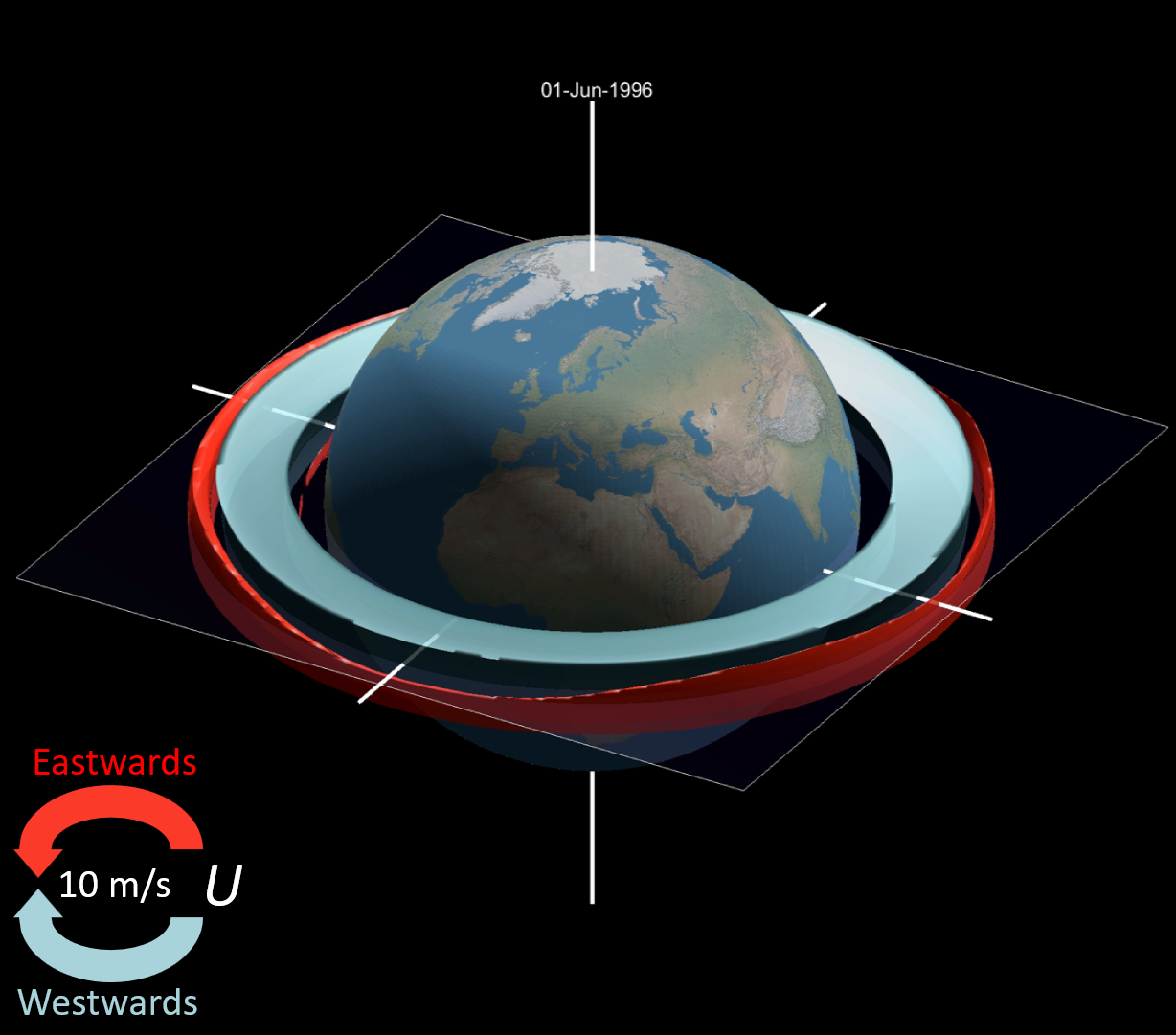
Satellite Exploration of the Quasi-Biennial Oscillation (SEQUOIA) investigated the small-scale atmospheric waves that drive the quasi-biennial oscillation (QBO), a regular reversal of tropical stratospheric winds occurring approximately every two to three years. Using satellite observations and numerical simulations, the project aimed to quantify the contribution of gravity waves to the QBO and examine why this important feature of the atmospheric circulation remains challenging to reproduce in climate models. The work also explored how improved observational constraints could inform model development.
MATADOR
Tracking atmospheric waves from their sources to their eventual impacts.
Funder: Royal Society
Scheme: Research Enhancement Award
Period: 2017–2023
Investigator: Corwin Wright (University of Bath, PI)
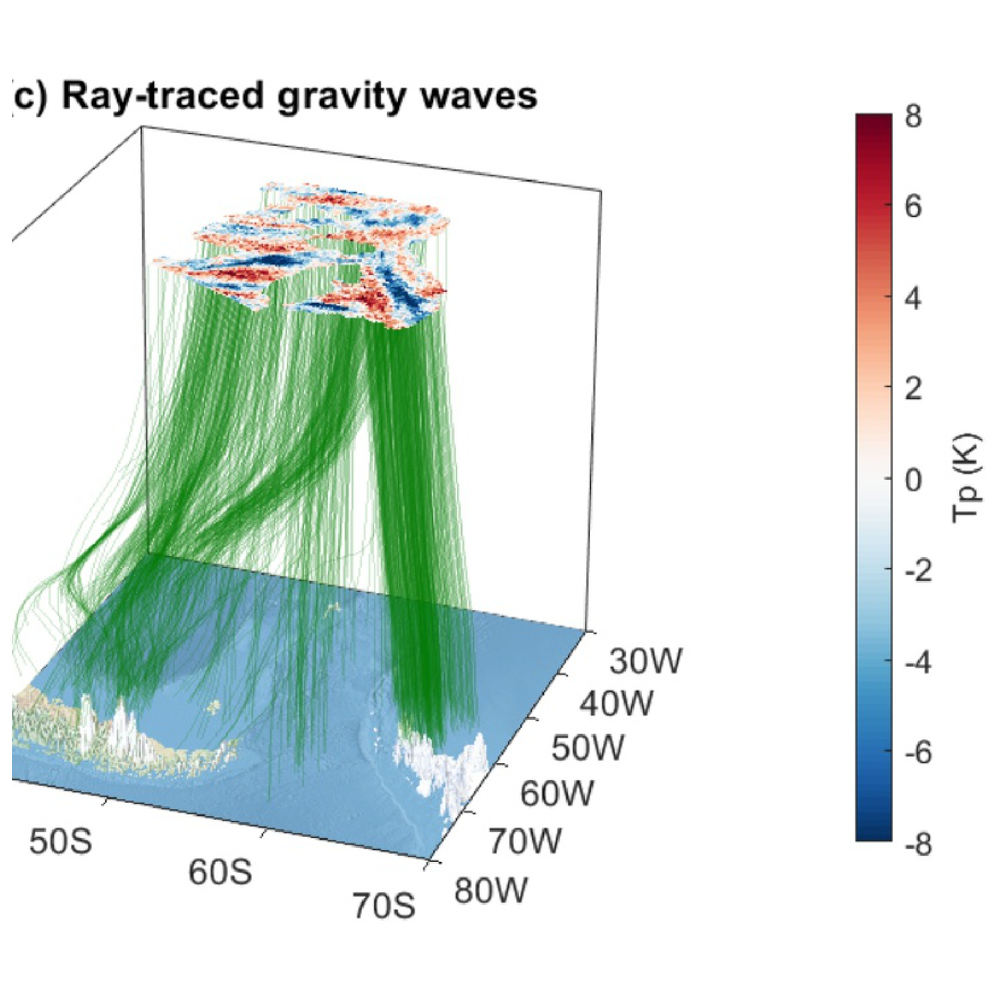
Measuring and Tracking Atmospheric Disturbances Using Observations and Ray-Tracing (MATADOR) developed approaches for studying atmospheric gravity waves by combining satellite measurements with numerical ray-tracing techniques. Satellite observations provide snapshots of gravity waves, but understanding their origins and impacts requires reconstructing how they travel through the atmosphere. The project investigated methods to trace observed waves backwards towards their likely sources and forwards towards the regions where they may deposit momentum, helping connect individual wave observations to their wider atmospheric effects.
Gravity Waves as Drivers of the Global Atmospheric Circulation
Revealing how small atmospheric waves help drive global circulation.
Funder: Royal Society
Scheme: University Research Fellowship
Period: 2017–2022
Investigator: Corwin Wright (University of Bath, PI)
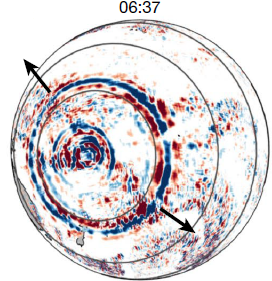
My original Royal Society University Research Fellowship focused on understanding how atmospheric gravity waves drive the circulation of the stratosphere and mesosphere. These waves transport momentum from their sources in the lower atmosphere, but their small spatial scales make their global impacts difficult to measure. The research developed new methods for recovering three-dimensional wave properties from satellite observations, using them to study gravity wave sources, momentum transport and interactions with the large-scale circulation, as well as links between atmospheric waves and ionospheric disturbances.
DRAGON-WEX
Measuring the atmospheric waves responsible for missing momentum over the Southern Ocean.
Funder: Natural Environment Research Council (NERC)
Scheme: Discovery Science Grant
Period: 2017–2021
Role: Co-Investigator (2017–2020); Principal Investigator (2020–2021)
Investigators: Nicholas Mitchell (University of Bath, original PI) · Tracy Moffat-Griffin (British Antarctic Survey) · Corwin Wright (University of Bath, PI 2020–2021)
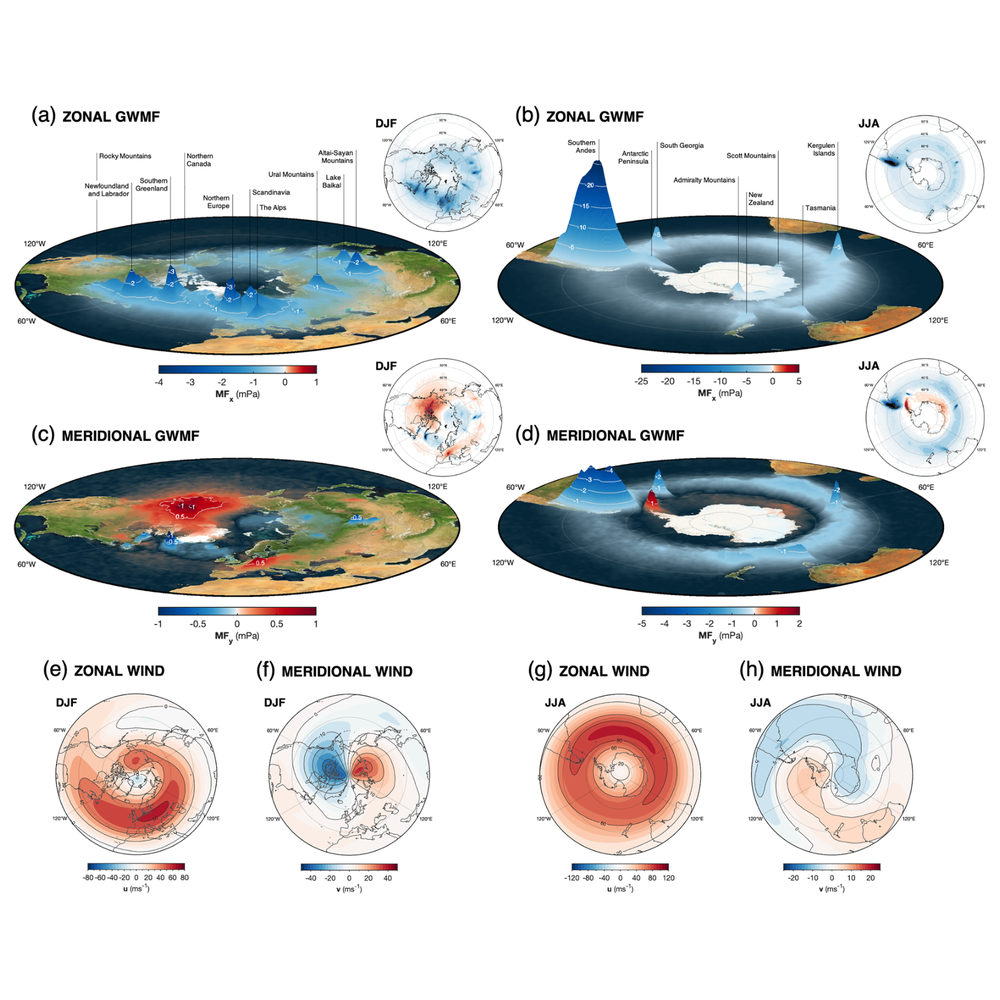
The Drake Passage/Southern Ocean Wave Experiment (DRAGON-WEX) investigated atmospheric gravity waves over the Southern Ocean, a region where climate models have long exhibited substantial biases associated with missing gravity wave momentum. Combining three-dimensional satellite observations with radiosondes, radars and numerical modelling, the project aimed to characterise gravity wave sources, propagation and momentum fluxes across this remote region. The results provided improved observational constraints on the contribution of gravity waves to the Antarctic stratospheric circulation and its representation in weather and climate models.
International collaborations
I have also participated in research projects funded by international partners, without receiving direct research funding beyond travel and collaboration costs.
Constraining Gravity Wave Drag in NASA GEOS
Using satellite observations to test how atmospheric models represent gravity wave momentum transport.
Funder: NASA
Programme: Weather and Atmospheric Dynamics
Period: 2023–2026
Role: Collaborator (no direct research funding)
Investigators: Laura Holt (NorthWest Research Associates, PI) · M. Joan Alexander (NorthWest Research Associates) · Neil Hindley (University of Bath) · Lars Hoffmann (Forschungszentrum Jülich) · Christopher Kruse (NorthWest Research Associates) · Corwin Wright (University of Bath)
Directly Constraining Gravity Wave Drag Parameterizations in GEOS with AIRS Observations Using OSSE Methods investigated how satellite measurements can be used to evaluate the representation of gravity waves in NASA’s GEOS atmospheric model. Observing System Simulation Experiments (OSSEs) reproduced the effects of satellite measurement characteristics on simulated atmospheric fields, allowing meaningful comparisons between models and observations. This approach aimed to help identify differences between simulated and observed gravity wave activity, providing constraints relevant to the development and evaluation of gravity wave parameterisations.
Improved Gravity Wave Climatology at Mars
Investigating the waves that shape the atmosphere of another planet.
Funder: NASA
Programme: Research Opportunities in Space and Earth Sciences (ROSES)
Period: 2018–2023
Role: Collaborator (no direct research funding)
Investigators: Nicholas Heavens (Space Science Institute, PI) · Joshua Bandfield (Space Science Institute) · J. Michael Battalio (Yale University) · Corwin Wright (University of Bath)
Improved Climatology of Lower/Middle Atmospheric Gravity Wave Activity at Mars investigated the distribution and variability of atmospheric gravity waves in the Martian atmosphere. Using observations from orbiting spacecraft, including the Mars Climate Sounder and Thermal Emission Spectrometer, the project sought to characterise wave activity across different regions, altitudes and seasons, including its response to dust storms and atmospheric circulation. These measurements provide observational constraints on the dynamics of Mars’s atmosphere and help establish which gravity wave processes are shared between Earth and Mars.
Declined awards
Atmospheric Waves in 3D, from the Surface to the Edge of Space
A proposed programme to measure atmospheric waves throughout the atmospheric column.
Funder: Natural Environment Research Council (NERC)
Scheme: Independent Research Fellowship
Proposed period: 2017–2022
Applicant: Corwin Wright (University of Bath)
Status: Offered but declined
This fellowship was awarded in open competition in 2017 but declined because it could not be held alongside the Royal Society University Research Fellowship awarded in the same year. The proposed research focused on developing methods to observe atmospheric waves in three dimensions and study their propagation and effects from the lower atmosphere to near-Earth space.