Corwin Wright
Professor of Atmospheric Remote Sensing, University of Bath
Royal Society University Research Fellow

I am Professor of Atmospheric Remote Sensing at the University of Bath, where I lead research into the dynamics of the Earth’s atmosphere, particularly atmospheric gravity waves and their role in weather, climate and the circulation of the middle atmosphere.
My research combines satellite observations, numerical modelling and data analysis to understand atmospheric processes across a wide range of spatial and temporal scales. I am particularly interested in developing new methods to extract information from satellite measurements, and in using these observations to improve our understanding of atmospheric dynamics and the performance of numerical models.
I have worked at Bath since 2013, initially as a postdoctoral researcher before taking up a Royal Society University Research Fellowship in 2017. Before joining Bath, I held research positions at the National Center for Atmospheric Research in the USA and the Université de Bretagne Occidentale in France. Since 2017, I have led research projects supported by a range of national and international funders including ARIA, EPSRC, ESA, the Leverhulme Trust, NERC, and the Royal Society.
Alongside my research, I co-lead the international APARC Gravity Waves Activity and contribute to several international satellite missions (including NASA STRIVE and ESA Keystone) and atmospheric science programmes (including TeamX and ARIP). I also supervise doctoral and postdoctoral researchers, teach computing, atmospheric science and space science, and have previously served as Director of Research in Bath’s Department of Electronic and Electrical Engineering and as founding Co-Director of Bath Engineering’s Centre for Climate Adaptation and Environment Research.
selected publications
- Nature
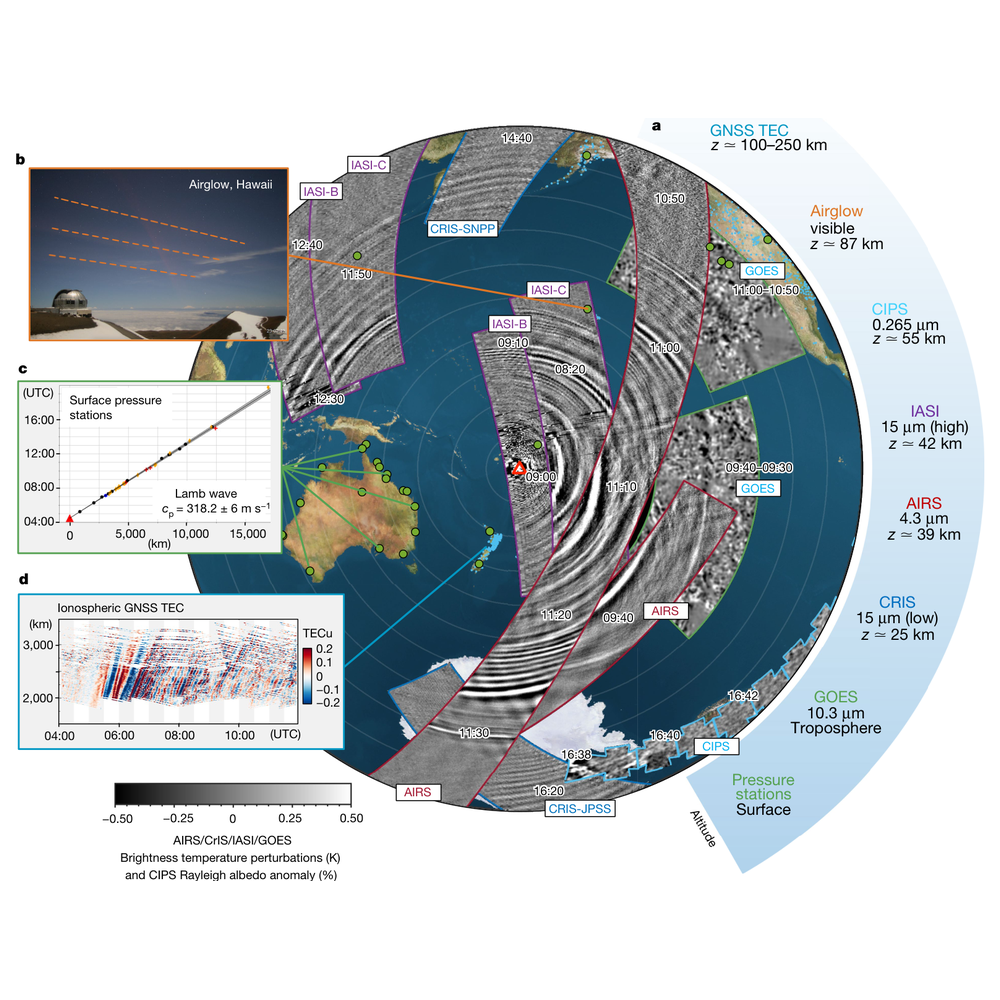 Surface-to-space atmospheric waves from Hunga Tonga–Hunga Ha’apai eruptionNature, 2022The Tonga eruption generated atmospheric waves observed from the surface to the ionosphere, including waves that circled the globe. Its volcanic plume subsequently produced gravity waves that dominated the Pacific stratosphere for over 12 hours.
- ACP
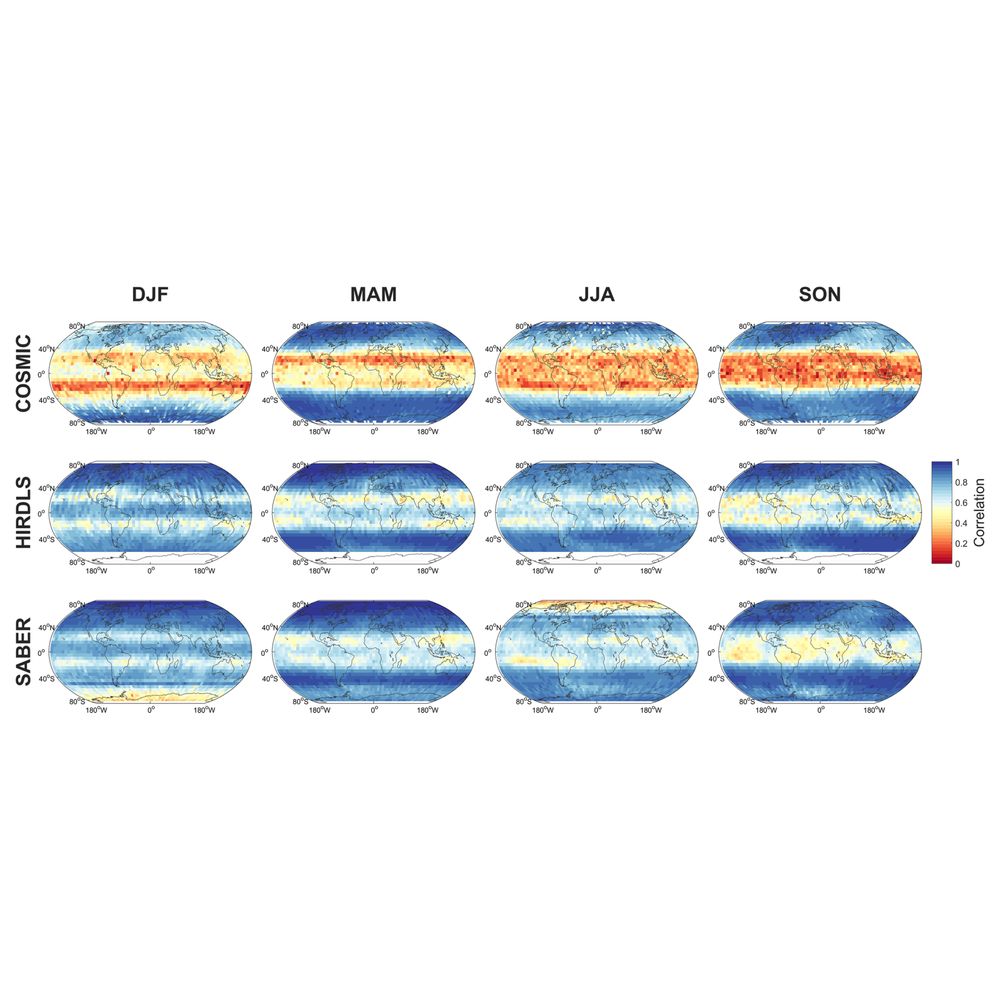 How well do stratospheric reanalyses reproduce high-resolution satellite temperature measurements?Atmospheric Chemistry and Physics, 2018Six widely used atmospheric reanalyses agree more closely with one another than with satellite measurements, including observations assimilated into the reanalyses; agreement with observations deteriorates above 30 km.
- ACP
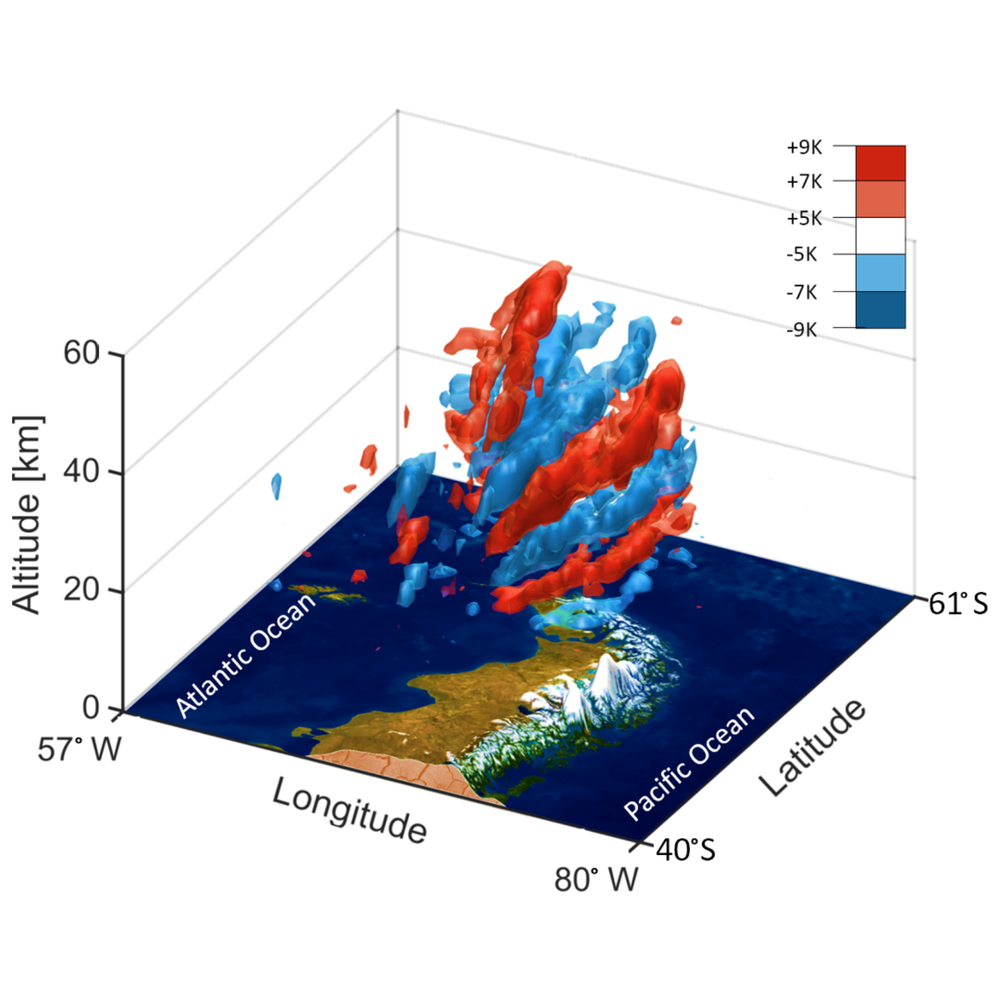 Exploring gravity wave characteristics in 3-D using a novel S-transform technique: AIRS/Aqua measurements over the Southern Andes and Drake PassageAtmospheric Chemistry and Physics, 2017A 3-D analysis of satellite temperatures retrieves the propagation speeds and momentum flux directions of individual gravity waves, identifying intense events over the Southern Andes with fluxes reaching 80–100 mPa.